
Drones – a game-changing technology and its regulations

An interesting phenomenon is occurring in modern warfare. Drones have become a pervasive feature in the war against Ukraine. The media has dubbed the war a “remote-control war”. Both Russians and Ukrainians have resorted to using drones to track the enemy and drop grenades. Hitherto, weapons such as Multiple Launch Rocket Systems (MLRS) dominated the battlefield. Drones have proven to be advantageous to Russian and Ukrainian troops on the front line.
These troops use them for battlefield reconnaissance and to attack enemy targets. Drones are adaptable and can be easily improvised for use as weapons. The same models used by photography enthusiasts and for drone racing can be used in a war for intelligence purposes. Though some drones are small in weight and weigh less than 500g, they can carry explosive weapons such as a kilo of grenades.
This technology has remarkably become a subject of diplomatic, military and economic policy wranglings. The United States of America has put in measures such as export controls to curtail the sale of advanced semiconductor chips used in military appliances like drones. Interestingly, The United States has blacklisted DJI, a Chinese company which is the largest manufacturer of drones.
Countries currently aligned to Russia or Ukraine are supplying the two countries with military drones. Russia regularly uses Iranian Shahed-136 drones to attack Ukrainian cities. Ukraine on the other hand has received drones such as the Norwegian Black Hornet reconnaissance drone and the Turkish missile-equipped Bayraktar TB2. A technology used for both civilian and military purposes is turning out to be a game changer in the war. This technology allows countries with less military capabilities to stretch limited forces.
What are Drones?
Drones are essentially unmanned aircrafts or remotely piloted aircraft systems. In effect, they are unmanned flying objects either controlled remotely or operating completely autonomously. In addition to its software, autonomous drones utilize other advanced technologies such as artificial intelligence, cloud computing, computer vision, deep learning, machine learning and thermal sensors to enable them carry out missions without human interventions.
Drones are also known as Unmanned Aerial Vehicles (UAVs), Unmanned Aircraft Systems (UAS), Small Unmanned Aerial System (SUAS) or Remotely Piloted Aircraft Systems (RPAS). These terms are sometimes used interchangeably. For the purpose of this article, drones, UAVs or RPAS will be used interchangeably and refer to the same thing.
History
Drones were originally developed in the 20th century for military purposes and used in military missions which were deemed “too dangerous” or risky for humans. As technology advanced and drones became more affordable, it became available for other civilian purposes.
The first recorded basic concept of drones being used for military purposes was in 1849. The Austrian Navy attacked the city of Venice during a siege using 200 bomb-laden balloons. Fortunately, only one bomb found its mark, changing winds diverted the course of most balloons. The first pilotless vehicles were developed in Britain and the USA during the First World War.
During the Vietnam war, reconnaissance UAVs were deployed on a large scale. Around that time the range of usage for UAVs expanded, they were used to launch missiles against fixed targets, and for psychological operations such as dropping of leaflets. In the Yom Kippur War of 1973, Israel used drones as decoys in combat.
In the 1990s, American and Israeli companies developed more advanced drone technology which were more cost efficient. After the devastation caused by Hurricane Katrina in 2005, the Federal Aviation Authority of the United States allowed drones to fly in civilian airspace for search and rescue missions. Predator drones with thermal cameras were able to detect the heat signatures of humans from up to 10,000 feet away. Around this time, the commercial drone industry began taking shape. The general public started to have a keen interest in the technology, after Amazon announced it would use drones for delivery in 2013.
Uses
Aside from their well-known military use, drones are used by police departments across the world for law enforcement purposes. They have been used to perform critical search and rescue missions, forest fire detection, border and maritime patrol, and road traffic surveillance. In the energy sector, drones are used for power and pipeline inspections. They serve as a surveying tool in the real estate industry. They are progressively use for climate change monitoring and environmental analysis.
Agricultural and mining companies are increasingly using drone applications in their operations. The technology offers immense benefits to the agricultural industry and is used for pest control, plant health monitoring, aerial spraying, soil analysis etc. In the field of precision agriculture, drones accurately measure and study crop production. Mining companies utilize drone technology in surveying and mapping of mining sites. Drones are excellent tools for precision mining. They can access tighter spaces in complex mine sites and collect accurate geospatial data more efficiently.
Drones are most famously used in Ghana in the entertainment industry for event management, aerial photography and videography. They are also used for product deliveries, a notable case in point being Zipline Ghana; a logistic company with the world’s largest fleet of medical-delivery drones in Ghana. For civilian purposes, many drones utilize a quadcopter configuration.
Drones and regulations in Ghana
There is a growing industry of drones and drone operators in Ghana. This trend is expected to grow further as drones gain more commercial applications. The Ghana Civil Aviation Authority (GCAA) is the mandated government authority in charge of regulating air transportation in Ghana. The GCAA also provides air navigation services within the Accra Flight Information Region (FIR), which comprises the airspace over the Republic of Ghana and a large area over the Atlantic Ocean in the Gulf of Guinea.
The GCAA in addressing the use of drones has issued the Ghana Civil Aviation (Remotely Piloted Aircraft System) Directives, 2018 – Part 28 (“the Directive”), to guide the operations of drones in Ghana’s airspace and at aerodromes. The Ghana Civil Aviation Authority collectively refers to drones in the Directive as Remotely Piloted Aircraft Systems (RPAS).
Classification of RPAS
Drones may be classified according to weight, range or endurance. Such classification helps drone operators know the appropriate laws applicable to their UAVs. The GCAA classifies drones into three (3) broad categories;
- Small RPAS: unmanned aircraft with maximum take-off weight up to 1.5 kilograms. This shall be flown only within the visual line of sight (VLOS) of the pilot.
- Light RPAS: unmanned aircraft with maximum take-off weight of more than 1.5 kilograms but less or equal to 7 Kilograms. This shall be flown only within the visual line of sight of the pilot.
- Large RPAS: all unmanned aircrafts with maximum take-off weight of more than 7 kilograms. This can be flown either within the visual line of sight of the pilot or beyond the visual line of sight (BVLOS) of the pilot.
A picture showing the Visual Line-of-Sight. Source: www.researchgate.net
Important Guidelines for RPAS Operators in Ghana
The Directive provides that RPAS should be operated in a manner so as not to pose safety risks to other aircrafts, persons and properties.
- All RPAS must be registered with the GCAA.
- An operating permit issued by GCAA is required for all groups of RPAS. However, certification will only be required for commercial RPAS operators.
- An operating permit is subject to annual renewal.
- All RPAS flights are limited to a maximum height of 400 feet above ground level. For flights above this level, the approval of the Authority is required.
- No RPAS shall operate within a 10 km radius from an airport or helipad.
- All private and recreational RPAS operations shall be limited to Visual Line-of-Sight operations in daylight unless permitted by the Authority.
- Only one RPA shall be controlled by an RPS (Remotely Piloted Station) at any given time.
- No RPAS shall be operated at night without prior authorisation by the Authority.
- Operators of RPAS are forbidden from flying in restricted, prohibited and danger areas without prior authorisation from GCAA and any other relevant Governmental agencies.
- RPAS shall not be flown within a radius of 30 meters from buildings and vehicles not within an operator’s control or without explicit permission from relevant persons or owners.
- Flying above populous areas, gatherings or other people’s backyards is prohibited, unless approval is granted.
Special authorisation is required when operating drones in the following operations:
- The carriage of goods
- Banner towing
- Cross border operations
- Hazardous operations
- Dropping and discharging of things
- Acrobatics, formation and racing flights
- Operations in the restricted areas of aerodromes
- Operations in areas of high RF transmission/interference (e.g., radar sites, high tension wires)
Applicants requesting for special authorization have to submit the application not less than thirty (30) days before the date of intended operation.
Concerns Surrounding the Usage of Drones
The use of drones raises privacy concerns and data protection issues. Drones combined with advanced surveillance technology may be able to identify and monitor individuals from a distance without their knowledge. Also, a Wi-Fi antenna affixed to a drone can be used to locate individuals through their mobile phones. This contravenes the right to privacy.
The right to privacy is a fundamental human right enshrined under Article 18 of Ghana’s 1992 Constitution. Article 18(2) provides that- “No person shall be subjected to interference with the privacy of his home, property, correspondence or communication except in accordance with law and as may be necessary in a free and democratic society for public safety or the economic well-being of the country, for the protection of the rights or freedoms of others.”
Complaints of drones being used to intrude on people’s privacy abound. The paparazzi is one cause of such complaints. They have resorted to using drones to capture images of celebrities in their backyards or in other private settings. Some paparazzi drones fly as low as 20 feet over celebrities’ homes.
The former governor of California, Jerry Brown, signed law AB 856 in 2015 which expands privacy protections to prevent paparazzi from using drones to photograph public figures on their private property. In addition, this law extends to individuals away from the public eye, safeguarding the airspace above people’s property. This has become a necessity because even non-celebrities have not been left out of “Peeping Tom” drones.
An example is an Australian couple that caught a drone spying on them through the balcony door of their fifth-floor apartment in Sydney. Drone operators must therefore be aware of privacy laws and data privacy risks, to ensure respect for people’s privacy and operation within the confines of the law.
Spying is another security threat issue caused by the use of drones. Governments can use the technology afforded by drones for spying purposes. In February 2023, suspected Chinese spy balloons were shot down over the United States airspace. These were allegedly used for surveillance purposes and for spying on sensitive military sites. There have also been ongoing debates of the ethical use of drones as weapons of warfare which sometimes result in unintended civilian casualties.
The future of Drones
The use of drones is projected to soar in the coming decade. It is expected that almost every sector of the economy will embrace the application of drone technology, especially the agricultural industry. The agricultural drone market is estimated to grow from a US$1.2 billion industry in 2019 to US$4.8 billion in 2024. There has also been tremendous growth in the drone inspection market.
The value of the inspections for confined spaces (e.g., oil and gas, power generation, mining, chemicals, marine vessels, and others) was US$795.12 million in 2019 and is projected to reach US$1,936.32 billion by 2027. As technologies and regulations develop, drone usage may include operations involving carriage of cargo and possibly passengers. In the not-so-distant future, domestic operations will likely expand to trans-border flights.
Conclusion
Clearly, looking at the numerous applications of drone technology in diverse industries, one can predict the further growth and integration of UAVs in everyday lives. In some operations, drones are a cheaper, cost effective and efficient option to use as opposed to manned flights.
An example being the current proliferation of drones in the Russia-Ukraine war and the recent use of the technology by logistic companies. Furthermore, there are low barriers to entry in operating drones. As such, regulations concerning UAVs are bound to evolve as drone technology advances. Legal issues such as the invasion of privacy and data protection are likely to become more topical.

Mergers and acquisitions in telecommunication industry

It has been said that telecommunications and information technology have advanced the world beyond imagination. The telecommunications industry, being at the heart of several homes, organizations, and institutions, is very competitive owing to its constant evolution to meet the emerging needs of its consumers. This era of digitalization has forced telecommunication companies to take steps to not only stay afloat but succeed in the face of the fast-paced evolving nature of the sector.
Telecommunication companies are turning to Mergers and Acquisitions as one of the solutions for them to thrive. A merger is the corporate marriage or fusion of two existing companies into a new company or the absorption of one company by the other. In contrast, an acquisition is the adoption or takeover of a target company by the acquiring company.
The rapid growth of wireless communications has also created an incentive for merging or acquiring telecommunication companies to acquire other companies that complement their existing strengths in the hope of stimulating corporate synergy. These companies consider merging or acquiring another company as a strategic tool to enhance their performance; however, the end is not always fruitful.
Ghana’s telecommunication industry has gone through various forms of mergers and acquisitions for almost two decades – a trend that shows no signs of fading any time soon. Consequently, it has become necessary to consider some of the challenges with such transactions in the industry.
These mergers and acquisitions remain of interest as the telecommunication sector is one of the principal contributors to the economy of Ghana. In 2021 for example, the industry contributed GH¢4.3 billion in taxes to the economy. This amount represented 7.7 percent of government revenue for the period in review.
Why companies opt for mergers and acquisitions
In the United States of America and Europe, mergers and acquisitions in the telecommunication industry have been attributed to factors such as the revision of the American Telecommunications Act in 1996, a WTO Agreement in 1997, and the integration of the European Union in 1998. These events effectively removed the barrier of entry for foreign companies to operate in a specific country’s telecommunications market and resulted in an increase in the rate of mergers and acquisitions as most companies seeking to acquire were foreign.
Companies get involved in mergers and acquisitions to have a competitive edge in the market, greater financial strength for both companies involved in the transaction, and greater access to new markets, to help ensure business continuity and allow a company to reach a wider market of consumers.
By engaging in a merger or acquisition, a telecommunication company enters a new market where it does not need to start afresh but will rather thrive on the back of the reputation and customers of the target company or merging companies. When companies come together, everything is maximized including assets, financial strength, and human resources. A company that may have been struggling will likely have its fortune turned around as there will be an injection of capital.
In Asia, the number of mergers and acquisitions keeps increasing because of the need to improve the return on investment in 5G mobile networks. Unfortunately, the aftermath of mergers and acquisitions is not always positive as it may lead to loss of jobs or employees, post-merger/acquisition integration issues, and customer/consumer neglect among others.
The state of mergers and acquisitions in Ghana
Ghana’s telecommunication industry is no stranger to this phenomenon and has experienced 3 major acquisitions between 2006 and 2010. In the past 6 years, there has been another wave of such Mergers and Acquisitions.
MTN Ghana
In 2006, MTN Ghana acquired Scancom PLC as a subsidiary of the MTN Group of South Africa. It gained two and a half million subscribers, a number that increased to four million in 2007, and doubled to eight million by December 2009.
This allowed MTN Ghana to amass large profits in just three years of operation. Had MTN entered the Ghanaian market as a new company, without the acquisition, such profits may have taken a significantly longer time to make as it would have been starting from scratch. To date, MTN Ghana remains highly profitable company. The company posted a profit after tax of GH¢2 billion for the 2021 financial year which represents an increase from the previous year’s figure of GH¢1.13 billion.
Vodafone Ghana
Another acquisition that took place was that of Vodafone Ghana which acquired a 70percent stake in Ghana Telecom from the government of Ghana in August 2008 for US$900 million. At the time, Ghana Telecom was the third-largest telecommunication company and a leading fixed-line operator. Vodafone Ghana projected the benefits would include exposure to the growing Ghanaian telecommunications market. Vodafone Ghana after the acquisition had the number of mobile phone subscribers increase. By April 2016, the company had a market share of 21.92percent. This made Vodafone Ghana rise to become the country’s second-largest operator.
Airtel
The next was the acquisition of the Zain Group by Bharti Airtel in 2010. This move by Bharti Airtel was not peculiar to Ghana but spanned 14 other African countries and was regarded as a very attractive acquisition. The acquisition was aimed at making Bharti Airtel an emerging markets telecom operator and to be among the five largest mobile operators in the world.
The Zain Group entered Ghana’s telecommunication space in 2008. Nine months to September 2009, Zain reported a net loss of US$112 million against a profit of US$169 million in the corresponding period the previous year. Seven of the 15 countries had also reported losses. Zain was not doing well at the time of the acquisition and that was a factor for Bharti Airtel to consider before the acquisition.
AirtelTigo
From the acquisition in 2010, Bharti Airtel seemed to be making steady progress. In 2017, they merged with Tigo in a bid to increase their share in Ghana’s telecommunication sector. They aimed to become the second leading telecommunications provider. Unfortunately, after the merger, the company became the third leading operator failing to gain a greater share, coming behind MTN Ghana and Vodafone Ghana.
It was presumed that once the merger was completed, the fate of the company would change in a positive direction. This has not been the case. In 2020, the company announced that they were leaving the country and by November 2021 their shares had been wholly acquired by the government of Ghana. Upon acquisition, the government stated that it was aware of the high capital injection required for the company and had made provisions to support the upgrade in infrastructure to give better services to its customers and work at becoming profitable.
It is worth noting that what is happening between Globacom Ghana and Airtel Tigo cannot be considered either a merger or an acquisition at this stage. Publicly available information indicates that it is an agreement between the parties to permit Globacom subscribers to roam under the former’s network. Airtel Tigo has not taken over any assets or liabilities of Globacom Ghana.
Telecel/Vodafone
The most recent acquisition in the telecommunication sector is that of Vodafone Ghana by the Telecel Group. Since 2021, Vodafone had been signaling its intention to leave the Ghanaian market. The company had indicated that it had been making losses despite huge investments in improving the quality of its service. Vodafone Ghana as the second largest operator had its subscriptions decline from 7.73 million to 7.32 million between March 2022 and June 2022.
By taking over Vodafone’s assets, Telecel will need to introduce highly innovative solutions to drive subscriber growth on all fronts and succeed in Ghana’s telecom space. The deal was concluded on 21st February 2023.
Mergers and acquisitions in Ghana’s telecommunications industry have not been always successful. The story of such failure is not only present in Ghana but reflects what happens globally.
Challenges with mergers and acquisitions in the telecoms industry
Among the factors accounting for the reduced success of mergers and acquisitions could be the lack of proper integration planning which summarizes how and when resources, assets, and processes of the acquiring and acquired companies will be combined to achieve the goals of the deal. This applies both operationally and culturally.
The lack of consideration of the cultural differences of the companies includes the way employees work. While one company will have its staff being entrepreneurial and innovation-focused, the other company may have a more traditional and results-driven staff. Failure to provide a detailed integration plan in place when the transaction is made may lead to the companies involved functioning separately for longer than anticipated, resulting in increased costs.
Varying degrees of shareholder participation following a merger or acquisition could adversely affect growth of a company. Such behaviour causes progress to stall as full participation is needed to make certain improvements. An example is the complaint made by Vodafone Ghana against the government of Ghana which is a 30% shareholder in the company. The company had tried, unsuccessfully, to get the government of Ghana to redeem its financial obligations to boost operations.
An overly optimistic presentation of the financials of a company can lead to the failure of a merger or acquisition. Some companies seeking to acquire or merge, pay an extravagant purchasing price for the target company and then the transaction ends up not delivering the expected benefits. Companies may not sufficiently factor in other expenses they must incur during and after the merger or acquisition such as redundancy packages, system upgrades, regulatory costs, the building and maintenance of towers, and other expenses. Such spending causes scarcity, restricting the use of the money when it is most needed. It could lead to insolvency in extreme cases.
Transacting companies must painstakingly undertake due diligence checks as certain companies may put up a good front when they are struggling financially. Due diligence covers checks concerning capital expenditure, regulatory issues, market dynamics, intangible assets, financial statement of the company, legal structure of the economy, the business, statutory regulations, list of legal cases filed against the company, partner agreement, and intellectual property regulation, the salary of employees and chances of an increase in salary, etc. Failure to conduct sufficient checks or insufficient disclosure of information could lead to the companies misunderstanding the nature of a deal, the risks involved, and whether the deal fits with their portfolio. In the end, this will lead to the total failure of the transaction.
Overestimating synergies that is, the value from the alliance before an acquisition or a merger can be another cause for a pitfall. Synergy may be hard or soft. The former is also known as cost synergy and involves cost-cutting measures and expansion strategies designed to maximize value. Soft synergy enhances the revenue of companies. A small degree of error in calculating synergy could cause the transaction to malfunction of the merger or acquisition transaction.
A significant issue in mergers and acquisitions in the sector relates to tower infrastructure. Over the years telcos have sold off or leased the maintenance and operations of the tower sites to third party entities whose main line of business is the ownership, leasing and maintenance of towers. In 2010, MTN Ghana sold its towers and Vodafone leased to different tower companies. While some of these tower sales or leases have been successful, in other cases, the cost of collocation has not necessarily worked in the interest of the telecommunication company.
If these issues are not addressed before a merger or acquisition occurs, it is likely the merger or acquisition will not be successful.
The Role of the Regulator: The National Communication Authority
The National Communication Authority was established in 1996 by the National Communications Authority Act, 1996 (Act 524). The Authority is the main regulator when it comes to the telecommunication industry in Ghana. The Act did not provide detailed procedural guidelines for dealing with the transfer of licenses and frequency authorizations, sale or transfer of a significant interest in a network operator or frequency authorization holder, merger or acquisition of a network operator or frequency authorization holder.
In 2022, the Authority published “Guidelines for mergers and acquisitions of network operators, frequency authorization holders, and other communication service providers” premised on sections 5 and 10 of the Electronic Communication Act, 2008 (Act 775). The objective was to have a clear regulatory framework for the industry and investors to assist parties concerned to make informed decisions on merger and acquisition activities, particularly as they relate to network operators.
Before the publication of these guidelines, there was no clear-cut process to follow. This does not put the failure of such mergers and acquisitions on the] Authority. However, due to the lack of guidelines, in some instances, there were delays with the final approval of the transaction. Such delays may cause the inapplicability of time bound research done in furtherance of the transaction. The guidelines as provided by the Authority will provide a framework for decision-making and enhance the appropriateness of the process.
Conclusion
Overall, Mergers and Acquisitions are great business tools when used right. However, like any business transaction risks have to beminimized and companies must do all the groundwork needed. A view espoused in the June 2016 issue of the Harvard Business Review on mergers and acquisitions generally, is that “M&A is a mug’s game in which typically 70%-90% of acquisitions are abysmal failures”, however, when done right mergers and acquisitions in the telecommunications sector can be profitable and indeed beneficial and timeous in a rapidly changing technology-based sector such as the telecoms industry.

Contract Farming
Koranteng and Koranteng Legal Advisors is proud to have attended the Contract Farming Management Training, conducted by the Ministry of Trade and Industry (MoTI) in partnership with the Deutsche Gesellschaft für Internationale Zusammenarbeit #GIZ from 20th February, 2023 to 23rd February, 2023 in Koforidua, Ghana.
Ama Koguah Obese-Jecty and Amanda Alokpa represented the firm for the duration of the event.
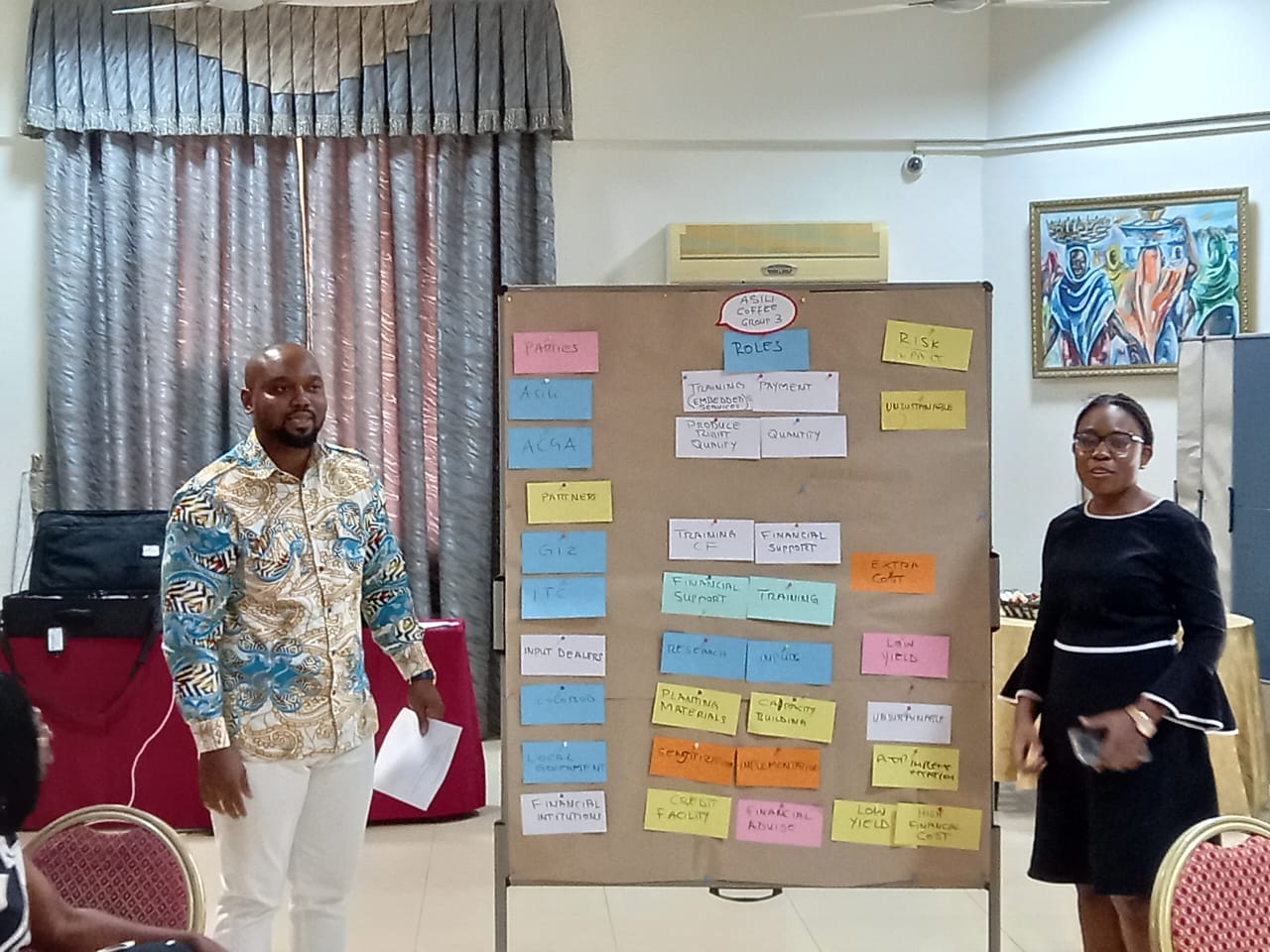
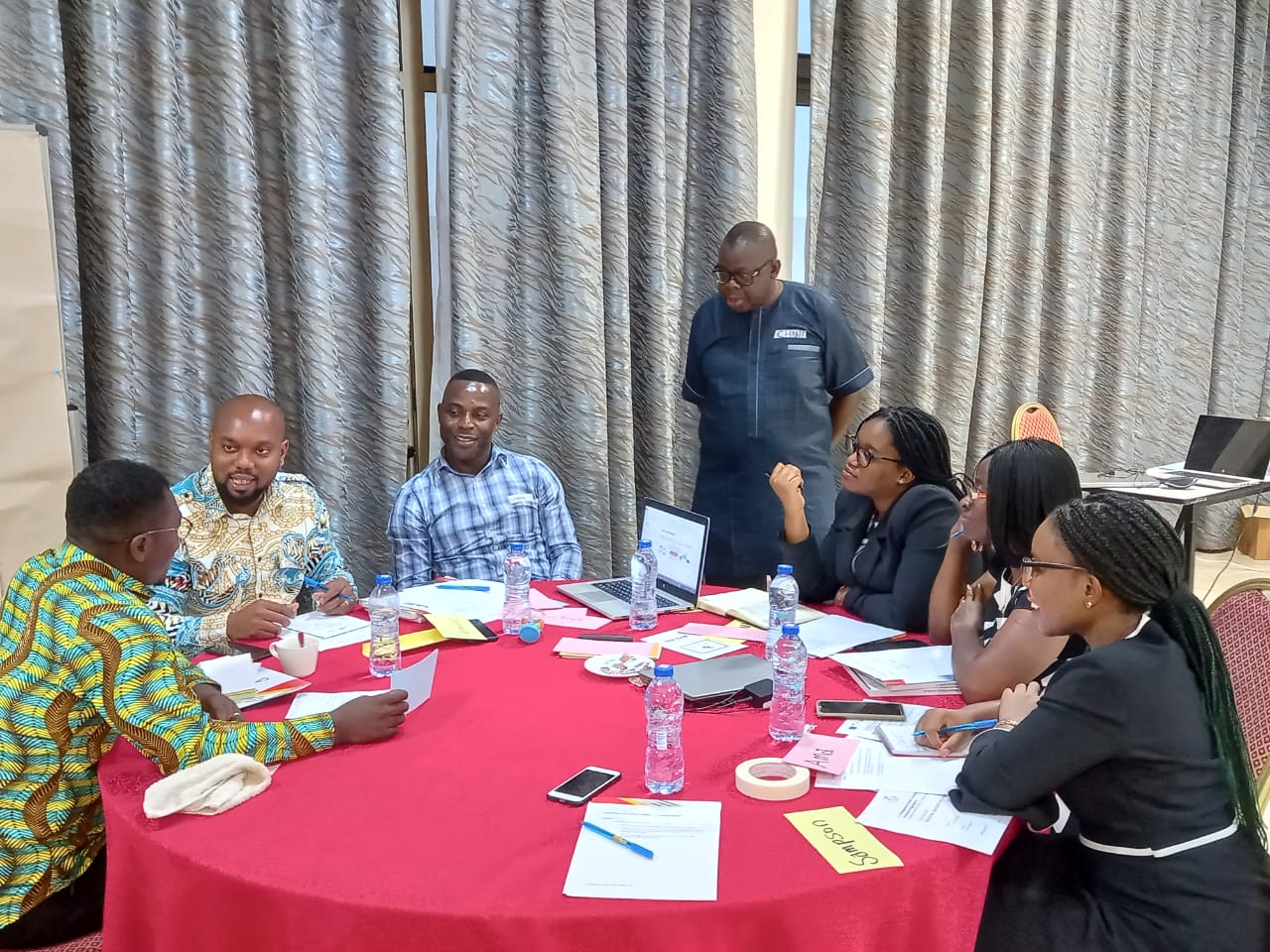
The objectives of the training included helping participants understand basic Contract Farming Management principles, acquire the skills to efficiently manage Contract Farming according to the Contract Farming Models and acquire the ability to coordinate harvesting, quality control, transport, logistics and documentation within a Contract Farming arrangement.
Participants were also trained on how to plan and initiate a Contract Farming scheme which involved the assessment of the capacity development and service needs of farmers and buyers in the agriculture industry and how to develop a Contract Farming business development plan.
We are thankful to have had the opportunity to acquire these key skills to support our clients in the agribusiness sector.

WOMEN, BUSINESS AND THE LAW 2023 – The Ghana Snapshot
Koranteng and Koranteng Legal Advisors acted as contributing experts to the Women, Business and the Law 2023 report, published by the World Bank Group yesterday. Lawyers Bridget Agyei, Ama Koguah Obese-Jecty and Afua A. Koranteng contributed to the report Ghana segment of the report.
Women, Business and the Law 2023 assesses 190 countries’ laws and regulations in eight areas related to women’s economic participation – mobility, workplace, pay, marriage, parenthood, entrepreneurship, assets and pensions – in an effort to identify barriers to women’s economic participation and encourage reform of discriminatory laws.
When it comes to constraints on freedom of movement, laws affecting women’s decisions to work, and constraints related to marriage, Ghana gets a perfect score.
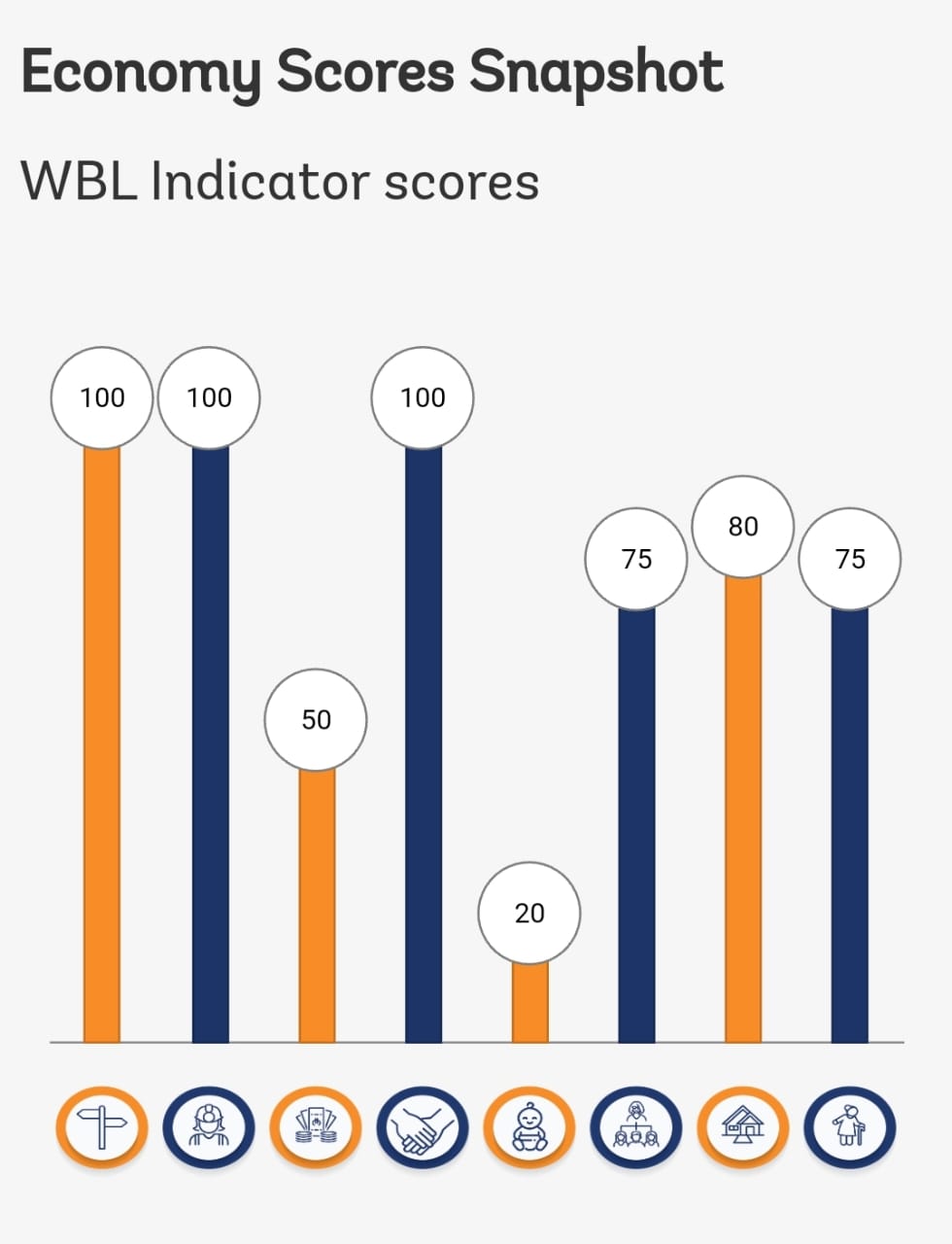
The Ghana Snapshot
However, for laws affecting women’s pay, women’s work after having children and constraints on women starting and running a business, Ghana could consider additional reforms to improve legal equality for women.
Source; wbl.worldbank.org
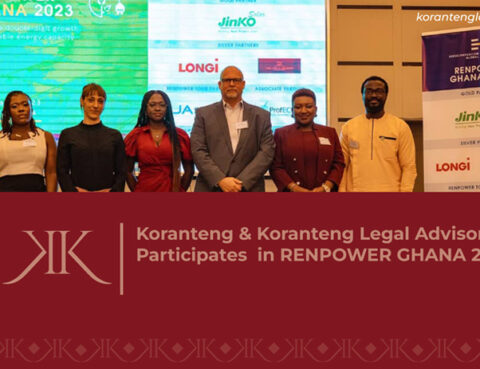
Koranteng & Koranteng Legal Advisors Participates in RENPOWER GHANA 2023
Koranteng and Koranteng Legal Advisors participated in
RENPOWER GHANA 2023 on 1st March, 2023, at the Labadi Beach Hotel on the theme: “Targeting a double-digit growth for renewable energy capacity.” Our Managing Partner Afua A. Koranteng was a Speaker and Moderator of the 4th Session of the Conference.
The conference was attended by renewable energy industry experts, regulators, financiers and government officials.
The conference consisted of 4 main sessions, addressing key topics:
· Session 1: Mapping and implementing Ghana’s energy transition journey
· Session 2: Ghana’s vibrant power generation sector – a level playing field for the participation of IPPs and developers
· Session 3: Pillars toward Ghana’s electrification plans – decentralized power, storage systems and hydrogen developments
· Session 4: Investing in Ghana’s energy transition and financing private sector investments in green technologies.
The conference was organised by Euroconvention Global and Koranteng and Koranteng were Silver Sponsors of the event.
#power #energy #renewableenergy #renewables #energysector #electricity #poweafrica #cleanenergy #greenfinance #greenenergy #gas #energytransition #powergeneration #investments #ghana #korantenglaw
Water crisis: a situation of laws without enforcement?
Water is life, and its importance cannot be denied. From nutrition to medication, it cuts across several spheres of our existence. Domestically, the discourse on water protection has been minimal, but now – more crucially than ever – the discourse on water protection needs to be increased for our own safety and for posterity.
Ghana’s Water Crisis
The report of the Water Resources Commission (WRC) on the state of water-bodies in illegal mining areas of Ghana as at June 2021 reveals the turbidity levels of water-bodies in those areas. Turbidity, as a good measure of water quality, is a measure of the degree to which water loses its transparency due to the presence of suspended articles. Per the report, the acceptable turbidity value for drinking water is 5 Nephelometric Turbidity Unit (NTU), while values of 80 to 150 NTU are acceptable for other water uses as appropriate. The table below extracted from the said report reveals the turbidity levels of the water-bodies stated therein.
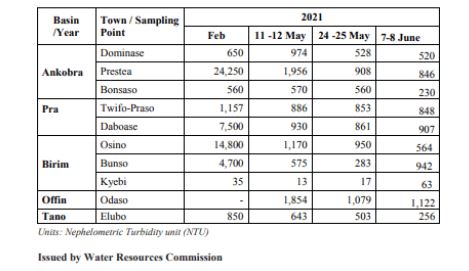
The combined sources of water pollution in Ghana are gradually making Ghana a water-insecure country. It has been predicted that Ghana may import water by 2030 if illegal mining is not banned. The Ghana Water Company Limited (GWCL) has also warned that Ghana may have to import large quantities of water soon if Ghana’s water-bodies are continually polluted through illegal mining activities.
According to the Communications Director of GWCL, the effect of illegal mining has increased GWCL’s operational cost because it has had to increase the quantity of chemicals used in treating water for production – mainly due to high turbidity levels. In 2018, the then Minister for Lands & Natural Resources reiterated the possibility of Ghana importing water by 2030 if the negative practices destroying Ghana’s water-bodies are not curbed. ffffhhhhhhoon jb import large quantities warned that stated that, by the Minister of Lands and naturla and their implementati
Toxic chemicals such as mercury are also released into water-bodies, endangering aquatic life. The fish that survive the deadly habitat are eventually harvested and consumed. Equally, agricultural communities in which galamsey takes place heavily rely on these water-bodies for farming. It is suspected that kidney-failure and the birth of newborn babies with deformities are on the rise in mining communities due to the consumption of polluted water.
The Head of Kwame Nkrumah University of Science & Technology (KNUST) School of Medicine and Dentistry, Dr. Paul Ossei Sampene, observed that illegal mining activities which contaminate river-bodies and food crops have devastating long-term effects on human health; and have significantly contributed to the strange diseases and birth-defects which have overwhelmed Ghana’s health facilities. This, he said, is largely due to the heavy metal pollution in the food chain that ends up in the human body.
The principal question to be asked is whether there are laws that protect our water-bodies from pollution; and which state agencies are responsible for the implementation of such laws.
Domestic Legislation Protecting Water-bodies
The Water Resources Commission was established by the Water Resources Commission Act, 1996 (Act 522) with the primary function of regulating and managing the utilisation of water resources in Ghana, and for the coordination of any policies in relation to them. Among the WRC’s functions are: granting of water rights; the proposal of comprehensive plans for conservation, improvement and development of water resources; to advise government on any matter likely to have an adverse effect on Ghana’s water resources; and also to advise pollution control agencies on matters concerning management and control of water resources pollution.
Section 24 of Act 522 provides that – except in accordance with provisions of the Act, or with approval of the Environmental Protection Agency (EPA) – a person who interferes with, alters the flow of, or pollutes or fouls a water resource beyond the level that the EPA may prescribe, commits an offence and is liable to a fine not exceeding five hundred penalty units (GH¢6,000) or a term of imprisonment not exceeding two years or to both.
The Act also gives the WRC power to grant water rights. Water rights refer to the legal right to use water from a specified source – e.g., a river, stream, pond or source of groundwater. It can also be defined as the right to use a portion of the public’s water supply. A grant of water rights is subject to parliamentary ratification. Parliament may, by resolution supported by the votes of not less than two-thirds of all the members of parliament, grant an exemption from the requirement of parliamentary ratification for certain classes of water rights.
Section 15 of Act 522 empowers the WRC – where it appears to it that the use of a water resource for any purpose at a particular place poses a serious threat to the environment or to public health – to serve on the user of that water resource an enforcement notice requiring the user to take the necessary steps to prevent or stop the activities.
It may interest you to know that under Act 522, when the Minister for Works and Housing is satisfied that special measures are necessary to protect water resources in or derived from an area, the minister may by an Executive Instrument (EI) declare that area or a part of it to be classified as a protected catchment area. Also, the minister may by notice in the Gazette declare that a water emergency exists in an area where the minister is satisfied that a serious water-deficiency exists; or is threatened by reason of drought, an accident, or unforeseen circumstances. This declaration is to be made after the minister has consulted with the District Assembly of the said area.
Additionally, the District Assemblies are to be supported by the Community Water and Sanitation Agency in promoting the sustainability of safe water supply and related sanitation services in rural areas and small towns. The enabling legislation of the agency is the Community Water and Sanitation Agency Act, 1998 (Act 564) which sets out a plethora of functions for the agency, with the object of providing safe water to rural communities and small towns.
Furthermore, the Water Use Regulations, 2001 (L.I 1692) provides a list of activities for which a permit from the WRC may be obtained. The list comprises domestic water use, commercial water use, municipal water use, industrial water use, agricultural water use, power generation water use, water transportation water use, fisheries (aquaculture) use, environmental water use, recreational water use and underwater (wood) harvesting.
Regulation 1 of L.I 1692 states that a person may obtain a permit from the WRC to undertake any of the above listed activities. The phrasing of Regulation 1 creates the impression that getting a permit is optional.
Where an application for a permit has been made, the WRC in considering such application shall be guided by the prevailing water policy, the domestic water use, and any other water use that fulfils the goals of national socio-economic development.
Also, where the WRC in consultation with the EPA considers a proposed water use to constitute a use requiring an Environmental Impact Assessment (EIA), the applicant shall attach to the application evidence that an EIA has been approved by the EPA. Where in the EPA’s opinion the proposed or existing water use requires an environmental management plan, that requirement shall be one of the conditions for granting the water-use permit. A permit granted under L.I. 1692 shall be for the period specified within the permit and may be renewed. An application for renewal of a permit shall be made to the Commission not later than 90 days before expiration of the permit.
In addition to the above, the Drilling Licence and Groundwater Development Regulations, 2006 (L.I 1827), make it mandatory for a person to obtain a water drilling licence from the WRC for constructing a well for the abstraction or monitoring of groundwater, or for research. The drilling licence is to be obtained by the company responsible for drilling the well.
To avoid or abate groundwater pollution, the environmental protection requirements of L.I. 1827 prohibit a drilling company from constructing a well in a manner that would contaminate or pollute groundwater or an aquifer. The WRC is empowered to inspect the well site through its authorised officer to ensure compliance with the Regulations. It is an offence for a person (a drilling company/drilling contractor) to carry out or to allow the carrying out of a well-drilling activity for the abstraction of water without a licence from the WRC.
It is also an offence under L.I. 1827 for a person to conduct drilling activities contrary to the conditions of his or her licence. An offender under L.I. 1827, on summary conviction, shall be liable to a fine of not more than 250 penalty units (GH¢3,000) or imprisonment for a term of not more than 2 years or to both.
The Environmental Protection Agency Act, 1994 (Act 490) makes the EPA responsible for prescribing standards and guidelines relating to water and other forms of environmental pollution, including the discharge of waste and control of toxic substances. The Environmental Assessment Regulations, 1999 (L.I 1652) outlines undertakings for which an EIA is mandatory. The list includes mining, petroleum, waste treatment and disposal, water supply and agriculture, among others. Watershed reserves, which are areas of erodible soils that are protected from development and retained in forest cover to provide lon-term water supply, are also considered to be environmentally-sensitive areas.
To advance the protection of water-courses, an EIA that includes reclamation plans is required for mining and other extractive industry. In mining and other extractive industries, reclamation involves the removal of equipment and unwanted structures – and modifying the mine site or land to an ecologically functional or economically usable state, with the goal of restoring the site or area’s topography.
An environmental permit is also required for agriculture and its related activities; mining (including milling, quarrying and oil wells); manufacturing; non-metallic mineral products; wholesale trade and accommodation; and food and beverages. L.I.1652 breaks down the activities that fall under these very broad heading or categories. A holistic reading of L.I. 1652 suggests that the legal requirements such as the EIA and Environmental Permit are measures to protect water sources and the environment in general from destruction or pollution.
Additionally, for the protection of watershed and forest reserves, the Forestry Commission Act, 1999 (Act 571) makes the Forestry Commission responsible for managing Ghana’s reserves or protected areas by monitoring the condition and extent of the nation’s forest and wildlife resources, as well as properly planning for the protection and development of forest resources in a sustainable manner.
Minerals and Mining Act, 2006
Notwithstanding all these seemingly advancing provisions on the protection of water-bodies, section 17 of the Minerals and Mining Act, 2006 (Act 703) permits the holder of mineral rights to obtain, divert, impound, convey and use water from a river, stream, underground reservoir or watercourse within the land subject to the mineral rights. This very extensive permission is however subject to the mineral rights’ holder obtaining the requisite approvals or licences under the Water Resources Commission Act, 1996 (Act 552).
This means that a licenced mineral rights holder can divert a water-course to the disadvantage of the immediate and wider community. This provision does not permit mining in rivers, and the law envisages legal mining without the incidence of water pollution. That notwithstanding, the possibility of polluting water-courses in the exercise of the wide permission granted under section 17 of Act 703 cannot be completely excluded. The large-scale pollution of water-courses oiver the past few years appears to have stemmed from illegal mining.
International Conventions
On the international front, Ghana officially became a party to the 1992 Water Convention and the 1997 Watercourses Convention on the 20th of September 2020. The 1992 Water Convention is the abridged title of the 1992 UNECE Convention on the Protection and Use of Transboundary Watercourses and International Lakes, which is serviced by the United Nations Economic Commission for Europe, while the 1997 Watercourses Convention is the abridged title of the United Nations Convention on the Law of the Non-Navigational Uses of International Watercourses.
Both conventions include provisions that border on principles such as the obligation not to cause significant harm; equitable and reasonable utilisation; the general obligation to cooperate; notification and response relating to planned measures; protection and preservation of ecosystems; preventing, reducing and controlling pollution; and the regular exchange of data and information between party states that share a transboundary watercourse, as the Conventions cover international watercourses.
Prior to these, Ghana was already a party to the Volta Basin Convention (Convention on the Status of the Volta River and the Establishment of Volta Basin Authority) to which the Heads of State of Mali, Benin, Burkina Faso, Ivory Coast, Ghana, Mali and Togo appended their signature on the 19th of January 2007.
These international legal regimes for water protection are necessary for cooperation between states toward the protection and use of Ghana’s transboundary waters. Considering the difficulties in enforcing global environmental law, it would be best for Ghana to ratify these conventions promptly. Ratification is essential to step-up compliance with these Conventions, to bring our domestic laws in sync with our international obligations, and also to avoid a situation where the country would invoke domestic laws to justify failure to perform its obligation under the Convention.
It is a principle of international law that a state party cannot invoke the provisions of its internal law as a justification for its failure to perform its obligation under an international agreement to which it is a party – such as the 1992 Water Convention and 1997 Watercourses Convention. Ratification of these conventions therefore provides motivation for compliance and also intensifying the enforcement of our domestic laws and implementation of these Conventions.
Regional Concerns
The effect of Ghana’s water bodies’ pollution transcends borders. This is because the Volta, Tano, Bia and Todzie-Aka Rivers also happen to be transboundary river basins. These rivers generate about 80 percent of freshwater flow, of which around 30 percent flows from outside Ghana’s international borders; Togo, Burkina Faso and Ivory Coast. In early 2017, Ivory Coast raised concerns that the Bia River had been polluted by illegal mining activities in Ghana -resulting in a cessation of production and supply of water to its population and civil unrest.
Also, in line with the 1992 Water Convention and 1997 Watercourses Convention, Ghana has an arrangement with Burkina Faso for sharing data on water discharges from the Bagre Dam in Burkina Faso, and on planned measures or developments. This is with respect to the principle of regularly exchanging data and information between party states that share a transboundary water-course.
Enforcement
The United Nations Development Programme noted that: “The availability of water is a concern for some countries. But the scarcity at the heart of the global water crisis is rooted in power, poverty and inequality, not in physical availability”. The people who tend to suffer most are those in communities affected by water pollution – who often happen to be destitute and have no alternatives.
Rooted in the problem of water protection is lack of enforcement for the laws. In respect of the institutional framework for water protection, there are a number of institutions that manage and develop Ghana’s water resources at the policy, organisational and operational levels.
At the policy level, there are the Ministry of Sanitation and Water Resources – which principally works through its Water Directorate; and the Ministry of Local Government and Rural Development. At the organisational level, there are the WRC, Community Water and Sanitation Agency (for rural water supply and sanitation provisions) and GWCL (for urban water supply). At the operational level, there is principally the Metropolitan, Municipal and District Assemblies (MMDAs).
There are also Non-Governmental Organisations (NGOs) and Community Based Organisations (CBOs) which take charge of and coordinate water resources management activities at the lowest level. The efforts of NGOs and CBOs, at best, can be described as supplementary to efforts of the institutions mandated to ensure water protection.
The WRC in July 2022 was adjudged the Most Efficient Regulator in Ghana at the maiden edition of the Public Enterprise League Table organised by the Ministry of Public Enterprise; a testament to its efforts. It is high time the other water protection agencies stepped up their efforts in protecting our water-bodies from pollution by enforcing the laws that empower them. If necessary, the assistance of law enforcement agencies should be sought. Roping-in the assistance of townsfolk to blow the whistle on offenders would also go a long way in protecting our water-bodies from destruction.
Conclusion
With climate change causing disruption to weather patterns, season shifting, extreme weather conditions as well as flood and drought in places which hitherto had no such disasters, guarding against the unavailability of water will be one of the global challenges of our time – especially for Ghana, as it is suffering from the menace of galamsey.
The laws discussed above are not exhaustive but provide a broad perspective on the legal protection afforded water-bodies in Ghana. The goal is that by 2030 Sustainable Development Goal (SDG) 6, Ensuring Access to Water and Sanitation For All, would have been far advanced in many countries. The 2024 general election is fast approaching, and as politicians mount their campaign platforms we should seize the opportunity to ask about their proposed national framework to advance water protection and protect your right to water and sanitation.
Source: thebftonline.com
AMENDMENTS TO TAX LAWS IN GHANA 2023
The 2023 budget came with a few changes to Ghanaian tax laws and these amendments
have been passed by Parliament accordingly.
ELECTRONIC TRANSFER LEVY (AMENDMENT) ACT, 2022 ACT 1089
The Act was amended to:
- Reduce the Electronic Transfer Levy charge from 1.5% to 1% on electronic transfers.
REVENUE ADMINISTRATION (AMENDMENT) ACT, 2022 ACT 1086
The Act was amended to:
- Give power to the Commissioner-General to establish a monitoring mechanism to
verify the actual revenue collected by a taxpayer for the purpose of computing taxes
due. - Impose a penalty of 5% of annual gross revenue in addition to other penalties
under the Act of a person who refuses to permit the Commissioner-General or a tax
officer physical access to the physical network node or infrastructure or system of
that person.
THE VALUE ADDED TAX, (AMENDMENT) NO. 2 ACT, 2022 (ACT 1087)
The Act was amended to:
- Provide for an increase in the Value Added Tax rate from 12.5 % to 15%.
- Remove the tax exemption for imported textbooks and imported newspapers,
architectural plans and similar plans, drawings, scientific and technical works,
periodicals, magazines, trade catalogues, price lists, greeting cards, almanacs,
calendars, diaries and stationery and other printed matter. - Remove Betting, Gaming, and other games of chance out of the scope of VAT.
The law and inflation – a history of price control legislation
The law and inflation – a history of price control legislation
Recently in Ghana, some sellers have increased the price of their goods by as much as 300 percent. The inflation rate in Ghana as measured by Combined Consumer Price Index as at October 2022, was 40.4 percent[1].
Inflation is a perennial problem that has plagued Ghana. Inflation may be considered good or bad. Two percent is the safe level of good inflation – meaning the kind of inflation that is natural and expected for a healthy economy without being malignant to economic growth. Lower than that and you have deflation, which is also toxic for an economy. Since 1965, Ghana has only achieved 2 to 3 percent inflation four (4) times; 2005, 2009, 2014 and 2020 respectively. That means there’s been a whopping 61 years when Ghana has been within dangerous levels of inflation.[2]
Before we dive into the battle that successive governments have waged against inflation, we need to clarify what inflation is. The general misconception is that inflation is ‘when prices go up’; however, it is more complex than that. The standard definition of inflation as defined by the Federal Reserve of the United States and which most economists would apply is this: a general increase in the overall price level of the goods and services in the economy.
Economists use a more technical explanation: Inflation is caused by an increased quantity of money in the system. Inflation does not have anything to do with the physical goods themselves, it is concerned with excessive money. The effect of inflation is rising prices.[3]
An inflation rate of 2% annually, which is considered as good inflation, has certain benefits. Good inflation allows prices and wages to adjust upward. Bad inflation or deflation can deplete the value of savings, it can trigger a feedback loop of hoarding and supply shortages; and it discourages local and external investment in the economy because the profit margin ceases to justify the risk taken.
Successive governments have tried to fight back the scourge of inflation since independence, with varying degrees of success, through things like penalising hoarding or subsidies for essential goods. One of the weapons used against inflation is legislation, particularly in the form of price controls. Price control is when the legal minimum or maximum prices are set for specified goods. Price controls are usually implemented as a means of direct economic intervention to manage the affordability of certain goods and services.[4]
Price controls have been employed as a top-down means of creating economic stability since the 3rd century BCE in Ancient Egypt for regulating the price of grain. Much reviled by free-market capitalists and libertarians, they have been received with much criticism – usually associated with less democratic governments and a centrally-planned economy. But how have price control laws worked particularly? And how did they attempt to do it? Are there laws that can be engineered to make price controls work? And if not, why not?
The colonial era – origination of price control
Price control legislation began under the colonial government in 1949 with the Control of Prices Regulations. Passing the ordinance was sparked by an increase in prices and general suffering of the population following a global supply shortage.
The Nkrumah era – hoarding and food shortages
The Nkrumah government sustained the import trade policy of the Colonial covernment till 1962. However, all consumer goods were placed on an open general licence. The new policy was expected to reduce prices, increase foreign exchange and reduce economic hardship; but it actually had the opposite effect, sending prices skyrocketing. In order to save the country from the brink, government decided to criminalise infringement of price controls. The bill was set before the National Assembly in 1962 and duly passed as the Control of Prices Act, 1962 LI 181.1, to replace the Control of Prices Regulations, 1949. The memorandum of the bill declared that it was an act “designed to replace the present machinery for the control of prices which is considered very unsatisfactory“.
The Act faced a myriad of setbacks in its implementation. First of all, the law had a legal loophole that allowed many sellers to get away with setting unlawful prices. If an agent was caught breaking the law, they would simply blame their employer, and the employer could in turn blame the agent for insubordination and setting the unlawful price – which meant that the employer had to be acquitted. Secondly, there existed an operative phrase in section 2(5) which was a “willingness to enter into any transaction of sale“. The defence of the sellers was often that the foods were not exposed for sale, or that owners of the goods were absent.
The price inspectors, even though empowered by the Act, did not have powers of arrest. This severely undercut their ability to enforce provisions of the Act.
Another limitation was that the law ended up being enforced mostly in departmental stores and high-end shops, leaving the majority of the population that shopped in local markets without protection of the Act.
This led to importers and retailers hoarding in order not to lose profits they would otherwise have received – and a resulting problem of hoarding and food shortages. This situation compelled government to amend the existing law. The law was thus amended with the Control of Prices (Amendment) Act, 1965, which made hoarding an offence.
Section 4A (4) provided that any person who purchased or caused any other person to purchase on his behalf any goods with intent to hoard the goods, was guilty of the offence of hoarding. It was also an offence to purchase goods in excess of one’s immediate requirements. A person could not obtain goods in quantities unreasonably in excess of his/her immediate requirements. The law further empowered the Minister of Trade, either by himself or by any person authorized by him in writing, to sell such seized goods to such members of the consuming public who required them. Despite these ambitious measures, unfair trade practices persisted.
The National Liberation Council era – price control inspectors
After the National Liberation Council (NLC) ousted the Nkrumah regime in 1966, they made commitments to fixing the country’s economic woes. They started by reducing consumer goods importation – which led to further supply shortages and had the opposite effect to what they desired, a further increase in prices. To curb this predicament, the N.L.C. passed the Control of Prices Act, 1962 (Amendment) (No. 2) Decree, 1966.
The amendment empowered every police officer not below the rank of inspector – and every officer in the Armed Forces not below the rank of sergeant in the Ghana Army and its equivalent in the Ghana Air Force and in the Ghana Navy – with all the powers of a price control inspector.
This amendment was a reaction to the lack of enforcement that beset the previous Act. The police were conferred with the powers of arrest and detention.
The overall goal of the Act – to help consumers get goods at government-regulated prices – was not successful, as few traders actually sold their goods at the controlled prices; and when they were caught, only a minority were successfully prosecuted. Enforcement was ineffective outside of departmental stores in middle- to high-income neighbourhoods.
The massive inflation rate did taper off in the months between 1968 and 1969 since importation increased and supply outstripped demand, as the purchasing power of Ghanaian consumers also shrunk – leaving excess goods available and consequently a natural price stabilisation.
The Busia era – currency devaluation
From 1969 the Busia government inherited a myriad of problems, including a crippling national debt. This made importers angsty and threaten to cut supplies of various goods. In order to be more competitive with Ghana’s products abroad, government decided to devalue the currency by 48.3%, causing prices to catapult.
The National Redemption Council (N.R.C.) era – restricted import list and house to house checks
The National Redemption Council (N.R.C) took the reins of government, and on 29th January 1972 abolished the open general licence and introduced the Restricted Import List. This triggered a chain reaction of events that would necessitate another price control law. Under the Restricted Import List, many goods were blocked from being imported into the country. This saw a massive shortage of those goods. The N.R.C also unilaterally cancelled Ghana’s external debt obligation – triggering an international backlash and a trade blockade against Ghana. Shortages ratcheted up, as well as massive increases in inflation. To curb this, government passed the Price Control Decree, 1972.
The Price Control Decree, 1972, had provisions that were very similar to the prior price control laws. The penalty for contravening a price control order on summary conviction was a fine not exceeding one thousand cedis or imprisonment not exceeding five years or both, on summary conviction. Section 4(a) of the Price Control Decree, 1972, authorised forfeiture of goods upon conviction of an offence under the Act. The offender was also compelled to pay a person sold goods beyond the controlled price double the price that he charged the person, or in default of such payment to be imprisoned for a term not exceeding six months. This was to encourage reporting by customers who were charged above regulation prices.
Section 5 of the Price Control Decree, 1972, sustained the criminalisation of hoarding. Traders had started the practice of circumventing the anti-hoarding provision by storing goods in scattered locations. Hence, the Decree stated in Section 6(3): In considering whether goods have been kept or obtained for the purposes of hoarding, it is immaterial that such goods are kept in several places or have been obtained in separate lots or upon separate occasions. In addition to fines or imprisonment for hoarding, all goods in connection with the offence committed were to be forfeited to the Republic.
In order to counter the loophole that traders were regularly taking advantage of by claiming that goods on display were not up for sale under the pretext of ‘the owner is not here”, Section 7(1) decreed that any uniformed Police Officer not below the rank of Inspector, or its equivalent for the Armed Forces, was empowered to seize goods where they were satisfied that the seller was unreasonably refraining from selling them.
Furthermore, no civil action could be instituted against any officer who acted under section 7 in good faith. It also criminalised smuggling, on the penalty of an imprisonment term not exceeding five years on summary conviction without the option of a fine; and all goods in respect of which the offence was committed were to be forfeited to the Republic.
Section 10 of the Price Control Decree, 1972, maintained the defence available to employers and shop owners that were acquitted. The Schedule to the Decree also provided that it was an offence to smuggle goods like corned beef, sardines, rice, sugar, milk, flour, bar soap, codfish (kako) matchets and baby foods out of Ghana.
In spite of the ruthless measures instituted by the Price Control Decree, 1972, to deal ruthlessly and swiftly with those who infringed price control orders, some traders continued to sell above controlled prices.
Lack of conformity with the laws became so pernicious that the Head of State, Colonel I. K. Acheampong, issued a warning to traders on 7 April 1972 – that “a house-to-house check would be introduced to uncover hoarded goods if middlemen continued to hoard goods to create artificial shortages”.
Following this, the penalty for hoarding was significantly stiffened to a term of imprisonment not less than fifteen years nor more than thirty years.
The Prices and Incomes Board Regulations, 1973 – Prices and Income Board Consent
In 1973, the Prices and Incomes Board issued the Prices and Incomes Regulations, with perhaps the most flagrant and over-exuberant price control legislation in the nation’s history.
The Regulations provided that no person should increase the price of any goods without the prior consent in writing of the Prices and Incomes Board. Further, where a person intended to sell any goods not previously available in Ghana or which he had not previously sold, he could only sell such goods after the proposed price for the goods had been approved in writing by the Prices and Incomes Board.
This caused such controversy that Professor Date-Bah described this regulation as an “obviously preposterous and unworkable provision in an inflationary economy, in the sense that the board would need to have a vast bureaucracy reaching into the remotest villages”.[5]
On paper, it brought a solution to the inflation problems of the country. But in practice, implementation was ineffective, leading to the next legislation a year after: the Price Control Decree, 1974.
The Price Control Decree, 1974 (N.R.C.D 17) – a mysterious act
The decree repealed the Price Control Decree, 1972, and the Price Control (Amendment) Decree, 1974. It is important to note that the new law did not make any significant changes, thus the motivation behind its passing was a mystery. Was it a response to public backlash? Or a reinforcement of the resolute provisions of the prior Act?
The Price Control Decree, 1974, provided that the Commissioner of Trade would act on the advice of the Prices and Incomes Board in prescribing the controlled prices of consumer goods.
The Price Control Decree, 1974, introduced a new provision which provided a sanction of imprisonment with no availability of fines for repeat offenders. Where an offender charged 20% above a regulated price, and had been previously convicted under the law within the past two years, he/she would be liable on summary conviction to be jailed not less than a month and not more than five years.
The courts were empowered to impose the further sanction of forfeiting all goods in respect of which the offence was committed to be given to the Republic, as well as ordering the offender to refund a sum equal to double the price which he charged the purchaser.
The refund of any illegal excess on the price charged by the seller and extracted from the employer must be paid immediately after conviction, where in the prior act the refund could be brought at any time.
The Decree further banned sellers from selling for one year after conviction for an offence under the Act. It also eliminated the option of a fine for the offence of hoarding and mandated the court to impose a term of imprisonment not exceeding five years, in addition to forfeiting the goods to the Republic. The law also provided that vehicles used in the offence of smuggling would be forfeited to the state if the owner of the vehicle could not be found within 30 days.
The Decree banning traders from selling for a year if convicted was particularly ineffective in local markets, because the ban only forfeited the trader’s market stall where they operated. They could simply set up stalls in other markets.
Like its predecessors, the Price Control Decree, 1974, could not effectively protect the consuming and buying public due to the national shortage of basic goods. Hoarding and profiteering still ran rampant. This led to passage the Commercial Houses and Supermarkets (Sale of Specified Goods) Decree, 1976.
Commercial Houses and Supermarkets (Sale of Specified Goods) Decree, 1976 (S.M.C.D. 17) – Black Market Trade
This law provided that the goods specified in the decree’s Schedule could not be sold except by a commercial house or supermarket designated by the Commissioner for Trade.
In order that consumers would not give unapproved stores their money and purchase goods from them, government passed the Commercial Houses and Supermarkets (Sale of Specified Goods) (Amendment) (No. 3) Decree, 1976, which made it an offence even to purchase specified goods from any source other than the designated commercial houses and markets.
The decree was ineffective due to the fact that there were severe shortages of food in the country, which made black market trade flourish and consumers to ignore the prohibition of buying goods from unapproved stores.
The A.F.R.C. era up to the present day
During the era of the Armed Forces Revolutionary Council (A.F.R.C.) some traders were forced to sell their goods at the controlled prices. However, no official price control laws were passed.
By the time the A.F.R.C. handed over power to the People’s National Party led by Dr. Hila Limann on 24 September 1979, the supply situation had deteriorated. The prices of goods continued to escalate; and by 31st December, 1981 – when Flight-Lieutenant Jerry Rawlings again took over the government of Ghana and set up the Provisional National Defence Council (P.N.D.C.) – many everyday consumer items (rice, maize, oil, milk etc.) were being sold for four or five times the controlled price. Therefore, the immediate post-coup period was again devoted to curbing increases in the prices of consumer goods through the application of physical force. That did not do much to curb the rising prices of the time.
Modern price regulation policy: the age of subsidisation
In sub-Saharan Africa, most price control legislation has slowly been phased out since the military era; but it has not disappeared in all its forms. As recently as 2020 during the COVID-19 pandemic, the South African Trade and Industry Minister, Mr. Ebrahim Patel, announced regulations to control the pricing of goods from major retailers in the country. This came after South Africans embarked on panic-shopping sprees in the wake of riots, general public unrest and rising food prices.[6]
Across the continent, price regulation policy has taken a new dimension. Instead of saddling the wholesalers and producers with the burden of losing profits due to brute-forced lower prices, price regulation has taken a new form in Africa: government subsidies.
This policy, mainly manifesting in the form of petroleum, food and fertiliser subsidies, avoids the shortages and economic upheaval brought by price control laws while keeping the benefits; ensuring that fuel and food costs are lower than the prevailing global rate, making the cost of living much more affordable for the ordinary citizen.
However, this is not without its own perverse effects and is fast becoming a load that governments may soon no longer be able to afford to carry.
Deputy Managing Director of the International Monetary Fund (IMF), Antoinette M. Sayeh, has cautioned on the slippery slope of subsidies as a means of price regulation.[7] She states:
“Indeed, these subsidies come at a high fiscal cost. Across 10 sub-Saharan African countries we have data on the cost ranging from 9 percent to 45 percent of public agricultural spending (or some 1.5 percent of GDP on average) in 2014. Country experiences from the region, however, suggest that the contribution of agricultural subsidies to improving food security and reducing poverty has only been weak.”
In a paper published in 2013 by the International Monetary Fund (IMF), titled Energy Subsidy Reform in sub-Saharan Africa: Experiences and Lessons, the cost of price regulation for petroleum is an open wound steadily bleeding cash from African states; cumulatively adding up to a significant expense over time. It states:
“In spite of reform efforts, energy subsidies still absorb a large share of scarce public resources in sub-Saharan Africa.” The argument could be made that this is a long-term investment that will be paid back in the long-term in form of taxes and revenue by the citizens that are able to grow their businesses due to these subsidies; but the statistics show a nuanced ramification of these policies. Ultimately, energy subsidies benefit the rich the most (those less likely to need it); however, the poor are also helped by it, but not to a proportionate degree. The IMF study says:
“These energy subsidies mostly benefit the better off, but their removal also would hurt the poor. Energy subsidies benefit mostly higher-income groups because they consume the most. Electricity subsidies are particularly regressive because connection to the electricity grid is highly skewed toward higher-income groups. Nevertheless, the welfare impact of eliminating subsidies (without compensating measures) would be significant for the poor because the share of total energy in their total household consumption is the same as the rich, although there are important differences in the types of energy products consumed across income groups.”
Regarding the economies of sub-Saharan African countries, the effects of price regulation with government subsidies were found to have grave effects. The report says:
“Energy subsidies have a negative impact on economic efficiency, in particular on allocation of resources and on competitiveness and growth. Energy subsidies can lead to resource misallocation through overconsumption. They may crowd out more productive government spending, as indicated by a negative relationship between fuel subsidies and public spending on health and education.”
In summary, the landscape of price regulation has gotten less draconian on traders, which is something to be desired; but the massive government spending required to lower prices on the end consumer might be a slowly ticking time-bomb for the continent.
Why conventional price control laws don’t work
Price is information. Price serves as a signal to people regarding where and whether or not to invest their money in a particular good or sector. Higher prices encourage consumers to conserve their money for a better time to buy, or to buy other products. Likewise, prices show innovators where they should commit their time and effort. They help entrepreneurs decide where they should invest their money.
But prices are effective only when they reflect actual economic realities. They should rise and fall as natural consumer preferences change, or when inputs become more or less scarce. When prices don’t reflect these changes, and are synthetically forced to be low, the result will be shortages or excess. In the case of shortages, the cost to make more of the good is less than its value to society, yet no one has the incentive to produce more. Conversely, an excess supply means resources are wasted on goods that cost more to make than their value to society. Whether it is a shortage or an excess, the outcome is that society gets less of what it wants.
Price control leads to scarcity for essential goods because suppliers are forced to sell at lower prices than the default market value. This does not provide incentives to increase output. Just like a signal of coming rain encourages people to get their umbrellas out, a price signal of increased demand triggers a supply response because suppliers see a potential increase in profit. This only happens if they are not constrained in price-setting.
Therefore, the most helpful weapon against shortage of essential goods is less price control, not more.
How price control laws can work
Legislation enforcing fixed prices have not all been failures throughout history. There is a version of them that operates, quite successfully in fact, for modern liberalised free market economies like the United States, United Kingdom and the European Union. This is in the form of anti-price gouging legislation.
Price gouging is when sellers take advantage of spikes in demand by charging exorbitant prices for necessities, beyond the average market price of those goods – often after a natural disaster or other state of emergency.
The reason why this works is chiefly because the authoritative hand of the state only intervenes as a matter of rare exception, not permanently. The laws of supply and demand are allowed to operate and signal sellers as to what the market wants, which prevents the shortage and hoarding cycles that rigid price-controlled markets typically devolve into.
Anti-Price Gouging Legislation Round the World
Thirty-seven states in the United States, including the territories of Guam, Puerto Rico and U.S. Virgin Islands, deem price gouging during a disaster or state of emergency as a violation of unfair or deceptive trade practices law. Most of these laws provide for civil penalties, as enforced by the state attorney general, while some state laws also enforce criminal penalties for price gouging violations.[8]
South Africa has legislation like the Competition Act, which only prohibits excessive pricing by ‘dominant’ businesses. The law provides that a business with a market share above 45 percent is presumed dominant in absolute, while one with a market share of above 35 percent is rebuttably presumed dominant – unless it can demonstrate that it does not have ‘market power’. Companies with market shares of less than 35 percent may also be dominant where they are found to possess highly influential market power.
With the European Union, while there are no price gouging laws, under EU competition law companies can be sanctioned for using their market power to exploit consumers, including by price gouging. Article 102 of the Treaty on the Functioning of the European Union (TFEU) provides that an abuse by a ‘dominant’ business may consist of “directly or indirectly imposing unfair purchase or selling prices or other unfair trading conditions”. Dominance has been defined as “the power to behave to an appreciable extent independently of its competitors, customers and ultimately of its consumer”. Other rules may also be applied, like the EU Unfair Trade Practices Rules (May 11, 2005 Directive 2005/29/EC) which is implemented and enforced at the member-state level; and several European jurisdictions have persuaded platforms such as Amazon and eBay to delist products advertised for sale at inflated prices when the seller is not a ‘trusted seller’ on that platform.
Similarly, there are no price gouging specific laws in the United Kingdom. The UK’s Competition and Markets Authority (CMA), however – which “works to promote competition for the benefit of consumers” – launched a COVID-19 Taskforce to monitor price gouging and set up a form for consumers to report businesses that were perceived as behaving ‘unfairly’.[9]
The key ingredient to drafting price regulation laws – that do not trigger destructive shortage and hoarding downward spirals – appears to be employing them sparingly; and they must be necessitated by exceptional, specific circumstances or only affect a limited class of sellers.
However, there is a school of thought which posits that anti-price gouging laws are just as bad as hardline price control legislation. The argument is that anti-price gouging laws prevent allocative efficiency. Allocative efficiency holds that when prices function properly, markets tend to allocate resources to their most valued uses. In turn, those who value the good the most and are able to afford it will pay a higher price than those who do not value the good as much or who are unable to afford it.
When a good is in short supply and highly valuable in a crisis, but yet affordable for all, shortages happen much faster if the seller cannot price its value higher than average market price.[10]
Conclusion
Price controls have absolutely failed to achieve their desired impacts, besides short-term gains which are outweighed by long-term disastrous effects on the economy. This is because of:
- Lack of capacity to enforce: There are simply too many shops in too many places for security services to moderate always everywhere. Unless we morph into an Orwellian police state, which is in the territory of fascism and authoritarian tyranny, that is not something practicable – nor should we even desire it.
- Corruption: The enforcers of these price control laws were ineffective also due to the corruption culture wherein you can get eyes to look away in exchange for some compensation… and our culture is sadly not past that yet.
- Business Interests: Business owners would rather just not sell than sell at a loss. Business owners have demonstrated over and over in the nation’s history that in the face of government-mandated sale at an unfavourable price, they can simply hoard the goods and wait out the storm. As long as that natural self-preservation instinct remains, price control laws cannot work in any meaningful way.
The bottom line is this: short-term gains versus long-term gains.
- Do we want fleeting success followed by scarcity, hoarding and a depleted economy? Then your answer is stiff price control laws.
- Do we want short-term grinding hard times followed by an inevitable market correction when sellers reduce prices because there are not enough willing buyers and supply exceeds demand? Then we should let the forces of supply and demand work, supported by light government subsidies.
These are the hard choices facing us today, and we must make the hard choice and choose liberalised trade – for the best choices are almost always the ones that demand sacrificing instant gratification.
The writer is an Associate of Koranteng and Koranteng Legal Advisors, a corporate and commercial law firm in Accra, Ghana. He can be reached by info@korantenglaw.com.
[1] Ghana Statistical Service, ‘Consumer Price Index ‘ November, 9, 2022, pg 3
[2] In research conducted by Macrotrends.net (https://www.macrotrends.net/countries/GHA/ghana/inflation-rate-cpi )
[3] ( https://www.managementstudyguide.com/myth-inflation-and-scarcity.htm )
[4] ( https://www.investopedia.com/terms/p/price-controls.asp )
[5]S. K. Date-Bah “Legislative Control of Freedom of Contract” in Essays in Ghanaian Law p. 125
[6] https://www.sabcnews.com/sabcnews/patel-announces-regulations-to-control-pricing-of-goods/
[7] A speech titled Supporting Food Security in Sub-Saharan Africa amid the COVID-19 Pandemic and Climate Change, calling for structural reforms in the agricultural sector.
[8] https://www.ncsl.org/research/financial-services-and-commerce/price-gouging-state-statutes.
[9] https://www.proskauer.com/blog/price-gouging-restrictions-beyond-the-50-states#.
[10] (M. Zwolinski (2008). “The Ethics of Price Gouging”. Business Ethics Quarterly.)

Bank of Ghana Financial Literacy on Mobile Loan Defaulters
Have you acquired a loan through any mobile money platform? Repay your loan on time! In case of any difficulties, contact the mobile money provider or the credit provider involved.
Credit history of all mobile money loan customers is kept in the credit reporting system managed by credit bureaus licensed by BOG. Under the Credit Reporting Act, 2007 (Act 726) this data is shared with other lenders to enable them to know the credit behaviour of borrowers, to help with appraisal of loan applications.
Repay your mobile money loans promptly to maintain a good credit history to help you access more loans in future. Your credit history shows how you managed the repayment of your past loans including the timeliness of the payment.
Failure to repay your loans will have a negative effect on your credit report and also adversely affect your chances of obtaining loan facilities from financial institutions and credit providers in future. For any enquiries or complaints:
T: 0302665005
Whatsapp: 0596912354, 0501502270
Email: complaints.office@bog.gov.gh
SGD.)
SANDRA THOMPSON (MS.)
THE SECRETARY
30TH NOVEMBER 2022
Newsletter April 2022 — Koranteng & Koranteng Legal Advisors