
GIIF, IFC TARGET GREEN INFRASTRUCTURE FINANCING
GIIF, IFC TARGET GREEN INFRASTRUCTURE FINANCING
The Ghana Infrastructure Investment Fund (GIIF) and International Finance Corporation (IFC) have signed a partnership deal that will ensure projects undertaken are climate-friendly and sustainable, Chief Executive Officer of the Investment Fund, Solomon Asamoah, has said.
GIIF is currently implementing internationally-recognised environmental management systems which integrate environmental and social requirements into its investment decisions and business processes.
In an interview with the B&FT, following a workshop on the adoption of green building practices, Mr. Asamoah said: “We want to make sure that all of our projects are climate-friendly, sustainable and do not damage the environment.”
“It would be very terrible if GIIF was to finance a project in local communities and it didn’t work out well for them. So, we try to structure with the latest climate-friendly policies,” he added.
GIIF is collaborating with IFC, a member of the World Bank Group, on accelerating the adoption of green building practices through the promotion of voluntary green building certification programmes based on the EDGE (Excellence in Design for Greater Efficiencies) software, standard and certifications system.
This partnership will ensure that all GIIF projects are EDGE-certified.
“We are very happy partnering IFC to improve the quality of our investments in the area of climate-friendliness,” the CEO remarked.
Over the last 4 to 5 years, GIIF has committed about US$290million of its US$325million funds. This covers 12 projects under the GIIF portfolio, which include the Kotoka International Airport (KIA) Terminal 3, major expansion at the Takoradi Port, as well as power and tourism projects in the mining sector.
“We are trying to make sure that Ghana’s infrastructure improves, and ensure that Ghanaian entrepreneurs and sponsors benefit from the investments that we do.”
Strategic Plan
Highlighting the plight of tertiary students following the huge number of students completing the Free Senior High School system, Mr. Asamoah noted that at the moment there is a silent crisis going on in terms of university accommodation.
“Following the success of Free SHS, these students are finding it difficult to find accommodation in the various universities across the country. We are looking closely to make a major intervention in university student accommodation. That’s an area we are focusing on quite significantly,” he said.
“Also, there is a real shortage of affordable housing. We are seeing what we can do for private sector-led solutions,” he further added
source; thebftonline.com
GIIF, IFC INTRODUCE STANDARDISE CERTIFICATION SYSTEMS TO REDUCE GAS EMISSION
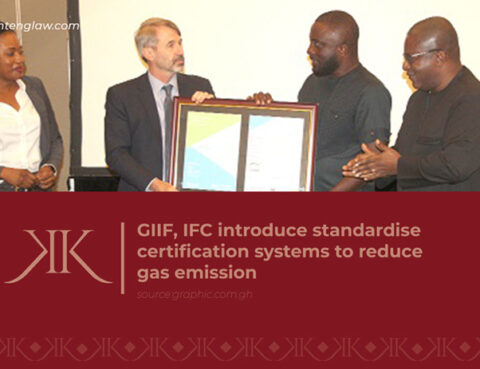
The Ghana Infrastructure Investment Fund (GIIF) has partnered with the International Finance Corporation (IFC), a member of the World Bank Group, to introduce a standardised and certification system in the country.
Known as the Excellence in Design for Greater Efficiencies (EDGE), it will help developers reduce energy consumption in buildings while lowering greenhouse-gas emissions to ultimately move the construction industry in Ghana to a lower carbon and a more resource-efficient path through certified green buildings.
The system provides a free software that allows designers to assess the resource efficiency level of buildings using various options and alternative materials. EDGE is an innovation of IFC which aims to help property developers create resource-efficient buildings quickly, easily and make them affordable.
Improving infrastructure
At a workshop in Accra to train some developers, architects and other individuals within the construction ecosystem in how to operate the software, the Chief Executive Officer (CEO) of the GIIF, Mr Solomon Amponsah, said the move was to ensure that the country’s infrastructure improved significantly.
Additionally, he said it would ensure that all projects were climate friendly, sustainable and did not cause harm to the environment.
“So for buildings to be as environmentally friendly as possible, they can apply for EDGE certification which tells everybody they have reached a certain standard in terms of climate and friendliness and sustainability,” he said.
Going forward, he said the GIIF was looking at addressing the housing deficit in the country.
“We believe that there is strong shortage of affordable housing. We are looking into whether we can play a role in constructing new types of housing that will be affordable but also attractive to average earning Ghanaians,” he said.
He said his outfit was trying to raise some funding from international sources and was hoping that a significant intervention would be made in soon.
Environment risk
The IFC Country Manager, Mr Kyle Kelhofer, recounted that the World Economic Forum in its 2020 Global Risks report identified top 10 risks up to the year 2030 and beyond in terms of likelihood of occurrence and impact.
Out of the 10, he said seven of them were of environmental and social nature.
Per the report, Mr Kelhofer noted that climate now toped the risks agenda at the global stage while economy, which was the core risk some 10 years ago, had disappeared from the top five risks on the global stage.
That, the country manager said, highlighted the importance of climate issues in the global discourse and the relevance of the GIIF’s collaboration with the IFC.
He said EDGE was the surest way to reduce the risk as it was the measurable way for builders to optimise their designs, which would lead to a more investment-worthy and marketable product.
By keeping certification fast and inexpensive, he said EDGE kept pace with the momentum that developers needed to stay at the forefront of the green building trend.
source; graphic.com.gh

CBDC TO HELP BRIDGE DIGITAL DIVIDE FOR WOMEN AND YOUTH IN AFRICA
CBDC TO HELP BRIDGE DIGITAL DIVIDE FOR WOMEN AND YOUTH IN AFRICA
Co-Founder and Managing Partner of Koranteng & Koranteng Legal Advisors, a corporate and commercial law firm in Accra, Ghana, Afua Adubea Koranteng, has said a Central Bank Digital Currency (CBDC) could serve as a catalyst in bridging the digital and financial divide faced by women and youth entrepreneurs.
Speaking on the theme ‘Policy Impacts of a Potential CBDC for Women and Youth in Africa’, during the Africa Central Bank Digital Currency Week 2022 organised by the Global Policy House from February 7-11, 2022, she stated that contrary to concerns the presence and success of mobile money in countries like Ghana and Kenya would render CBDCs redundant, the widespread acceptance of mobile money among women and young people bodes well for the adoption of central bank-issued digital currency and will lead to deeper financial integration.
Research conducted by the Mastercard Foundation Index on Women Entrepreneurs in the world placed Ghana in third position after Uganda and Botswana for countries with the highest number of women entrepreneurs. Women entrepreneurs operate largely in the informal sector and face numerous challenges in accessing finance and digital products.
Likewise, the youth (60 percent of the African population is under the age of 25) who form a large part the African population also face challenges with access to finance.
“Looking at what CBDC is able to do in terms of bridging the digital divide, I would say CBDCs will be the catalyst in helping women and youth entrepreneurs in Africa. If you look at the numbers, women entrepreneurs make up a high percentage of the populace but they fall within the informal sector – and as such are often marginalised. However, mobile money gives us an indication of what to expect for CBDCs,” she stated.
In a subsequent discussion with the B&FT, Ms. Koranteng noted that women and youth will benefit from the financial inclusion brought about by introducing a CBDC, since the ability to be independent and empowered with access to finance will help a mother educate her children.
Also, the youth can generate small businesses, pay for tertiary education and improve their lives; and digital payment platforms will continue to allow young and female creators to monetise their art and content on various online platforms.
Regulation, Education and Infrastructure
Crucial to success of the digital currency, added the lawyer with expertise in the legal regimes of telecom infrastructure and fintechs, is the twin duty of stringent regulation and comprehensive education on the central bank’s part. This, she noted, is crucial to building trust in a new product.
She highlighted that with a mobile money transaction value of close to US$12billion (GH¢75billion) in January 2022 alone in Ghana, for instance, there is a huge market for digital financial services and the populace is ready to adopt the use of efficient online services.
However, questions linger over regulation, data privacy and public mistrust. Education on and understanding the use of central bank-backed digital currency can go a long way toward (answering these questions and) overcoming this mistrust.
With regard to challenges that may plague a digital currency, she highlighted the need for infrastructure such as telecom towers in rural areas for Internet access, roads, and offline design features of the digital currency for a successful implementation.
In 2019, the Bank of Ghana announced its plans to launch a Central Bank Digital Currency (CBDC), the e-cedi, as the pinnacle of government’s ‘Digital Ghana Agenda’ which focuses on promoting digitisation in the financial sector. In August 2021, Ghana announced the pilot phase of a general-purpose Central Bank Digital Currency (CBDC), the e-cedi.
The digital currency, also known as CBDC, is potentially a new form of central bank money, which is an electronic record or digital token of an official currency – issued and regulated by the monetary authority of a country, and may serve both as a medium of exchange and a store of value.
The e-cedi is currently being tested in a trial phase with banks, payment service providers, merchants, consumers and other relevant stakeholders.
Although a general-purpose CBDC might be an alternative to cash, the BoG in introducing such a currency would have to ensure the fulfillment of anti-money laundering and counter-terrorism financing (AML/CFT) requirements.
In her final thoughts, Ms. Koranteng indicated that: “The improvement of finances will bridge the digital divide eventually, and Africa is poised to do this. With the advent of an African Continental Free Trade Agreement and its Pan African Payment and Settlement System, this is the time for Africa to actually leapfrog in terms of digital finance. Nations must however work together under the AFCFTA to continue developing laws and policies which promote financial inclusion, and that will enable objectives of the AFCFTA to be realised”
source; thebftonline.com
THE GHANA ALTERNATIVE MARKET; A GIFT TO BUDDING SMEs
THE GHANA ALTERNATIVE MARKET; A GIFT TO BUDDING SMEs
medium scale enterprises. The situation is no different in Ghana.
In view of this, the Ghana Stock Exchange (“GSE”), launched the Ghana Alternative Market (GAX) in 2013 which is regulated by the Securities and Exchange Commission (“SEC”), to provide equity financing solutions to businesses with potential for growth, i.e., Small to Medium Enterprises (SME) at various
stages of their development. The key benefits of this bourse include:
- 1. Easier access to long-term capital at a relatively lower cost: GAX provides companies with a platform to access capital over the long term with little to no short-term obligations such as interest or principal repayment on debt instruments.
- 2. Increased Brand Awareness and Enhanced Positioning: Listing on GAX raises the investment community’s awareness of the company and its products which will invariably lead to an enhanced market status and attract general business opportunities.
- 3. Investment Value Realization: The company and its advisors determine the first valuation, offer and listing price. Subsequently, trading among investors determines the price on the market so owners can realize the value of their equity in the company.
- 4. Improvement in the Company’s Financial Position: The injection of equity funds improves the company’s balance sheet, provides capital for expansion and improved profitability and efficiency with the right kind of market discipline and corporate governance.
- 5. Reduce Risk and Improved Liquidity: Equity financing is a less risky method of capital raising since there is no repayment in the form of interest or principal as typically required for debt financing. Also, listing on GAX provides investors with liquidity as their equity can be converted to cash.
More specifically, SMEs in Ghana benefit further due the carefully designed, small business-oriented initiatives aimed at assisting these SMEs in raising capital. The GAX provides the following benefits to SMEs:
- 1. A foolproof Initial Public Offers (IPO): The GAX Rules 2013 provides for mandatory underwriting of the minimum offer either directly or indirectly by the sponsor. This ensures that SMEs are able to have a guaranteed amount should the listing not meet their desired expectations.
- 2. GAX-SME Listing Support Fund: SMEs listing on GAX have access to a revolving fund to support the cost of raising capital and benefit from the deferment of up-front fees due to various professional advisors and relevant third parties. Companies listing on GAX can apply for funds under the GAX-SME listing support fund to pay fully or partly for the cost of advisory services.
- 3. A Waived Listing Fee: Unlike the GSE, where listing and application fees relatively high, GAX only requires listed companies to pay an annual fee currently pegged at GHS 4,000.
- 4. Provision of Collateral Value to Securities: Potential creditors are able to more easily find information on a listed company.
The eligibility criteria for listing on the GAX is as follows:
1. Stated Capital Requirement
A company applying to list on the GAX must have a minimum stated capital of GHS 250,000 at the time of listing. The stated capital of GHS 250,000 shall be the capital after the company’s initial public offer but prior to listing.
2. Public Float
The public float of the applicant must constitute a minimum of twenty-five percent (25%) of the total number of issued shares. Also, the minimum number of public shareholders shall be twenty (20).
3. Period of Existence
Admission may be granted to a start-up company, provided the applicant submits to the GAX a 3- year business plan, clearly demonstrating the business’s viability.
4. Profitability
A company seeking admission to the GAX need not have recorded profits historically but must have the potential to make profit at least at the end of its third year of listing.
5. Sponsorship of Applicants for Listing
Licensed Dealing Members, Investment Advisors or Issuing Houses shall sponsor an application for listing on the GAX.
Despite all these interventions, it appears that SMEs are reluctant in harnessing the opportunities provided by the GAX for a myriad of reasons. As of November 2021, only 6 companies had been listed on GAX, a development which shows the low rate of penetration or interest for this relatively easy capital raising initiative.
A cursory look at the business environment reveals the following as reasons for the low level of listing on
GAX:
Firstly, the small and medium scale Ghanaian enterprise is built on a deep sense of ownership which business owners believe will be infringed on by public ownership through listing. Most business owners thus, view the listing of shares that may give voting rights and decision-making powers to the incoming shareholders/strangers, as an encroachment on their ownership and decision-making powers. As such, these SMEs might only resort to GAX listing when the need for capital is so dire and that reduces their bargaining power and valuation.
Again, as has been the trend in the public sector, most companies are reluctant to share or disclose their business records or accounts. Although the company law of Ghana requires that they file various annual return forms, listing on the GAX would mean they must do so compulsorily and must provide a true and
accurate record of all business endeavors.
In addition, the education on equity financing through listing on the GAX and the detailed process of listing and its benefits is insufficient. It would seem that most SMEs that are the target of GAX are not well sensitized on the value proposition of listing on the GAX and the details of listing requirements.
Conclusion
It appears that for the GAX to fully meet its mandate as a “gift” to SMEs, more work needs to be done in the area of publicity and sensitization and perhaps further expanding the range of benefits and exemptions that an applicant could apply for. The GSE should collaborate with SME- focused government agencies such as the National Youth Employment Agency, Microfinance and Small Loans Centre (MASLOC), the Ghana Chamber of Young Entrepreneurs as well as the National
Entrepreneurship and Innovation Programme and pursue frequent media engagement, to provide the much-needed education on the GAX in Ghana and its benefits.
That being said, SMEs are encouraged to take the plunge to list on GAX as a solution to the elusive capital injection problem. This will enable them to exponentially grow their businesses and turn them around to not just survive, but to thrive.
Written by Abraham Jojo Afun (Koranteng & Koranteng Legal Advisors)
Highlights of the Latest Tax Law Amendments Passed by the Parliament of Ghana in January 2022
The Commissioner-General of the Ghana Revenue Authority (GRA) has notified the general public that the following tax law amendments have been duly passed by Parliament:
- Income Tax (Amendment) (No. 2) Act, 2021 (Act 1071)
- Value Added Tax (Amendment) Act, 2021 (Act 1072)
- Penalty and Interest Waiver (Amendment) Act, 2021 (Act 1073)
Each of the above amendments came into force on 1 st January, 2022.
1. Penalty and Interest Waiver (Amendment) Act, 2021 (Act 1073)
The Waiver of Penalties and Interest for outstanding debt owed to the GRA as at 31 st December, 2020 under the Penalty and Interest Waiver (Amendment) Act, 2021 (Act 1073) has been extended to 30 th June, 2022.
The amendment of Act 1073 was passed as part of the Government of Ghana’s support to taxpayers during the COVID-19 pandemic. It is intended to cushion such
taxpayers in meeting their tax obligations in a manner that will support them in their recovery from the impact of the pandemic.
Act 1073 extends the 30 th September 2021 deadline for the application for a waiver of penalties and interests on accumulated tax arrears \for persons who make
arrangements with the GRA to pay the principal tax amount, up to 30 th June 2022.
CONDITIONS FOR THE WAIVER OF THE PENALTY AND INTEREST
Under Act 1073 a person qualifies for the waiver of penalty or interest where, on or before 30 th June 2022, the person:
- Submits returns or amended returns, containing full disclosure of undisclosed liabilities through 31 st December 2020 and pays or makes the necessary arrangements to pay all resulting taxes; OR
- Pays or make the necessary arrangements to pay assessed and outstanding taxes (to the GRA).
For taxpayers who take advantage of the above extended deadline, the Commissioner – General shall not recover assessed penalties and interest on the tax paid or due, nor shall he commence prosecution or an enforcement action in respect of such a person (individuals and companies).
2. Income Tax (Amendment) (No. 2) Act, 2021 (Act 1071)
(a) The rate of withholding tax for the sale of unprocessed precious minerals has been reduced by 50%, i.e. from 3% to 1½%.
(b) The maximum turnover of individuals who qualify for presumptive tax under the Second Schedule to the Income Tax Act, 2015 (Act 896) has been increased to Five Hundred Thousand Ghana Cedis (GH₵500,000). Presumptive tax applies where the chargeable income of a resident individual for a year of assessment consists exclusively of income from a business, the income is exclusively from sources within Ghana and either, the individual is not registered for Value Added Tax (VAT) purposes and has an annual turnover of not more than twenty thousand Cedis from the business or they are not required to register for VAT purposes and have an annual turnover of more than twenty thousand Cedis from the business. The annual turnover is computed as an average of the turnover for three consecutive years ending in the year of assessment.
(c) The Vehicle Income Tax (VIT) for commercial transport vehicles was suspended by the Government of Ghana in March 2021. These commercial transport vehicles have been listed in the 2 nd Schedule of the Income Tax Regulations, 2016 (L.I.2244) under separate classes from Class A to Class D. They include taxi’s,trotro’s, tipper trucks and commuters. Under the Income Tax Act, the suspension of VIT payment for selected vehicles has been extended to cover the 1st and 2nd quarters of 2022. In addition, commuter vehicles in categories C1, C2, C3, C5, C7 and C9 have been included in the list of vehicles for the dispensation. Such vehicles are as follows:
- C1 – Commuters capable of carrying up to 15 persons.
- C2 – Commuters capable of carrying from 16 to 19 persons.
- C3 – Ford buses and Commuters capable of carrying up to 23 persons.
- C5 – Commuters capable of carrying up to 38 persons.
- C7 – Commuters capable of carrying from 39 to 45 persons.
- C9 – Tour Operators capable of carrying above 45 persons.
(d) The suspension of income tax payments for selected self-employed individuals, using the Tax Stamp system has been extended to cover the 1st and 2nd quarters of 2022. The Income Tax Stamp is designed for individuals operating in the informal sector, for example, small-scale self-employed dressmakers / tailors, hairdressers / barbers, susu collectors, chop bar owners, hawkers etc. The Income Tax Stamp amount ranges from GH₵3 to GH₵45 and is paid on a quarterly basis. Self-employed individuals, obligated to purchase a Tax Stamp under the Tax Stamp system, i.e. make this quarterly income tax installment payment, have been granted exemptions for the 1 st and 2 nd quarters of 2022. An operator in the informal sector, under the Tax Stamp system, must ordinarily buy the tax stamp on or before 15th January, 15th April, 15th July, and 15th October of each year.
3. Value Added Tax (Amendment) Act, 2021 (Act 1072)
(a) The Value Added Tax (VAT) flat rate for retailers of goods has been restricted to taxpayers whose annual turnover is Two Hundred Thousand Ghana Cedis (GH₵200,000) and above, but not exceeding Five Hundred Thousand Ghana Cedis (GH₵500,000).
(b) The Value Added Tax zero-rating dispensation on African textile prints produced by local textile manufacturers has been extended to 31 st December, 2023.

Afua Koranteng listed as Global Law Expert 2022 for Corporate Law
Afua Koranteng listed as Global Law Expert 2022 for Corporate Law
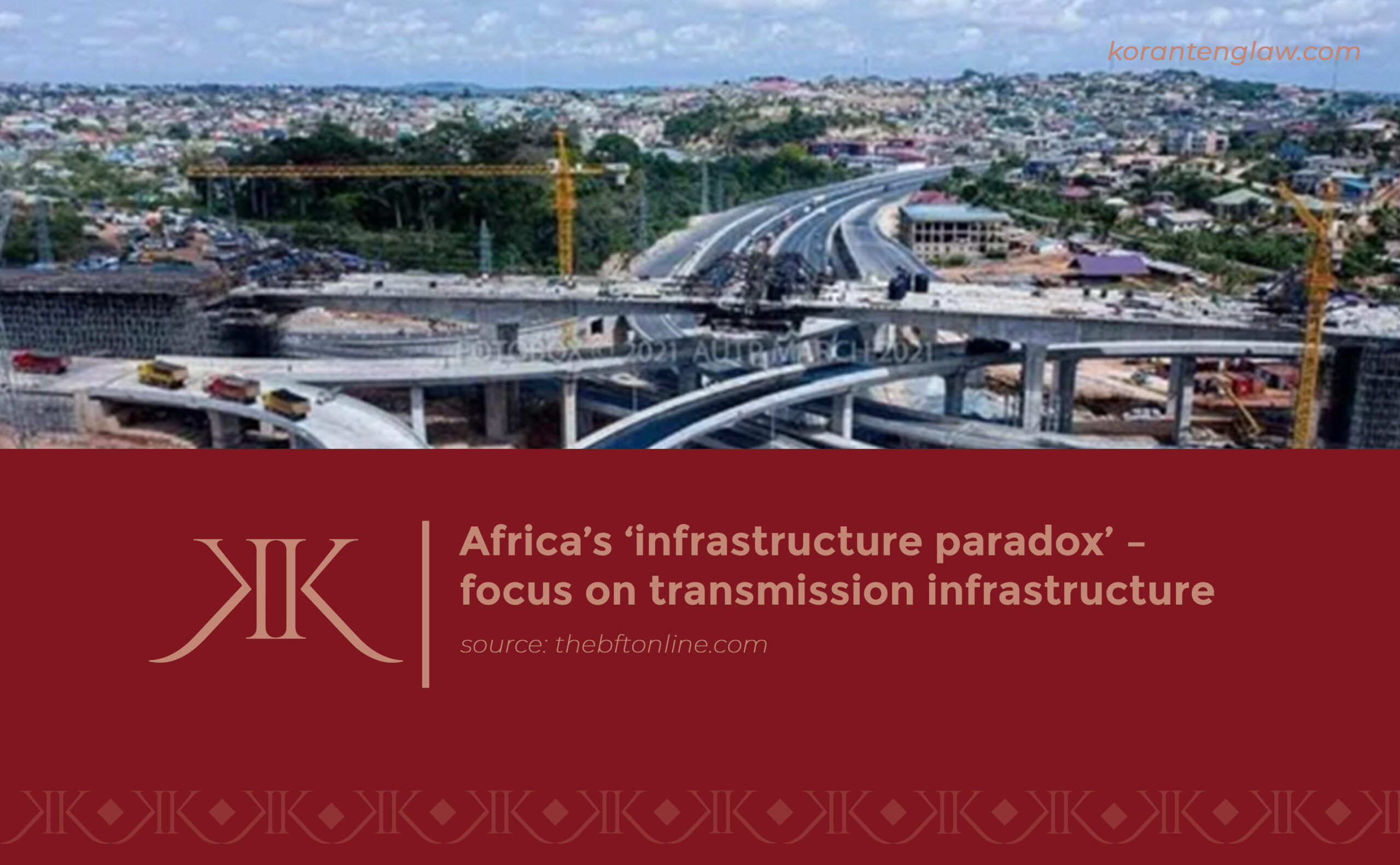
Africa’s ‘infrastructure paradox’ – focus on transmission infrastructure
Africa’s infrastructure needs – including road, rail, ports, transmission and power – are considerable, and will become increasingly pronounced on account of the continent’s need for such infrastructure to support its social and economic growth. It is estimated that international investors’ interested in Africa have as much as US$550bn in assets1 that could be deployed to meet the estimated US$130bn– $170bn in infrastructure investment required by the continent each year.2 However, there is a gap to bridge due to the lack of investment opportunities that meet such investors’ criteria, with a 2018 African Development Bank (AfDB) study noting a financing gap of US$68bn– $108bn.3
Bridging the gap
Despite the clear need and availability of capital, few infrastructure projects in Africa achieve financial close – in fact, according to McKinsey, 80% of potential projects fail at the feasibility stage.4 A number of reasons for this have been reported, including inadequate long- term policy plans and frameworks, developers and governments having limited experience in carrying out the relevant feasibility studies and front end work, poor coordination between the various governmental agencies, and community resistance to certain projects.5
This challenge may be addressed by governments, supported by multilateral development organisations, improving the flow of private-sector financing into commercially viable infrastructure sectors. There is no shortage of private-sector finance, but investors struggle to match these funds against viable projects in Africa. Governments and their institutional partners can take decisive action to improve the commercial viability of projects, including by helping to mitigate political, currency, and regulatory risks, and, akin to some of the more successful procurement programmes, by creating a pipeline of bankable projects that leads to more focused investment.6
Power and transmission
A key area for infrastructure development in Africa is the power sector. While much attention is being given to the generation of power, especially in the context of renewable energy,transmission infrastructure has often been the poor relation, suffering from decades of poor maintenance and under-investment. Modern transmission infrastructure is therefore crucial not only in terms of electrification, but also in providing both the flexibility and reliability needed to integrate additional power generation – especially less predictable sources, such as renewable energy – into the grid, as well as reducing transmission losses.
Transmission infrastructure requires significant investment and, given the depleted state of government finances across the continent, private investment opportunities. It also helpfully amplifies some of the underlying issues that can often drive infrastructure projects off course –land rights, permitting, the interface between state agencies and the private sector (for example the wheeling of privately generated power), and the interaction with domestic regulation, to
name but a few.
Government programmes in this sector could therefore usefully look to structures, both regional and international, that have successfully mitigated some of these risks. This could be achieved by following the more traditional PPP/PF model, perhaps in conjunction with a structure that places risks, such as obtaining access to the land and permits, with the state, for example, the IFC scaling solar programme. However, other complimentary structures are also of note, such
as:
• Operating lease model – A long lease model, used for example in Uruguay, whereby the private lessor constructs and leases the transmission infrastructure to the state transmission company (which takes on the land risk). This model is of particular interest where the alternative PPP model is not well-developed in country;
• Corporate finance – The government or SOE could look to raise a government/SOE loan (on-balance sheet), potentially ECA-backed, which could then finance the third party construction of the transmission infrastructure;
• Institutional investors – While still applicable to the PPP model, noting the desire in certain jurisdictions to encourage local pension funds to invest in infrastructure projects, raising local equity through capital pool companies could help reduce the level of third-party debt (and therefore the tariff), provide quasi-political cover and potentially increase the developer upside;
• Long-term concession – Whereby a private company receives a long-term concession to manage and operate existing transmission assets and is in charge of expanding the transmission grid in its area of operation.
The above structures are not mutually exclusive. The key point is that each strives, in its own way, to mitigate some of the more fundamental blocks to private investment, and most critically the need to expedite the development process; the tyranny of time being the curse of many otherwise financially and
developmentally sound projects.
Furthermore, increasing the involvement of national and multilateral financial institutions that can offer additional funding, subsidies and innovative financing structures would successfully encourage further private sector investment. Such institutions can offer governments critical skills in areas such astransaction support, planning and risk allocation – and they can embed those skills in government entities. For example, in 2019, AfDB, through its Africa Investment Forum (AIF) platform, helped secure 52 deals worth US$40bn of investment towards infrastructure in Africa.7
Ghana
Power transmission is the vital middle sub-sector in the three broad components that make up a power/electricity grid, ie generation, transmission and distribution.
The power sector in Ghana
The Volta River Authority (VRA) was established in 1961 by the Volta River Development Act, 1961 (Act 46). The same legislation prescribed the functions of the VRA, vital among these being the generation of electrical power for domestic and industrial use in Ghana, the construction and operation of a power transmission system and the distribution of electricity to consumers at low voltages.8 This resulted in a considerable mandate on the VRA from the onset. In 1967, however, the Electricity Corporation Decree, 1967 (NLCD 125) established the Electricity Corporation of Ghana (ECG), which assumed the sole electricity distribution responsibilities of the VRA nationwide. In order to reduce the burden on the ECG, the VRA later created the Northern Electrification Department (NED) in 1987 and the organisation subsequently took over the distribution mandate in the Northern regions of Ghana.9
• GRIDCo development and operations – The current framework and layout of the power sector in Ghana is largely as a result of Power Sector Reforms undertaken by the Ghanaian government in the late 1990s. These reforms included the creation of an Energy Commission in 1997 to oversee the technical regulation of the electricity, natural gas and renewable energy industries, the formation of the Public Utilities Regulatory Commission in the same year to provide guidelines for the tariffs and charges on public utility services and, importantly, the unbundling of the then vertically-integrated Volta River Authority among other developments.10
The latter of the changes was initiated pursuant to the Energy Commission Act, 1997 (Act 541) and the Volta River Development (Amendment) Act, 2005 Act 692; with these laws providing for the exclusive operation of the National Interconnected Transmission System by a single independent public utility upon the grant of a transmission licence by the Board of the Energy Commission.11 This licence was granted to Ghana Grid Company (GRIDCo) and the organisation commenced operations in 2008 as the main organ responsible for power transmission in Ghana following its receipt of the requisite electricity transmission assets and core
staff from the VRA.12
Despite these and the other changes made within the framework of the Power Sector Reforms, the issue of inconsistent power supply has remained a significant challenge facing the power sector in Ghana over the past few decades. A major cause of the inconsistent power is a lack of adequate and reliable infrastructure in the electricity transmission sector. Ghana for example is estimated to lose US$100m annually from transmission losses or leakages.
Nevertheless, and notwithstanding the gap in diversification of power generation,13 the position at present is one of over-capacity in the power-generation sector. The magnitude and effect of this overproduction was made clear in the Ghana 2019 Mid-Year Fiscal Policy Review presented by the Finance Minister to Parliament, where it was revealed that the installed capacity of the generating subsector at 5,083MW was nearly double the peak demand at the time, 2,700MW.14
Ghana had to bear costs exceeding C2.5bn annually for power generation capacity that was neither needed nor consumed.15 Regardless, this surplus capacity has not resulted in constant power supply, due in part to inadequacies in the electricity transmission infrastructure.
• Technical challenges – Demand for electricity in Ghana has grown dramatically over recent years and is showing no signs of slowing down in times to come. The past five years have seen an annual growth rate of 10.3% in electricity demand, with peak system demand figures moving from 2,118MW in 2015 to 3,090MW in
2020. Within the same time span, total annual electricity consumption rose from 11,678GWh to 19,717GWh.16 This growth in demand can generally be attributed to economic growth, urbanisation and increases in industrial activity.17
Over this same period, power transmission facilities have also been expanded. As of 2016, the National Interconnected Transmission System consisted of approximately 5,207.7 circuit km of high voltage transmission lines employed to connect the operating power generation plants at Akosombo, Kpong, Bui, Tema and Aboadze to the 64 bulk supply points operated by GRIDCo across Ghana. The NIT also comprised 123 transformers with an overall transformer capacity of 4,598.86 MVA.18 By the close of 2020, the transmission network had grown up to 7,200.5 circuit kilometres and its overall total transformer
capacity had more than doubled, standing at 8,901.8 MVA with 65 bulk supply points across the nation.19 Nevertheless, this expansion has been insufficient in catering to the state’s growing power demands and diversification of energy sources. Nationwide access to electricity as at 2020 was at 83%, with 91% of residents in
urban areas having access to electricity while the same was true for only 50% of residents in rural parts of the country.20
At present, several whole communities in rural remote areas do not have access to power and this is primarily due to a lack of infrastructure to transmit electricity from the power generating plants to these inland locations, particularly in the mid-portion and northern parts of the country.21 Attempts to improve power transmission to rural areas have been embarked on over the years, key among them being the Self-Help Electrification Program, an initiative introduced by the National Electrification Scheme whereby rural communities complement the efforts of the government with regards to provision of basic transmission facilities to secure their accelerated connection to the national grid. However, the data suggest that much more work needs to be done and barring significant infrastructural investments, the strain created by nationwide growth in electricity demand would adversely affect the limited progress that has been made in rural electrification.
In addition, a considerable number of the transmission facilities on ground are notoriously outdated; a problem that has resulted in transmission bottlenecks, overloaded transformer sub-stations and high system losses.22 Between 2006 and 2016, transmission and distribution losses made up as much as 20.1% of the total
electricity supplied and although distribution losses have proved more significant with 16.2% of losses stemming from distribution and commercial losses by the ECG and NEDCo, as opposed to 3.9% losses reported in the transmission sub-sector23, recent trends have shown an increase in transmission losses, which moved from 3.8% in 2017 to 4.5% in 2020 representing 888GWh of losses in that year alone. Needless to say, the 4.5% losses recorded fall below the benchmark set by the PURC, and the Energy Commission has reported that investment in new transmission lines and the upgrade of existing outmoded lines is paramount to averting
the rising trend in transmission losses.24
The lack of adequate infrastructure has been especially felt in recent times with a series of power outages around the country between January and April 2021 attributed to system challenges on the NITS spurring an investigation by the PURC into the causes of the erratic power supply.25 The ensuing report cited faults in
transmission lines and line insulators, compressor failures, emergency upgrades and modification works, construction of new infrastructure on the NITS, scheduled maintenance and delayed investments, and completion of projects as some of the causes of the power outage over the observed time period.26 Briefs released by the
Ministry of Energy likewise attributed the power outages to maintenance work and improvements being carried out on outdated systems in the NITS, indicating that the discomfort experienced in the short-term was inevitable in the quest to secure long-term improvements in the system.27
• Financial hurdles – These issues are only compounded by the financial difficulties facing the companies operating in the transmission and distribution sub-sectors. In 2018, despite attaining a 16.67% increase in power transmitted, GRIDCo recorded a net loss of C114.3m. This was in part due to a significant loss in transmission revenue from C715.2m in 2017 to C490.2m in 2018, caused by the 50% decrease in the Transmission Service Charge set by the PURC.[28] The events
of the year only draw attention to a wider issue within the industry that speaks to a lack of financial sustainability/commercial viability.The prices in the sector are not regulated by the traditional market forces of demand and supply due to state intervention and this has led to the transmission and distribution entities running at a deficit for a number of years.
As of 2017, the total debt owed to GRIDCo by the ECG and the Volta Aluminium Company (VALCO) stood at C862m.29 The dire financial situation of the sub-sector has severely hampered planned infrastructural investment and left a widening infrastructural gap as demand continues to increase around Ghana. The
Preliminary Investigative Report on Erratic Power Supply conducted by the PURC in April 2021, noted that several key projects provided for in the 2020 Electricity Supply Plan that were scheduled to have been completed were stalled due to delays in investment.
GRIDCo is purely a state-owned entity and there has been little or no private investment in the company or its projects. As a result, a significant portion of the infrastructural development that has taken place over the years has been financed by multinational agencies and financial institutions. In 2017, GRIDCo completed one infrastructural development project, commenced another and reported eight moreongoing projects.
These included the 330kV Prestea-Kumasi Power Enhancement Project at a cost of US$58,150,352 financed by the Export-Import Bank of Korea; the Project for Reinforcement of Power Supply to Accra Central at a cost of US$58,000,000, jointly financed by the Japanese International Cooperation Agency and GRIDCo; and the Substation Reliability Enhancement Project (SREP) at a cost of €31,762,217 and C10,218,312, also jointly financed by Societe Generale and GRIDCo among other projects.30
Likewise, in 2018, GRIDCo reported eight completed major engineering projects and six more ongoing ones. The year saw the completion of the 225kV Bolgatanga–Ouagadougou Interconnection Project with a project cost of US$12,806,475.91 and C923,710.18 (for the 330/22kV Substation) and US$829,280.70, €398,395.92 and C1,510,221 (for the 330/225kV transmission line) jointly financed by the World Bank (330/22kV substation) and the French Development Agency (225kV transmission line); the 34.5kV and 11.5kV Switchgear Upgrade Project with a project cost of €11,446,845, jointly financed by the African Development Bank and
GRIDCo; and the 225Kv Bolgatanga–Ouagadougou and 330kv Kumasi–Bolgatanga transmission line projects, with a project cost of £2,505,763 and US$1,221,434 financed by a grant from the European Union, among other projects.31
Given the age of Ghana’s transmission lines and the shortfalls in such transmission lines reaching certain rural areas, a concerted effort to invest in such infrastructure using innovative means and the suggested reforms would significantly close the infrastructure gap.
• Proposed reforms – At risk of oversimplification, the solution to the electricity transmission issues faced by Ghana lie in large-scale and comprehensive upgrading and expanding the transmission infrastructure in the country. As mentioned in the Energy Outlook document by the Energy Commission, investments in infrastructure are necessary to curb the rising trend in transmission losses.
The Investigative Report on Erratic Power Supply in the state conducted by the PURC concluded that delays in the execution of capital projects were partly responsible for the irregular power supply and recommended that the relevant stakeholders work towards the timely completion of these projects, especially through requisite capital injection and adequate monitoring and supervision mechanisms.32 In addition, the increasing proportion of intermittent energy sources, such as solar PV, requires a more robust, modern and adaptable transmission grid to help ensure a steady supply of power.
On the part of the government, the recent passing of the Public-Private Partnership Act, 2020 (Act 1039) is a step in the right direction as the establishment of a definite framework within which these partnership agreements can be created and managed, and should increase the confidence and willingness of private-sector
investors to enter into these arrangements, allowing for the capital and expertise required to secure the development of infrastructure in the electricity transmission sector. In addition, the implementation of the cash waterfall mechanism by the government in 2020 to ensure a more transparent distribution and management of
the revenue received by the Electricity Company of Ghana should go some way to address the liquidity issues being faced in the transmission sector, especially as a certain fixed percentage of the revenue is allocated to GRIDCo.
In light of the above, the Government of Ghana in 2021 is accelerating reforms premised on a GRIDCo development plan with an emphasis on transmission. This is taking a more concrete shape
as demand for power increases. In line with these reforms, the government has been constructing the Pokuase Bulk Supply Point (BSP), which was expected to be completed by the end of July 2021. The Kasoa BSP was expected to be completed by end of August 2021. Further, the Tema to Achimota line rehabilitation is ongoing, while the gap in the transmission backbone between Kumasi and Kintampo is to be fixed to complete the transmission system between the coastal part of Ghana and Bolgatanga in the Northern part of Ghana. These transmission upgrades with estimated capex of US$533m are a big step in the right direction towards ensuring that the grid is able to accommodate the loads being transmitted. However, more is needed and it is hoped that some of the funding models discussed in this article can help fund the additional investment that is needed to ensure a bright future for Ghana.
Conclusion
Closing the gap of Africa’s infrastructure paradox will take time and commitment. The suggested reforms referred to in this article require strong commitment and the political will of African governments, as exemplified by the Ghanaian case. African governments should seek to build on the positive experiences of other countries and regions (for example, by obtaining the services of domestic and international advisers with the relevant structuring experience) in line with all proposed reforms.
Too often, projects in Africa are delayed by government bureaucracy, changes in political administrations, lack of effective investment propositions to potential investors, and media miscommunication. This leads to waning levels of public support for reforms, thereby impacting onthe ability of private investors to effectively plan and participate in long-term energy projects across the continent. Despite these challenges, reforms across the continent in the energy sector, as seen in countries such as Kenya, Ghana, Rwanda, South Africa, Morocco, Egypt and Zimbabwe, among others, is bringing about a new wind of change that is providing opportunities for PPAs/ PPPs and other multilateral funding and capacity development arrangements. These efforts, together with the right investments, funding models and incentives for both governments and private investors, can contribute to the elimination of this infrastructure paradox.
Footnotes
1 – McKinsey & Company, see section headed “Closing Africa’s infrastructure gaps”, Solving Africa’s infrastructure paradox, 6 March 2020
2 – African Development Bank, Africa’s Infrastructure: Great Potential but Little Impact on Inclusive Growth, 2018
3 – See footnote 2.
4 – See footnote 1, section headed “Why so few African projects get funding”
5 – See footnote 1, section headed “The causes of Africa’s infrastructure paradox”
6 – See footnote 1, section headed “Actions for governments and development institutions”
7 – African Development Bank Group, Africa Investment Forum 2018: a new bold vision tilts capital flows into Africa, 14 November 2018
8 – Volta River Development Act 1961, (Act 46), s.10
9 – Abeeku Brew-Hammond, ‘The Electricity Supply Industry in Ghana: Issues and Priorities’ (1996) Africa Development Vol.21 No.1 81, 82
10 – Ishmael Ackah, ‘Ghana’s Power Reforms and Intermittent power supply: A critical Evaluation’ (2014) JESD Vol.5 267, 268
11 – Energy Commission Act, 1957 (Act 541), s.23
12 – ‘Overview/Our History’ (GRIDCo) accessed 7 July 2021
13 – [Kimathi & Partners Corporate Attorneys, ‘Electricity Regulation and Transfer in Ghana’ (Lexology 31 October 2019) < https://www.lexology.com/librar/detail. aspx?g=910beca2-f3bf-420f-8597-e7e3e6f53b38> accessed 7 July 2021
14 – Ministry of Finance, 2019 Mid-Year Fiscal Policy Review and Supplementary Estimates (2019) para 19
15 – Ministry of Finance, 2019 Mid-Year Fiscal Policy Review and Supplementary Estimates (2019) para 19
16 – Ghana Energy Commission, 2016 Energy (Supply and Demand) Outlook for Ghana (April 2016) para.1;Ghana Energy Commission, 2021 Energy (Supply and
Demand) Outlook for Ghana (April 2021) p.ii
17 – [Ishmael Ackah, ‘Ghana’s Power Reforms and Intermittent power supply: A critical Evaluation’ (2014) JESD Vol.5 267, 268
18 – Ghana Energy Commission, 2017 Energy (Supply and Demand) Outlook for Ghana (April 2017) p.25 19 – Ghana Energy Commission, 2021 Energy (Supply and Demand) Outlook for Ghana (April 2021) p.38
20 – International Trade Administration, Ghana- Country Commercial Guide Energy Sector (August 2020) accessed 8 July 2021
21 – Public Utilities Regulatory Commission (PURC), Ghana Preliminary Investigative Report On Erratic Power Supply (April 2021) para.5.1
22 – Ministry of Energy, National Energy Policy (2010) p.10
23 – [Ebenezer Nyarko Kumi, ‘The Electricity Situation in Ghana: Challenges and Opportunities’ (2017) CGD 10
24 – Ghana Energy Commission, 2021 Energy (Supply and Demand) Outlook for Ghana (April 2021) p.14
25 – Public Utilities Regulatory Commission, Preliminary Investigative Report On Erratic Power Supply (April 2021)
26 – Public Utilities Regulatory Commission, Preliminary Investigative Report On Erratic Power Supply (April 2021) p.4
27 – Dr. Matthew Prempeh, ‘Bear With Us As We Fix Power Transmission Issues’ (Ministry of Energy Blog 21 May 2021) accessed 8 July 2021
28 – Ghana Grid Company Limited, Annual Report (2018) 10
29 – Ghana Grid Company Limited, Annual Report (2017) 10
30 – Ghana Grid Company Limited, Annual Report (2017) pp. 21-24
31 – Ghana Grid Company Limited, Annual Report (2018) pp.23-28
32 – Public Utilities Regulatory Commission, Preliminary Investigative Report On Erratic Power Supply (April 2021) p.9
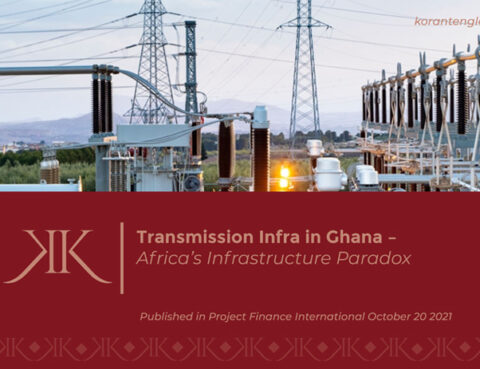
TRANSMISSION INFRA IN GHANA
AFRICA’S INFRASTRUCTURE PARADOX. BY TOM JAMIESON, PARTNER, RO LAZAROVITCH, PARTNER, JO EN LOW, PARTNER, AND ONIS CHUKWUEKE-UBA, ASSOCIATE, BRACEWELL (UK) LLP AND AFUA A KORANTENG, PARTNER, AND EDWARD KORANTENG, PARTNER, KORANTENG & KORANTENG LEGAL ADVISORS.
Africa’s infrastructure needs – including road, rail, ports, transmission and power – are considerable, and will become increasingly pronounced on account of the continent’s need for such infrastructure to support its social and economic growth. It is estimated that international investors’ interested in Africa have as much as US$550bn in assets1 that could be deployed to meet the estimated US$130bn– $170bn in infrastructure investment required by the continent each year.2 However, there is a gap to bridge due to the lack of investment opportunities that meet such investors’ criteria, with a 2018 African Development Bank (AfDB) study noting a financing gap of US$68bn– $108bn.3
Bridging the gap
Despite the clear need and availability of capital, few infrastructure projects in Africa achieve financial close – in fact, according to McKinsey, 80% of potential projects fail at the feasibility stage.4 A number of reasons for this have been reported, including inadequate long- term policy plans and frameworks, developers and governments having limited experience in carrying out the relevant feasibility studies and front end work, poor coordination between the various governmental agencies, and community resistance to certain projects.5
This challenge may be addressed by governments, supported by multilateral development organisations, improving the flow of private-sector financing into commercially viable infrastructure sectors. There is no shortage of private-sector finance, but investors struggle to match these funds against viable projects in Africa. Governments and their institutional partners can take decisive action to improve the commercial viability of projects, including by helping to mitigate political, currency, and regulatory risks, and, akin to some of the more successful procurement programmes, by creating a pipeline of bankable projects that leads to more focused investment.6
Power and transmission
A key area for infrastructure development in Africa is the power sector. While much attention is being given to the generation of power, especially in the context of renewable energy,transmission infrastructure has often been the poor relation, suffering from decades of poor maintenance and under-investment. Modern transmission infrastructure is therefore crucial not only in terms of electrification, but also in providing both the flexibility and reliability needed to integrate additional power generation – especially less predictable sources, such as renewable energy – into the grid, as well as reducing transmission losses.
Transmission infrastructure requires significant investment and, given the depleted state of government finances across the continent, private investment opportunities. It also helpfully amplifies some of the underlying issues that can often drive infrastructure projects off course –land rights, permitting, the interface between state agencies and the private sector (for example the wheeling of privately generated power), and the interaction with domestic regulation, to
name but a few.
Government programmes in this sector could therefore usefully look to structures, both regional and international, that have successfully mitigated some of these risks. This could be achieved by following the more traditional PPP/PF model, perhaps in conjunction with a structure that places risks, such as obtaining access to the land and permits, with the state, for example, the IFC scaling solar programme. However, other complimentary structures are also of note, such
as:
• Operating lease model – A long lease model, used for example in Uruguay, whereby the private lessor constructs and leases the transmission infrastructure to the state transmission company (which takes on the land risk). This model is of particular interest where the alternative PPP model is not well-developed in country;
• Corporate finance – The government or SOE could look to raise a government/SOE loan (on-balance sheet), potentially ECA-backed, which could then finance the third party construction of the transmission infrastructure;
• Institutional investors – While still applicable to the PPP model, noting the desire in certain jurisdictions to encourage local pension funds to invest in infrastructure projects, raising local equity through capital pool companies could help reduce the level of third-party debt (and therefore the tariff), provide quasi-political cover and potentially increase the developer upside;
• Long-term concession – Whereby a private company receives a long-term concession to manage and operate existing transmission assets and is in charge of expanding the transmission grid in its area of operation.
The above structures are not mutually exclusive. The key point is that each strives, in its own way, to mitigate some of the more fundamental blocks to private investment, and most critically the need to expedite the development process; the tyranny of time being the curse of many otherwise financially and
developmentally sound projects.
Furthermore, increasing the involvement of national and multilateral financial institutions that can offer additional funding, subsidies and innovative financing structures would successfully encourage further private sector investment. Such institutions can offer governments critical skills in areas such astransaction support, planning and risk allocation – and they can embed those skills in government entities. For example, in 2019, AfDB, through its Africa Investment Forum (AIF) platform, helped secure 52 deals worth US$40bn of investment towards infrastructure in Africa.7
Ghana
Power transmission is the vital middle sub-sector in the three broad components that make up a power/electricity grid, ie generation, transmission and distribution.
The power sector in Ghana
The Volta River Authority (VRA) was established in 1961 by the Volta River Development Act, 1961 (Act 46). The same legislation prescribed the functions of the VRA, vital among these being the generation of electrical power for domestic and industrial use in Ghana, the construction and operation of a power transmission system and the distribution of electricity to consumers at low voltages.8 This resulted in a considerable mandate on the VRA from the onset. In 1967, however, the Electricity Corporation Decree, 1967 (NLCD 125) established the Electricity Corporation of Ghana (ECG), which assumed the sole electricity distribution responsibilities of the VRA nationwide. In order to reduce the burden on the ECG, the VRA later created the Northern Electrification Department (NED) in 1987 and the organisation subsequently took over the distribution mandate in the Northern regions of Ghana.9
• GRIDCo development and operations – The current framework and layout of the power sector in Ghana is largely as a result of Power Sector Reforms undertaken by the Ghanaian government in the late 1990s. These reforms included the creation of an Energy Commission in 1997 to oversee the technical regulation of the electricity, natural gas and renewable energy industries, the formation of the Public Utilities Regulatory Commission in the same year to provide guidelines for the tariffs and charges on public utility services and, importantly, the unbundling of the then vertically-integrated Volta River Authority among other developments.10
The latter of the changes was initiated pursuant to the Energy Commission Act, 1997 (Act 541) and the Volta River Development (Amendment) Act, 2005 Act 692; with these laws providing for the exclusive operation of the National Interconnected Transmission System by a single independent public utility upon the grant of a transmission licence by the Board of the Energy Commission.11 This licence was granted to Ghana Grid Company (GRIDCo) and the organisation commenced operations in 2008 as the main organ responsible for power transmission in Ghana following its receipt of the requisite electricity transmission assets and core
staff from the VRA.12
Despite these and the other changes made within the framework of the Power Sector Reforms, the issue of inconsistent power supply has remained a significant challenge facing the power sector in Ghana over the past few decades. A major cause of the inconsistent power is a lack of adequate and reliable infrastructure in the electricity transmission sector. Ghana for example is estimated to lose US$100m annually from transmission losses or leakages.
Nevertheless, and notwithstanding the gap in diversification of power generation,13 the position at present is one of over-capacity in the power-generation sector. The magnitude and effect of this overproduction was made clear in the Ghana 2019 Mid-Year Fiscal Policy Review presented by the Finance Minister to Parliament, where it was revealed that the installed capacity of the generating subsector at 5,083MW was nearly double the peak demand at the time, 2,700MW.14
Ghana had to bear costs exceeding C2.5bn annually for power generation capacity that was neither needed nor consumed.15 Regardless, this surplus capacity has not resulted in constant power supply, due in part to inadequacies in the electricity transmission infrastructure.
• Technical challenges – Demand for electricity in Ghana has grown dramatically over recent years and is showing no signs of slowing down in times to come. The past five years have seen an annual growth rate of 10.3% in electricity demand, with peak system demand figures moving from 2,118MW in 2015 to 3,090MW in
2020. Within the same time span, total annual electricity consumption rose from 11,678GWh to 19,717GWh.16 This growth in demand can generally be attributed to economic growth, urbanisation and increases in industrial activity.17
Over this same period, power transmission facilities have also been expanded. As of 2016, the National Interconnected Transmission System consisted of approximately 5,207.7 circuit km of high voltage transmission lines employed to connect the operating power generation plants at Akosombo, Kpong, Bui, Tema and Aboadze to the 64 bulk supply points operated by GRIDCo across Ghana. The NIT also comprised 123 transformers with an overall transformer capacity of 4,598.86 MVA.18 By the close of 2020, the transmission network had grown up to 7,200.5 circuit kilometres and its overall total transformer
capacity had more than doubled, standing at 8,901.8 MVA with 65 bulk supply points across the nation.19 Nevertheless, this expansion has been insufficient in catering to the state’s growing power demands and diversification of energy sources. Nationwide access to electricity as at 2020 was at 83%, with 91% of residents in
urban areas having access to electricity while the same was true for only 50% of residents in rural parts of the country.20
At present, several whole communities in rural remote areas do not have access to power and this is primarily due to a lack of infrastructure to transmit electricity from the power generating plants to these inland locations, particularly in the mid-portion and northern parts of the country.21 Attempts to improve power transmission to rural areas have been embarked on over the years, key among them being the Self-Help Electrification Program, an initiative introduced by the National Electrification Scheme whereby rural communities complement the efforts of the government with regards to provision of basic transmission facilities to secure their accelerated connection to the national grid. However, the data suggest that much more work needs to be done and barring significant infrastructural investments, the strain created by nationwide growth in electricity demand would adversely affect the limited progress that has been made in rural electrification.
In addition, a considerable number of the transmission facilities on ground are notoriously outdated; a problem that has resulted in transmission bottlenecks, overloaded transformer sub-stations and high system losses.22 Between 2006 and 2016, transmission and distribution losses made up as much as 20.1% of the total
electricity supplied and although distribution losses have proved more significant with 16.2% of losses stemming from distribution and commercial losses by the ECG and NEDCo, as opposed to 3.9% losses reported in the transmission sub-sector23, recent trends have shown an increase in transmission losses, which moved from 3.8% in 2017 to 4.5% in 2020 representing 888GWh of losses in that year alone. Needless to say, the 4.5% losses recorded fall below the benchmark set by the PURC, and the Energy Commission has reported that investment in new transmission lines and the upgrade of existing outmoded lines is paramount to averting
the rising trend in transmission losses.24
The lack of adequate infrastructure has been especially felt in recent times with a series of power outages around the country between January and April 2021 attributed to system challenges on the NITS spurring an investigation by the PURC into the causes of the erratic power supply.25 The ensuing report cited faults in
transmission lines and line insulators, compressor failures, emergency upgrades and modification works, construction of new infrastructure on the NITS, scheduled maintenance and delayed investments, and completion of projects as some of the causes of the power outage over the observed time period.26 Briefs released by the
Ministry of Energy likewise attributed the power outages to maintenance work and improvements being carried out on outdated systems in the NITS, indicating that the discomfort experienced in the short-term was inevitable in the quest to secure long-term improvements in the system.27
• Financial hurdles – These issues are only compounded by the financial difficulties facing the companies operating in the transmission and distribution sub-sectors. In 2018, despite attaining a 16.67% increase in power transmitted, GRIDCo recorded a net loss of C114.3m. This was in part due to a significant loss in transmission revenue from C715.2m in 2017 to C490.2m in 2018, caused by the 50% decrease in the Transmission Service Charge set by the PURC.[28] The events
of the year only draw attention to a wider issue within the industry that speaks to a lack of financial sustainability/commercial viability.The prices in the sector are not regulated by the traditional market forces of demand and supply due to state intervention and this has led to the transmission and distribution entities running at a deficit for a number of years.
As of 2017, the total debt owed to GRIDCo by the ECG and the Volta Aluminium Company (VALCO) stood at C862m.29 The dire financial situation of the sub-sector has severely hampered planned infrastructural investment and left a widening infrastructural gap as demand continues to increase around Ghana. The
Preliminary Investigative Report on Erratic Power Supply conducted by the PURC in April 2021, noted that several key projects provided for in the 2020 Electricity Supply Plan that were scheduled to have been completed were stalled due to delays in investment.
GRIDCo is purely a state-owned entity and there has been little or no private investment in the company or its projects. As a result, a significant portion of the infrastructural development that has taken place over the years has been financed by multinational agencies and financial institutions. In 2017, GRIDCo completed one infrastructural development project, commenced another and reported eight moreongoing projects.
These included the 330kV Prestea-Kumasi Power Enhancement Project at a cost of US$58,150,352 financed by the Export-Import Bank of Korea; the Project for Reinforcement of Power Supply to Accra Central at a cost of US$58,000,000, jointly financed by the Japanese International Cooperation Agency and GRIDCo; and the Substation Reliability Enhancement Project (SREP) at a cost of €31,762,217 and C10,218,312, also jointly financed by Societe Generale and GRIDCo among other projects.30
Likewise, in 2018, GRIDCo reported eight completed major engineering projects and six more ongoing ones. The year saw the completion of the 225kV Bolgatanga–Ouagadougou Interconnection Project with a project cost of US$12,806,475.91 and C923,710.18 (for the 330/22kV Substation) and US$829,280.70, €398,395.92 and C1,510,221 (for the 330/225kV transmission line) jointly financed by the World Bank (330/22kV substation) and the French Development Agency (225kV transmission line); the 34.5kV and 11.5kV Switchgear Upgrade Project with a project cost of €11,446,845, jointly financed by the African Development Bank and
GRIDCo; and the 225Kv Bolgatanga–Ouagadougou and 330kv Kumasi–Bolgatanga transmission line projects, with a project cost of £2,505,763 and US$1,221,434 financed by a grant from the European Union, among other projects.31
Given the age of Ghana’s transmission lines and the shortfalls in such transmission lines reaching certain rural areas, a concerted effort to invest in such infrastructure using innovative means and the suggested reforms would significantly close the infrastructure gap.
• Proposed reforms – At risk of oversimplification, the solution to the electricity transmission issues faced by Ghana lie in large-scale and comprehensive upgrading and expanding the transmission infrastructure in the country. As mentioned in the Energy Outlook document by the Energy Commission, investments in infrastructure are necessary to curb the rising trend in transmission losses.
The Investigative Report on Erratic Power Supply in the state conducted by the PURC concluded that delays in the execution of capital projects were partly responsible for the irregular power supply and recommended that the relevant stakeholders work towards the timely completion of these projects, especially through requisite capital injection and adequate monitoring and supervision mechanisms.32 In addition, the increasing proportion of intermittent energy sources, such as solar PV, requires a more robust, modern and adaptable transmission grid to help ensure a steady supply of power.
On the part of the government, the recent passing of the Public-Private Partnership Act, 2020 (Act 1039) is a step in the right direction as the establishment of a definite framework within which these partnership agreements can be created and managed, and should increase the confidence and willingness of private-sector
investors to enter into these arrangements, allowing for the capital and expertise required to secure the development of infrastructure in the electricity transmission sector. In addition, the implementation of the cash waterfall mechanism by the government in 2020 to ensure a more transparent distribution and management of
the revenue received by the Electricity Company of Ghana should go some way to address the liquidity issues being faced in the transmission sector, especially as a certain fixed percentage of the revenue is allocated to GRIDCo.
In light of the above, the Government of Ghana in 2021 is accelerating reforms premised on a GRIDCo development plan with an emphasis on transmission. This is taking a more concrete shape
as demand for power increases. In line with these reforms, the government has been constructing the Pokuase Bulk Supply Point (BSP), which was expected to be completed by the end of July 2021. The Kasoa BSP was expected to be completed by end of August 2021. Further, the Tema to Achimota line rehabilitation is ongoing, while the gap in the transmission backbone between Kumasi and Kintampo is to be fixed to complete the transmission system between the coastal part of Ghana and Bolgatanga in the Northern part of Ghana. These transmission upgrades with estimated capex of US$533m are a big step in the right direction towards ensuring that the grid is able to accommodate the loads being transmitted. However, more is needed and it is hoped that some of the funding models discussed in this article can help fund the additional investment that is needed to ensure a bright future for Ghana.
Conclusion
Closing the gap of Africa’s infrastructure paradox will take time and commitment. The suggested reforms referred to in this article require strong commitment and the political will of African governments, as exemplified by the Ghanaian case. African governments should seek to build on the positive experiences of other countries and regions (for example, by obtaining the services of domestic and international advisers with the relevant structuring experience) in line with all proposed reforms.
Too often, projects in Africa are delayed by government bureaucracy, changes in political administrations, lack of effective investment propositions to potential investors, and media miscommunication. This leads to waning levels of public support for reforms, thereby impacting onthe ability of private investors to effectively plan and participate in long-term energy projects across the continent. Despite these challenges, reforms across the continent in the energy sector, as seen in countries such as Kenya, Ghana, Rwanda, South Africa, Morocco, Egypt and Zimbabwe, among others, is bringing about a new wind of change that is providing opportunities for PPAs/ PPPs and other multilateral funding and capacity development arrangements. These efforts, together with the right investments, funding models and incentives for both governments and private investors, can contribute to the elimination of this infrastructure paradox.
Footnotes
1 – McKinsey & Company, see section headed “Closing Africa’s infrastructure gaps”, Solving Africa’s infrastructure paradox, 6 March 2020
2 – African Development Bank, Africa’s Infrastructure: Great Potential but Little Impact on Inclusive Growth, 2018
3 – See footnote 2.
4 – See footnote 1, section headed “Why so few African projects get funding”
5 – See footnote 1, section headed “The causes of Africa’s infrastructure paradox”
6 – See footnote 1, section headed “Actions for governments and development institutions”
7 – African Development Bank Group, Africa Investment Forum 2018: a new bold vision tilts capital flows into Africa, 14 November 2018
8 – Volta River Development Act 1961, (Act 46), s.10
9 – Abeeku Brew-Hammond, ‘The Electricity Supply Industry in Ghana: Issues and Priorities’ (1996) Africa Development Vol.21 No.1 81, 82
10 – Ishmael Ackah, ‘Ghana’s Power Reforms and Intermittent power supply: A critical Evaluation’ (2014) JESD Vol.5 267, 268
11 – Energy Commission Act, 1957 (Act 541), s.23
12 – ‘Overview/Our History’ (GRIDCo) accessed 7 July 2021
13 – [Kimathi & Partners Corporate Attorneys, ‘Electricity Regulation and Transfer in Ghana’ (Lexology 31 October 2019) < https://www.lexology.com/librar/detail. aspx?g=910beca2-f3bf-420f-8597-e7e3e6f53b38> accessed 7 July 2021
14 – Ministry of Finance, 2019 Mid-Year Fiscal Policy Review and Supplementary Estimates (2019) para 19
15 – Ministry of Finance, 2019 Mid-Year Fiscal Policy Review and Supplementary Estimates (2019) para 19
16 – Ghana Energy Commission, 2016 Energy (Supply and Demand) Outlook for Ghana (April 2016) para.1;Ghana Energy Commission, 2021 Energy (Supply and
Demand) Outlook for Ghana (April 2021) p.ii
17 – [Ishmael Ackah, ‘Ghana’s Power Reforms and Intermittent power supply: A critical Evaluation’ (2014) JESD Vol.5 267, 268
18 – Ghana Energy Commission, 2017 Energy (Supply and Demand) Outlook for Ghana (April 2017) p.25 19 – Ghana Energy Commission, 2021 Energy (Supply and Demand) Outlook for Ghana (April 2021) p.38
20 – International Trade Administration, Ghana- Country Commercial Guide Energy Sector (August 2020) accessed 8 July 2021
21 – Public Utilities Regulatory Commission (PURC), Ghana Preliminary Investigative Report On Erratic Power Supply (April 2021) para.5.1
22 – Ministry of Energy, National Energy Policy (2010) p.10
23 – [Ebenezer Nyarko Kumi, ‘The Electricity Situation in Ghana: Challenges and Opportunities’ (2017) CGD 10
24 – Ghana Energy Commission, 2021 Energy (Supply and Demand) Outlook for Ghana (April 2021) p.14
25 – Public Utilities Regulatory Commission, Preliminary Investigative Report On Erratic Power Supply (April 2021)
26 – Public Utilities Regulatory Commission, Preliminary Investigative Report On Erratic Power Supply (April 2021) p.4
27 – Dr. Matthew Prempeh, ‘Bear With Us As We Fix Power Transmission Issues’ (Ministry of Energy Blog 21 May 2021) accessed 8 July 2021
28 – Ghana Grid Company Limited, Annual Report (2018) 10
29 – Ghana Grid Company Limited, Annual Report (2017) 10
30 – Ghana Grid Company Limited, Annual Report (2017) pp. 21-24
31 – Ghana Grid Company Limited, Annual Report (2018) pp.23-28
32 – Public Utilities Regulatory Commission, Preliminary Investigative Report On Erratic Power Supply (April 2021) p.9
Afreximbank and AfCFTA announce the Operational Roll-out of the Pan-African Payment and Settlement System (PAPSS)
Cairo and Accra, 28 September 2021: – African Export-Import Bank (Afreximbank) and AfCFTA Secretariat announced today the operational roll-out of the Pan-African Payment and Settlement System (PAPSS), a revolutionary Financial Market Infrastructure to enable instant, cross-border payments in local currencies between African markets. By simplifying cross-border transactions and reducing the dependency on hard currencies for these transactions, PAPSS is set to boost intra-African trade significantly and underpin the implementation of the African Continental Free Trade Area (AfCFTA).
PAPSS will serve as a continent-wide platform for the processing, clearing and settling of intra-African trade and commerce payments, leveraging a multilateral net settlement system. Its full implementation is expected to save the continent more than US$5 billion in payment transaction costs each year.
The development of a pan-African payments infrastructure has been made possible by some of the continent’s leading institutions. The platform has been developed by Afreximbank, who also acts as the main Settlement Agent in partnership with participating African Central banks. The implementation of the infrastructure is taking place in collaboration with the African Continental Free Trade Area (AfCFTA) Secretariat with the endorsement of the African Union (AU).
The commissioning of PAPSS follows a successful pilot phase in the countries of the West African Monetary Zone (WAMZ), with live transactions done in an instant. The West Africa Monetary Institute (WAMI) collaborated with Afreximbank in launching the system in the WAMZ. This an important milestone for the continent and PAPSS is now engaged in advanced discussions with other national and regional institutions to rapidly expand continent-wide connectivity. Afreximbank provides settlement guarantees on the payment system and overdraft facilities to all settlement agents. To accelerate expansion and ensure settlement finality, Afreximbank has approved US$500 million to support the clearing and settlement in West African Monetary Zone (WAMZ) countries. It is estimated that a further US$3 billion will be made available to support the systems continent-wide implementation.
Professor Benedict Oramah, President of Afreximbank and Chairman person of PAPSS Management Board, said:
“With the implementation of PAPSS, Africa can expect to begin to reap the fruits of the African Continental Free Trade Agreement. Afreximbank is proud to have contributed in the realization of the multi-decade dream that seemed unachievable just a few years ago”
“PAPSS is not positioned to replace existing regional and national payment systems but to collaborate and work with them in better integrating African economies for the benefit of all. We thank the African Union, the AfCFTA Secretariat, the West African Monetary Institute and African Central banks for a remarkable outcome.”
H.E Wamkele Mene, Secretary-General of the African Continental Free Trade Area, said:
“The implementation of the Agreement establishing the AfCFTA will improve intra-Africa trade, necessitating in this regard, the establishment of a payment system to facilitate affordable and efficient cross border trade transactions. It is on this basis that the AfCFTA Secretariat strongly supports the development of a Pan African Payment and Settlement System (PAPSS) that will usher in a new phase in the African economic trajectory.”
“The introduction of PAPSS provides Africa with greater capacity to conduct cross-border transactions and expand the scale of both active and latent opportunities for enhanced intra-African trade.”
Godwin Emefiele, Governor Nigerian Central Bank, said:
“PAPSS has been brought about by our collective desire to facilitate and accelerate the growth of intra-African trade. With central banks working actively together alongside the Afreximbank, we are ushering in a new phase in Africa’s economic trajectory, in keeping with the ideals of the African Continental Free Trade Area.
“The introduction of PAPSS provides central banks with greater transparency and control as we now have a single window into all cross-border transactions emanating from our various jurisdictions and across the continent.”
Mike Ogbalu III, CEO of PAPSS said:
“PAPSS is designed to be a fundamental rail connecting African markets to each other and enabling individuals, businesses and governments on the continent to trade with each other seamlessly. PAPSS will provide fresh impetus for businesses to scale more easily across Africa, essentially eliminating the borders that have balkanized us and robbed us of our economic prosperity for so long.”
“PAPSS has demonstrate credibility through its successful pilot and proof of concept in the WAMZ region, a region with the diversity and complexity anticipated in the larger African context (multi-lingual, multi-currency, multi-regulator, etc). ”Following the accomplishment of this milestone, PAPSS will now set its sights on integrating the rest of the continent into this critical infrastructure by integrating National Payment Systems, Regional Payment Systems and other financial services providers.
PAPSS was launched on July 7th, 2019 in Niamey, Niger, at the 12th Extraordinary Summit of the Assembly of the African Union (AU) who adopted it as a key instrument for the implementation of the African Continental Free Trade Agreement (AfCFTA)
COCOBOD to sign $1.5 billion Syndication Loan for 2021/2022 cocoa season
Ghana Cocoa Board (COCOBOD) will later today sign a $1.5 billion Syndication Loan for the 2021/2022 cocoa crop season.The facility, which is the largest deal in sub-Saharan Africa, will be used to finance cocoa purchases and related operational activities in the crop season.
The signing comes on the back of some positive developments in Ghana’s cocoa sector.
COCOBOD exceeded its production target to reach a record 1.06 million metric tons for the 2020/21 season, beating the previous record of 1.024 million metric tons in the 2010/ 2011 crop season. Also, global demand for cocoa is projected to grow by 2.2% for the next crop season.
Since the 1992/93 crop season, COCOBOD has consistently and successfully, through the pre-export syndicated finance facility, obtained a receivables-backed syndicated loan each year from the international money market to finance its cocoa purchases.
Cocoa/Cedi buffer
So far, the cedi has depreciated by about 1.30% to the US dollar, selling at about ¢6.25 to the US dollar on the interbank forex market.
Analysts have however calmed market sentiments about the recent persistent depreciation.
This is because the local currency will be bolstered by the expected COCOBOD Syndication Loan as well as other developments. Importantly, the current pricing of the cedi to the dollar is also within range of many research institutions forecast for the year.