
Newsletter October 2022 — Koranteng & Koranteng Legal Advisors

PRESS RELEASE
MOBILE MONEY LOAN DEFAULTERS
The attention of Bank of Ghana has been drawn to some individuals whohave acquired loans through mobile money platforms, but have deliberately refused to register their SIM cards under the on–going national SIM Card registration exercise, with the intention of avoiding
repayment of the acquired loans.
Bank of Ghana wishes to inform the general public that data on all mobile money loan customers are domiciled in the databases of credit bureaus. As a result, failure to repay such loans will attract negative repercussions on borrowers’ credit reports/history and could subsequently adversely affect any chance of obtaining loan facilities from other financial institutions and credit providers in future.
Borrowers who have discarded their SIM Cards are advised to contact their telecommunication service providers or respective lenders, to discuss repayment arrangements to avoid adverse information on their credit reports, that could deny them access to future credit facilities
SGD.)
SANDRA THOMPSON (MS.)
THE SECRETARY
28TH SEPTEMBER 2022
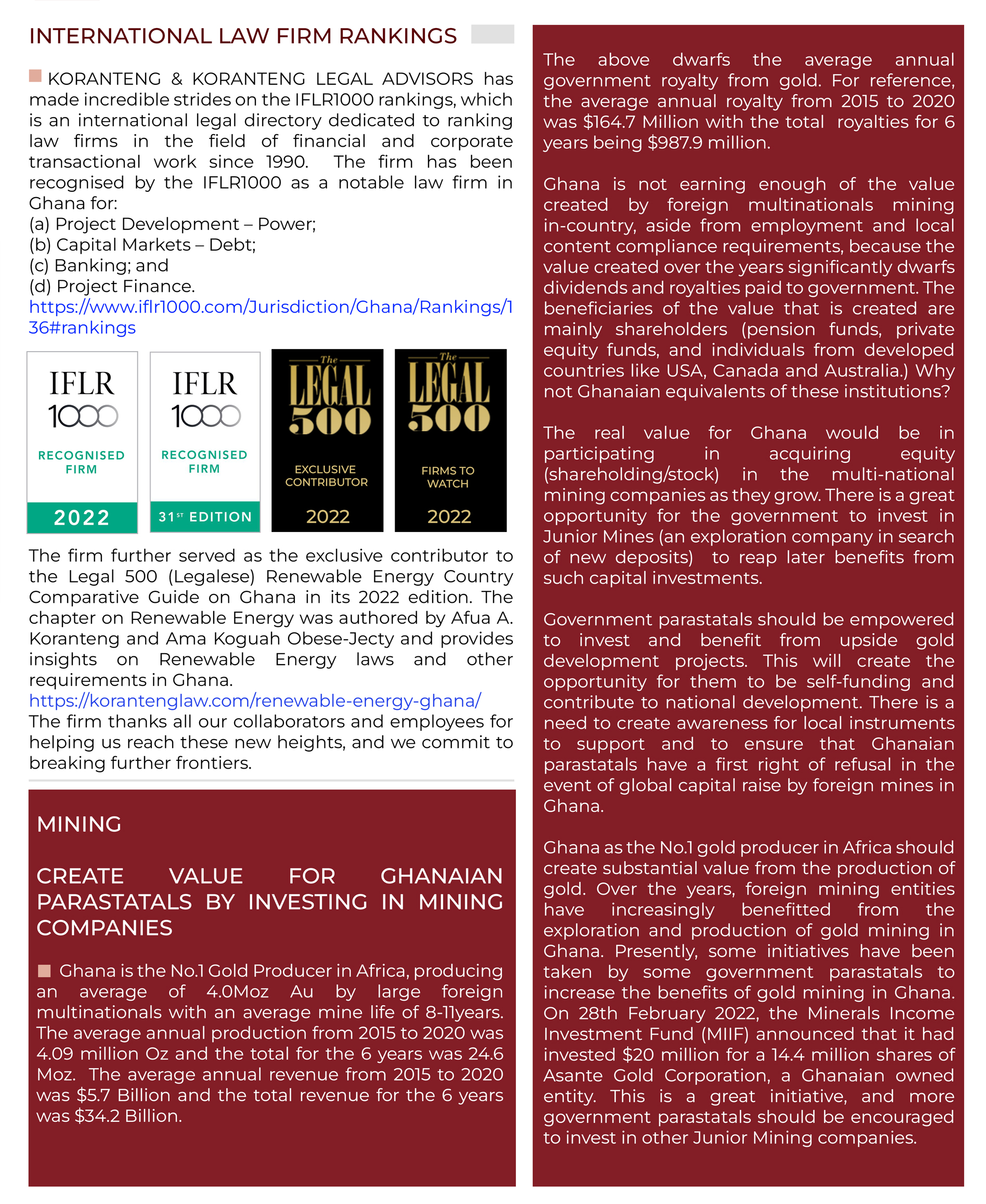
Koranteng and Koranteng Legal Advisors was the exclusive contributor to the Legal 500 (Legalese) Renewable Energy Country Comparative Guide on Ghana in its 2022 edition.
Our chapter on Renewable Energy was authored by Afua Adubea Koranteng and Ama Kagua Obese-Jecty and provides insights on Renewable Energy laws and other requirements in Ghana.
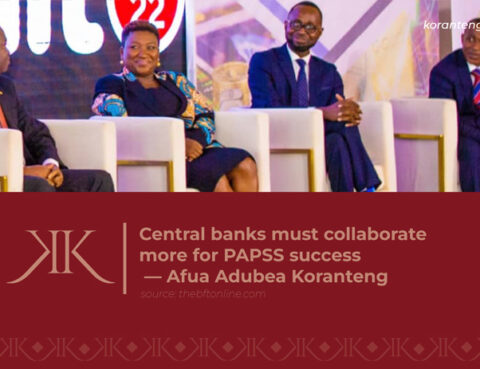
Central banks must collaborate more for PAPSS success — Afua Adubea Koranteng
Central banks must collaborate more for PAPSS success — Afua Adubea Koranteng
Managing Partner at Koranteng & Koranteng Legal Advisors, Afua Adubea Koranteng, is confident that constant communication and more collaboration between central banks and other regulatory bodies on the continent will better position them to harness benefits of the Pan African Payment and Settlement System (PAPSS) – the cross-border, financial market infrastructure enabling payment transactions across Africa.
According to her, as measures are being considered those two cannot be left out – given the need for a standardised form of rules and procedures to enhance intra-Africa trade processes.
“Collaboration between the central canks will lead to a more standardised form of rules and procedures for an enhanced PAPSS. I would say these are key measures.
“The various central banks are in control of what happens within the PAPSS. It’s clear they have got it under their thumb and know what to do as regulators. Imagine if all central banks have regulations that slightly differ? So the issue is more collaboration to get to a point where there is a standard form as far as the system is concerned,” she said.
She made these remarks at the Money Summit organised by the Business and Financial Times, focused on the ‘Africa’s Payment and Settlement System; Opportunities, Challenges, and the Way Forward’, where she said the system could help make Africa’s local currencies stronger – given that it allows for trading with each country’s currency.
“The beauty of it is that most countries will be reliant on their local currency, and it will beef-up respective currencies. Imagine if each country had a strong currency, there would be no need for external dollars.
“The PAPSS’ success will also be dependent on the fact that each country’s currency will be useful, and it only becomes useful when it is strong. I believe it is a real game-changer, and the more commercial banks sign onto the system it will revolutionalise payment systems on the continent,” she said.
Education
Ms. Koranteng also holds that the success of PAPSS depends on how widely business folk understand the system; and for that matter, each regulator must sensitise the public to carry them along.
“I met a businessman at the banking hall, and he did not know anything about PAPSS. It is critical that you have the whole public, starting from SMEs, get to a point where they know and understand the system; then, the system’s upscaling will be far increased,” she noted.
Industrialised economies
Responding to the argument put forth by other experts that countries must diversify produce to increase trade volumes, she argues there is more room for businesses on the continent – and that energy must be channelled into industrialising the economies.
“I don’t think the issue, for me, is diversification. I think there is enough room for businesses on the continent. If we have all these exports of produce outside Africa, then the key thing is that these economies within Africa should be enhanced and industrialised sufficiently. Enough that between ourselves we are trading more and within the continent; we can significantly increase the amount of trade that we undertake,” she said.
source: thebftonline.com
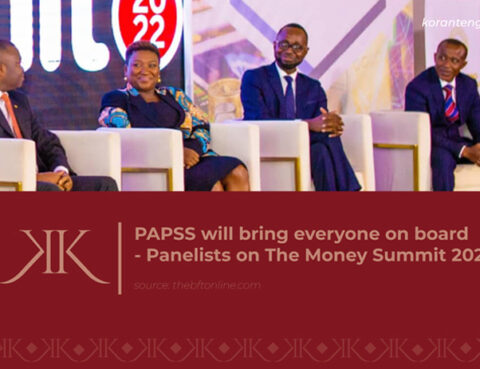
PAPSS will bring everyone on board
PAPSS will bring everyone on board
The Pan African Payment and Settlement System (PAPSS) is poised to incorporate all regulated payment and settlement outlets across participating countries into its framework, and in the process ensure that no segment of the economy is left out.
In Ghana, banks and non-bank financial institutions – including saving and loans companies, fintechs and mobile money platforms – will be able to access PAPSS through their participation on the Ghana Interbank Payment and Settlement Systems Limited (GhIPSS) platform.
This came to light at the second edition of The Money Summit organised by the B&FT, which had as its theme ‘Africa’s Economic Growth – Facilitating Investment, Payments and Settlement Systems’.
Speaking as part of the first plenary at the event, where the focus was on Africa’s Payment and Settlement System; Opportunities, Challenges, and the Way Forward, the Head of Payment Systems at BoG, Dr. Settor Amediku, explained that GhIPSS is at an advanced stage of being linked to PAPSS; adding that the move will deepen financial inclusion as businesses will be able to execute transactions through digital tools, including mobile phones.
“PAPSS will work with all regulated payment institutions in every African country. For example, in the case of Ghana, all our banks are going to be linked to the PAPSS infrastructure through GhIPSS. We have licensed fintechs, we have savings and loans companies, and we have other payment companies that are already linked with GhIPSS… with your mobile phone, you can do transactions through the PAPSS infrastructure,” he remarked.
Addressing concerns that the system could be compromised due to the shareholder composition of Afreximbank – which developed the platform, Dr. Amediku explained that the participating central banks are custodians of the payment system and remain responsible for the day-to-day running of PAPSS in accordance with its mandate.
“Afreximbank is only providing the infrastructure. It is our duty to ensure that payment and settlement systems support the economy of our respective countries. So there should be no fear that Afreximbank will dictate to us how our payment systems should be run, because this is the constitutional mandate of the member central banks,” he added.
Regulator’s pledge
Describing PAPSS as a major step in unleashing the region’s trade and investment opportunities, the Second Deputy Governor of the BoG, Elsie Addo Awadzi, in her keynote address stressed the regulator’s preparedness to be firm as a member of the Governing Council of PAPSS.
“As a member of the governing council of PAPSS, the Bank of Ghana has offered maximum support to the testing and pilot phases of the PAPSS. The BoG also continues to promote a modern, innovative, resilient and inclusive payment system in Ghana to help boost commerce and access to financial services which intend supporting Ghanaian MSMEs to plug into the AfCFTA market and beyond,” she said.
She added that the impending e-Cedi, which is backed by the apex bank’s balance sheet, will serve as a critical tool in driving an inclusive and formalised economy as the nation emerges from effects of the pandemic and Russia-Ukraine crisis.
Core function
For the Chief Financial Officer at Fidelity Bank, Attah Yeboah-Gyan, there is a need to clarify the core function of PAPSS – which is to facilitate payment for goods and services. Otherwise, he stated, the platform will be evaluated using the wrong metrics.
He explained that the system will address issues around the delays associated with transactions, cost of payment as well as the demand for forex which characterises many countries on the continent; it is no substitute for or direct remedy to problems of infrastructure, political stability, or diversity of goods and services.
“PAPSS in itself will not drive trade volumes, and that must be made clear. Trade volumes are low because we do not have economies that are diversified enough, coupled with other infrastructure, social and political factors,” he said, adding that the cost and time benefits of PAPSS might lead sovereign states to see the usefulness of a single currency and make them work faster toward the required convergence criteria.
Tokens
With the growing appeal of cryptocurrencies as a medium of cross-border payments fuelling calls for their acceptance locally, the Country Manager at AZA Finance, Nana Yaw Owusu-Banahene stated that despite these developments, PAPSS at this stage of its execution remains solely a payment rail for legal tender.
He added that there is an expanding list of firms that serve as exchange platforms where digital assets are traded, but PAPSS is currently not one of them – although, with advancements in the regulatory space, it could be used as a vehicle for payment for these tokenised assets. “PAPSS is not built as an exchange for tokenised assets; there are other dedicated firms offering other services,” he said.
On a similar tangent, with innovations around Central Bank Digital Currencies (CBDCs) for cross-border payments, as in the case of the multinational mBridge project that serves Hong Kong, China, Thailand and the United Arab Emirates, Mr. Banahene said he expects to see similar developments, particularly between pioneers on the continent – Ghana and Nigeria.
Chief Executive Officer of the Ghana Investment Promotion Centre (GIPC), Yofi Grant, argued that operators of PAPSS must take notice of advances in digital and decentralised finance.
AML/CTF
For Managing Partner at Koranteng & Koranteng Legal Advisors, Afua Adubea Koranteng, existing due diligence frameworks of participating central banks, as well as the presence of MANSA – the reference Africa customer due diligence repository platform, will ensure that PAPSS is not used as a conduit for illicit funds and participating countries will not fall foul of the Financial Action Task Force (FAFT) stipulations.
“Before a trade is begun, much due diligence will have to be done by the institution initiating the transaction; and with the BoG being very active, I do not think we will be in a situation where any regulator will be trigger-happy with sanctions,” she explained.
The National Identification Card, otherwise known as the Ghana Card, was lauded for its role in advancing know your customer and due diligence compliance.
On his part, the Head of Product Management at Hubtel, Patrick Asare-Frimpong, called for increased collaboration among parties within the pan-African payment and settlement ecosystem.
The Head of Product and Business Development at PAPSS, Monica Oraro who joined in virtually, highlighted the preparedness of the platform’s operators to ensure it fulfils the purpose for which it was designed.
source: thebftonline.com
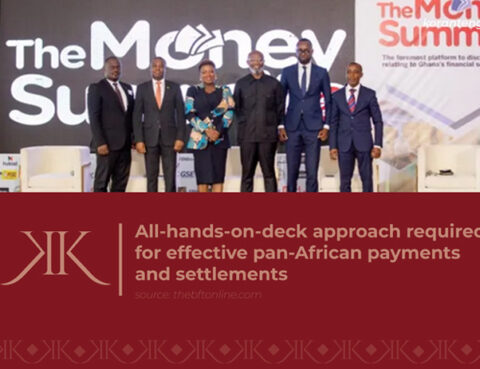
All-hands-on-deck approach required for effective pan-African payments and settlements
Enhanced collaboration by relevant stakeholders is needed to harness the full range of benefits, including interoperability, from payment and settlement systems on the continent, panelists at the second edition of The Money Summit, organised by the B&FT have said.
According to the panelists, who were speaking on the topic: ‘Africa’s Payment and Settlement Systems; Opportunities, Challenges, and the Way Forward’, at the first plenary of the foremost platform to discuss issues relating to the financial sector, a major challenge of the African continent has low internal trade due to the absence of a basic payment infrastructure.
To remedy this, the Pan-African Payment and Settlement Systems (PAPSS) was birthed to make the African Continental Free Trade Area (AfCFTA) – the world’s largest trading and economic bloc – work effectively.
Head of Payment Systems at the Bank of Ghana, Dr. Settor Amediku, said the initial commitment from participating central banks has been strong, as evidenced by their willingness to connect their real-time gross settlement (RTGS) systems.
He indicated that under the auspices of the Association of African Central Banks (AACB), Payment System Integrated Working Committee, and Mobile Working Integrated Working Committee, the feedback and commitment received to support the successful implementation of PAPSS has been very positive.
This, he added, will not only facilitate trade but ensure the speed and convenience from trading in any of the approximately 40 currencies on the continent.
“Trade among African countries is very low. Current report from the United Nations Conference on Trade and Development shows that intra-African trade is only around 15 percent, which is very low compared to 68 percent in Europe and 58 percent in Asia. This means we need to do more in promoting trade, and one of the things we need to do to promote trade is to ensure we have a payment infrastructure.
“If we are able to make an integrated interoperability system like PAPSS work, then people can make payments to trade partners in other countries in their own currency, and the speed of transaction also will become fast,” he said.
Dr. Settor also reiterated that the continent needs to have a robust technological infrastructure to leverage AfCFTA.
Taking his turn, the Country Manager at AZA Finance, Nana Yaw Banahene, stated that the PAPSS has become the basic infrastructure to leverage to promote trade; but the right tools and process must be followed to make it successful, keeping in mind that every country has its own digital payments regulations.
On his part, Attah Yeboah Gyan, Executive of Fidelity Bank, opined that PAPSS will not drive trade volumes in itself. He said the various countries need to diversify their offerings and champion production in sectors where they have a competitive advantage so that exchanges can drive trade.
“I think that the only way for trade to increase and for the continent to develop is to produce and sell, or have a market among ourselves as a continent,” he stated.
source: thebftonline.com
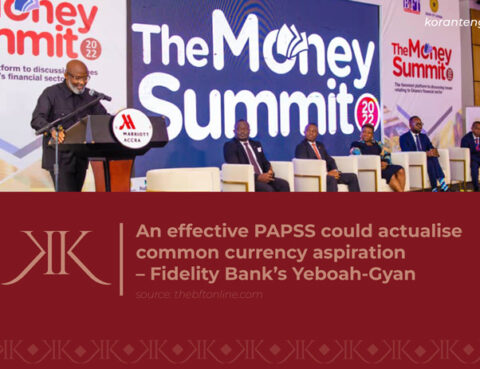
AN EFFECTIVE PAPSS COULD ACTUALISE COMMON CURRENCY ASPIRATION – FIDELITY BANK’S YEBOAH-GYAN
AN EFFECTIVE PAPSS COULD ACTUALISE COMMON CURRENCY ASPIRATION – FIDELITY BANK’S YEBOAH-GYAN
Effective implementation of the Pan African Payments and Settlement System (PAPSS) could move the continent closer to realising a common currency.
This, according to Atta Yeboah-Gyan – an executive at Fidelity Bank, is because PAPSS will eliminate many of the challenges with payments within the continent; the demand for foreign currencies, speed of transaction processing and the cost of currency conversion.
“The coming into effect of the PAPSS platform is going to make a compelling case for countries in Africa to begin fast-tracking the aspiration toward having a single currency,” he said.
When this happens, he said, all transactions will be settled in that currency, and “we are going to have the value of our currencies evident, because it will reflect the value of goods we produce and not because there is excessive demand for any hard currency. So, the value of a common currency would be the reflection of value for the goods we produce rather than an interplay of demand and supply”.
Mr. Yeboah-Gyan spoke at the second edition of The Money Summit (TMS) in Accra, organised by the Business and Financial Times (B&FT) in partnership with Bank of Ghana (BoG) and with support from Hubtel, Letshego, AZA Finance, FBNBank, Ghana Stock Exchange (GSE) and Securities and Exchange Commission (SEC). It was themed Africa’s Economic Growth- facilitating Investment, payments and Settlement Systems.
The continent currently spends over US$5billion as payment transaction cost yearly, due to the lack of common payment platform and currency. However, he said the PAPSS platform will permit settlement on net basis – which means demand for hard currencies, like the dollar, will reduce. This will impact the stabilisation of currencies on the continent. A stable currency will then help most economies within the continent to meet certain criteria for a common currency.
Meanwhile, he said, strong political will and sound monetary framework from member-states are of more importance to achieving the single currency aspiration that has eluded the continent for many decades. “It behoves African governments and monetary policy regulatory authorities to begin managing our economies well, stabilise the political environment and get the convergence criteria in place, so we can issue common currencies that we can trade in,” he added.
PAPSS, launched earlier this year, will serve as a continent-wide platform for processing, clearing and settling intra-African transactions and payments; and is seen as a major step toward boosting cross-border trade under the African Continental Free Trade Area.
source: thebftonline.com
PROHIBITION OF PRICING, ADVERTISING, RECEIPTING AND/OR MAKING PAYMENTS FOR GOODS & SERVICES IN FOREIGN CURRENCY IN GHANA
PROHIBITION OF PRICING, ADVERTISING, RECEIPTING AND/OR MAKING PAYMENTS FOR GOODS & SERVICES IN FOREIGN CURRENCY IN GHANA
Further to Bank of Ghana’s previous notices Nos. BG/GOV/SEC/2019/07 and BG/GOV/SEC/2012/12 which advised the public against unauthorized dealings in foreign currency, Bank of Ghana hereby reminds the public that in accordance with the Foreign Exchange Act, 2006 (Act 723), companies, institutions and individuals are prohibited from:
i. engaging in foreign exchange business without a licence issued by Bank of Ghana; or
ii. pricing, advertising, receipting or making payments for goods and services in foreign currency in Ghana, without written authorization from Bank of Ghana.
Such violations are punishable on summary conviction, by a fine of up to seven hundred (700) penalty units or a term of imprisonment of not more than eighteen
(18) months, or both. Bank of Ghana hereby cautions the general public to desist from dealing in illegal forex activities (black market transactions), pricing, advertising, receipting or making payments for goods and services in foreign currency in Ghana, without the requisite licence or authorization from Bank of Ghana.
The General Public is hereby notified that the sole legal tender in Ghana is the
Ghana Cedi.
Bank of Ghana, in collaboration with National Security and Law Enforcement Agencies, will continue to clamp down on illegal foreign exchange operations. All
offenders shall be dealt with in accordance with the law.
Bank of Ghana urges the general public to report any violations witnessed to:
Telephone: 0302665005
Email: complaints.office@bog.gov.gh
WhatsApp: 0596912354 or 0501502270
(SGD) 5th APRIL 2022
SANDRA THOMPSON (MS)
SECRETARY
Credit: bog.gov.gh
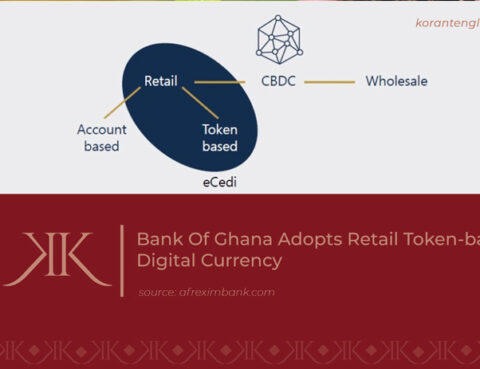
BANK OF GHANA ADOPTS RETAIL TOKEN-BASED DIGITAL CURRENCY
BANK OF GHANA ADOPTS RETAIL TOKEN-BASED DIGITAL CURRENCY
The Bank of Ghana has adopted a retail token-based central bank digital currency (CBDC) as the ‘eCedi of choice’, which enables the currency to be stored locally on a card, on a phone, or a smart device and can be passed on from one user to another.
The retail CBDC is digital cash that is designed to take on most traditional attributes of physical cash, as well as have other additional functionalities depending on its final design.
The central bank in its eCedi design paper said, in line with the strategic initiatives and key motivations, the eCedi will be designed to have characteristics such as being accessible to both the general public and businesses; covering low-value payments as well as utilising existing payment infrastructure; and mitigate potential risks for the banking system disintermediation.
“In this context, the eCedi is considered a digital version of the Ghana cedi notes and coins that are issued by BoG. Accordingly, the eCedi is a legal tender and convertible to Ghana cedi in the form of cash or deposit money at a 1:1 ratio,” the central bank said.
Retail CBDC can be used by individuals for Peer-to-Peer (P2P) transfers, and Person-to-Business (P2B), Business-to-Person (B2P), B2B, Person-to-Government (P2G), and G2P payments besides cash and existing payment media and instruments.
Contrary to banknotes that are stored in physical wallets, the eCedi is stored in a digital wallet since it is represented by a token, which is also a value note. Payment is done by transferring the value note from one person to another, similarly to cash whereby payment is done by transferring physical banknotes and/or coins from person A to person B.
“The Bank of Ghana has proceeded on the understanding that a CBDC may be designed with a variety of possible architectures and design features. In this regard, Ghana’s CBDC project is tailored to needs as stated in its policy objectives,” said the Bank of Ghana Governor, Dr. Ernest Addison.
“It is envisaged that the digital currency will dovetail with the existing payment landscape of Ghana. The Bank of Ghana will therefore extensively engage stakeholders as much as possible for their active participation and successful implementation,” he added.
The interest in a Central Bank Digital Currency (CBDC) has escalated in the past few years. According to a BIS survey in 2021 on CBDC, 86 percent of central banks were actively researching the potential for CBDCs, 60 percent were experimenting with the technology, and 14 percent were deploying pilot projects.
Given that user acceptance of the eCedi is contingent on it meeting consumer needs, the Bank of Ghana said the eCedi design will factor in the needs and expectations of consumers (on the client`s side) and merchants (on the acceptance side).
Recent market surveys by the Bank indicate that smartphone apps and smartcards are considered to be the optimal solutions from clients’ perspective.
Accordingly, BoG has designed two types of wallets for the eCedi in the form of hosted wallets – server-based storage systems that are managed by financial institutions; and hardware wallets – secure portable storage devices held by individuals.
“The most optimal form factor for the eCedi wallet is the app for a smartphone developed by commercial banks, FinTech companies and other service providers. Other devices can be utilised depending on user preferences and payment scenarios. These could be smartcards (including the biometric ones) or wearables such as smartwatches that contain communication capabilities and a secure element,” the bank said.
Similarly, the BoG further highlighted that debit cards and USSD devices which are associated with the existing payment landscape in the country can be adapted to the eCedi. Thus, users can get the type of wallet that suits their needs from a bank or other financial service provider.
Credit: B&FT online
(By Joshua Worlasi AMLANU)

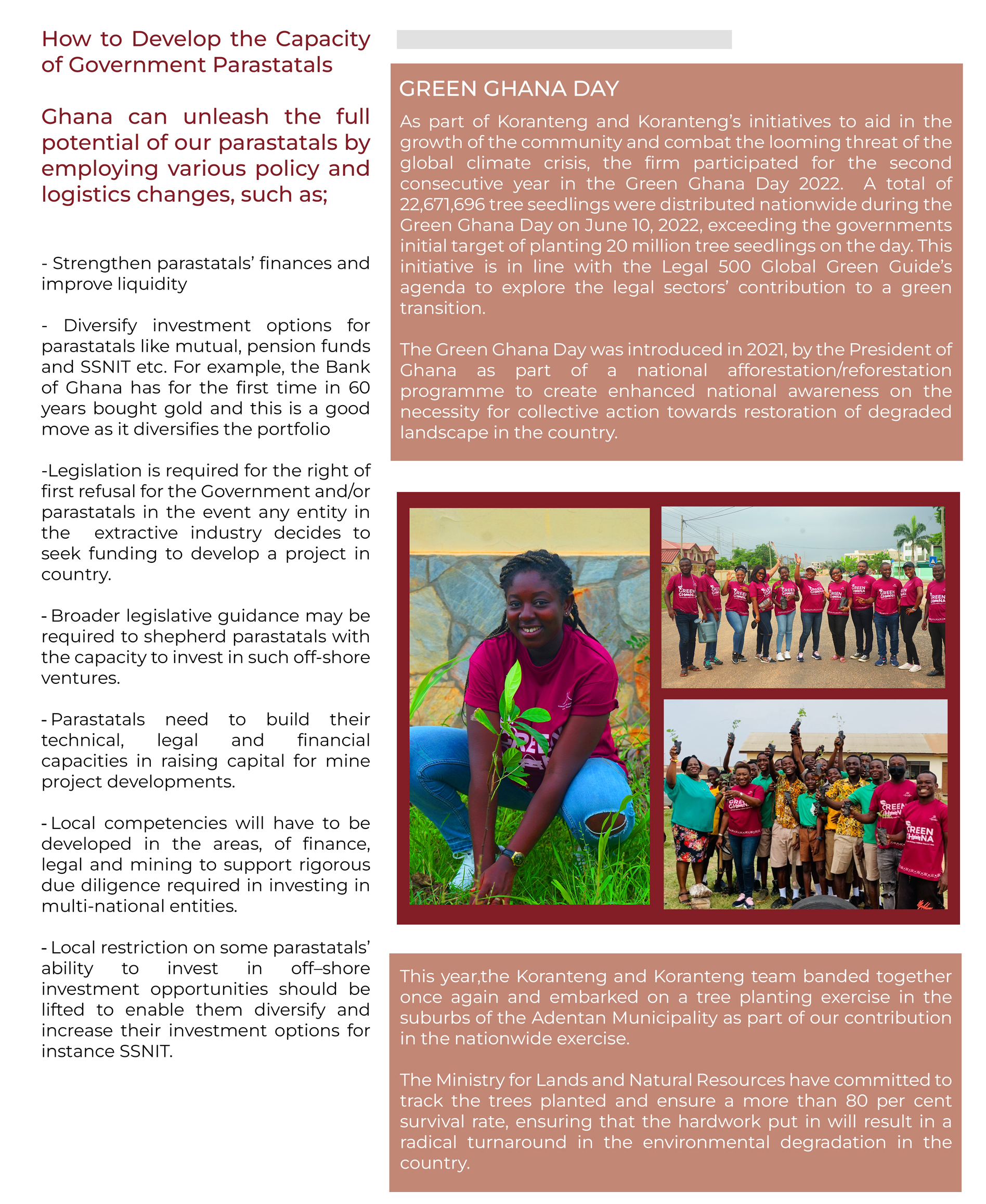
PRESIDENT AKUFFO-ADDO DECLARES JUNE 10 AS GREEN GHANA DAY
PRESIDENT AKUFFO-ADDO DECLARES JUNE 10 AS GREEN GHANA DAY
“We have chosen as a theme for this years’ edition, ‘Mobilising for a Greener Future’.”
“A greener future is necessary for the survival of our planet, and we must do all we can to bequeath to future generations, a greener, better planet,” he said.
President Akufo-Addo made these remarks when he launched the 2022 Green Ghana Day in Accra yesterday.
“This requires that we mobilise our entire population to ensure that each Ghanaian and each foreigner living in Ghana plants at least one tree on the day.
“But we can only achieve this if we mobilise our populations, and commit to the restoration of our ecosystems,” he said.
President Akufo-Addo appealed to all Ghanaians, including government workers, Members of Parliament, corporate Ghana, traditional leaders, entrepreneurs, teachers, nurses, doctors, lawyers, judges, students, religious leaders, and members of the diplomatic corps, among others, to participate in the exercise.
The Green Ghana initiative, according to the President, would leave a big legacy for future generations through the planting of trees.
He said Article 41(k) of the country’s Constitution imposed a duty on every citizen to protect and safeguard the environment, and urged Ghanaians to consider the tree planting exercise as one of the ways of fulfilling that constitutional obligation.
“This noble venture ought to be funded and executed through our collective efforts, and as much as possible, without burdening the public treasury. We can do it and I call on all Ghanaians and residents of Ghana to contribute in diverse ways in this Godly endeavour,” he said.
President Akufo-Addo indicated that the country’s forest was one of the most important natural resources for the country’s socio-economic development.
“Apart from their economic benefits, forests are necessary for our own survival and the survival of our planet.
“With just eight years to achieve the Goals we set for ourselves in the Sustainable Development Goals, climate change continues to derail our efforts by impacting the fundamentals required to achieve the Goals”.
No poverty, zero hunger, good health, gender equality, clean water, affordable and clean energy, reduced inequalities, responsible consumption and production, life on land, and life below water, are all being negatively impacted by climate change,” he said.
The Minister of Lands and Natural Resources, Samuel Jinapor, expressed the ministry’s commitment to undertake aggressive afforestation and reforestation, and galvanise Ghanaians to participate in greening the nation.
He said the ministry would take all necessary steps to protect the country’s forest cover from further depletion.
In that regard, he said the ministry had placed an outright ban on the harvesting, salvaging, processing, auctioning, exporting and importing of Rosewood.
“We recognise that the cause of making Ghana Green requires collective action and the participation of all and sundry.
“We do this for the survival of our planet, and this is the time to preserve our country for the future. Let us join hands to mobilise for a greener future,” he said.