
A Summary of Ghana’s Development Finance Institutions Act 2020
The Development Finance Institutions Act, 2020 (Act 1032) (the “Act”) was passed by the Ghanaian Parliament and received Presidential assent on 27thOctober, 2020. The Act establishes a framework for the licensing, regulation, and supervision of Development Finance Institutions (DFI’s) within the country.
Development finance business is defined in the Act to mean the “provision of short, medium and long term funding, guarantees and other credit enhancement structures to key sectors of the economy in a financially sustainable manner.” Any person that intends to engage in this business must be a body corporate registered under Ghanaian law and must obtain a license from the Bank of Ghana (BoG).
Persons intending to obtain a license must send a written application to the Bank of Ghana accompanied by several stated documents and the particulars of the company, proposed directors and key management staff in addition to paying the relevant processing fees. There are four license classes available namely: (Class 1 license) -DFIs which provide for wholesale development finance; (Class 2 license) -DFIs which provide retail development finance; (Class 3 license)- DFIs which provide guarantee development finance; and (Class 4 license) -DFIs which provide a combination of any of the three.
Requirements for Foreign DFI’s under the Act
Notably, the Act does not apply to DFIs governed by a multilateral treaty or under sovereign bilateral agreements such as the World Bank and the African Development Bank.
The Bank of Ghana is assigned the role of regulating and supervising DFIs in the country and is responsible for issuing licenses as well as granting approval to foreign DFIs to set up representative offices in Ghana.
Permissions of Engagement and Product Offerings under the Act
While DFIs are permitted to engage in direct and indirect debt or equity financing, refinancing and loan syndication amongst other related activities, they cannot engage in the acceptance of any type of deposits. DFIs must comply with the liquidity and minimum paid-up capital (i.e., initial funds required to start-up a DFI and the operational start-up costs prescribed by BoG) requirements and accompanying calculations prescribed for their license class by the Bank of Ghana. They are also required to set up a Reserve Fund where a portion of their net profits for the year are transferred, calculated based on the proportion of the amount in the fund to their paid-up capital. Notably, DFIs must invest a minimum of 75% of loanable funds in medium (3-7years) and long term (exceeding 7 years) loans and no more than 25% in short term (less than 3 years) loans. A breach of the above requirements, following a notice by the BoG, would attract a penalty.
Ownership and Control as prescribed by the Act
The DFIs are required to bi-annually furnish the BoG with a report on its organisational structure. Any transfer of shares in the DFI which would affect significant shareholdings must be done with prior approval the BoG. In the same vein, a person cannot sell or transfer the whole or part of the business, undertake a merger or engage in the reconstruction of a DFI without a formal application to and approval from the BoG.
The Act also provides for governance of DFIs, stating that a DFI shall have a Board of Directors, Chief Executive Officer and any other necessary staff. The Board is responsible for the overall corporate governance of the institution and members are to serve for 4 years with the option of re-election for another term. In addition, the Act provides for the composition, qualification, meetings, and performance evaluation of board members. DFIs are also required to have Audit and Risk Committees to oversee audit and risk management functions. Provisions are included to address conflict of interest scenarios and to secure compliance with their disclosure. Notably, the DFI must seek prior written approval from the BoG in the appointment of a CEO, director and any key management personnel.
With regard to restrictions on lending and investment, the Act contains provisions prohibiting an advance or loan against the security of the DFI’s own shares, limiting the DFI’s financial exposure, restricting transactions with an affiliate or insider, restricting lending to staff, and limiting the scope of the DFI’s equity investments.
The Act likewise provides guidelines on accounting standards and disclosures in financial statements for the DFIs. In addition, the BoG may require the submission of information and data it requires relating to the DFI’s affairs and has the power to carry out an examination of its operations.
The Current Situation in Ghana
Ghana has a number of foreign DFIs which are set up under bilateral arrangements, however, there are currently no local development finance institutions registered as such with the Bank of Ghana. Entities like the National Investment Bank and Agricultural Development Bank started out as development banks but have since taken on commercial activities. Similarly, the Export Development and Investment Fund (a statutory corporation that provides grants and loans for the development of agro-processing and exporting) was not registered as a financial institution with BoG. The Ghana Infrastructure Investment Fund, also a statutory corporation, similarly offers funding for infrastructure development projects but is not registered as a financial institution with the BoG.
The World Bank provided funding for the establishment of the Development Bank of Ghana in 2020. This will be the first properly registered DFI under the Act and we expect that their specific focus on development projects will set the pace for other institutions to follow.
Conclusion
The Act is a recognition by the Ghanaian government of the growing structural and demographic changes and a new industrial revolution with its attendant impact on human capital. This requires Ghana and Africa to find innovative mediums of financing and generating capital in order not to be left behind.
Ghana seeks to open up to international DFIs while it mulls the idea of a Government- owned DFI which will help channel private investments into productive sectors, new technologies and help accelerate market efforts to achieve the sustainable development goals.
Written By: Prince Ogunlana, Legal Intern, Koranteng & Koranteng Legal Advisors
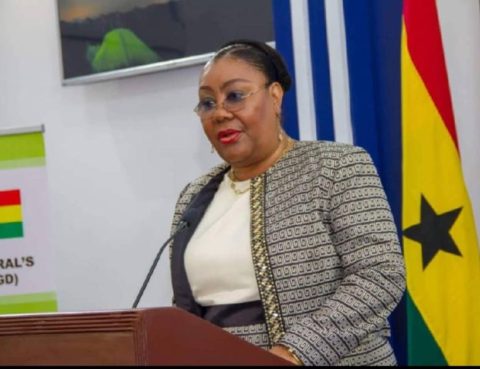
Registrar-General To Delete Dormant Companies From Register
From 1963 till date, the Registrar-General’s Department has registered over 1.2 million companies. Over time, some of these companies have become dormant or have ceased operations altogether. However, their names remain in the Register of Companies. The Department estimates that there may be up to 740,628 inactive companies on their roll. It has therefore decided to embark on a cleanup exercise to delete dormant companies from the Register.
On 18th March 2021, The Registrar-General’s Department issued a Final Notice to all Directors, Shareholders, and Company Secretaries of Public/Private Companies Limited by Shares, Private Unlimited Companies, Companies Limited by Guarantee and External Companies on its intended delisting dormant Companies from the Companies database. This notice comes on the heels of two earlier ones published on 12th May and on 1st December, 2020 in the National Dailies and the Department’s website respectively. Companies therefore have between now and 30th June, 2021 to comply with this directive.
Apart from the dormant companies that were registered before 2011, there are some companies that were registered more recently who have never filed their Annual Returns before or re-registered with the Department since the new Company database (eRegistrar) was created. Those companies are also not in good standing with the Department.
Under Section 289 of the Companies Act 2019, (Act 992) a company can be stricken off the Register due to the failure to its Annual Returns on time or due to a change in the Company’s Registered Office and Principal Place of Business without notifying the Registrar of Companies timeously.
After the expiration of the 3 month from the date of the Notice, i.e by 30th June 2021, the names of the Companies/Partnerships that have still failed to comply with the moratoriums granted would have their names stricken off the Register and the company dissolved.
Find the full press release on RGD’s notice to delete dormant companies from the Register of Companies here Press Release
Find the list of impending companies to be deleted at www.rgd.gov.gh at the bottom of the news page
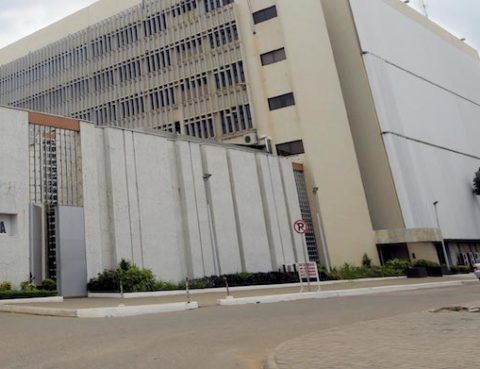
Bank of Ghana Increases Sanctions for the issuance of Dud Cheques.
Under section 313(A) of the Criminal Offences Act, 1960 (Act 29) as amended, it is an offence punishable by a fine and/or imprisonment of up to five (5) years for any person to issue a dud cheque. Yet the Bank of Ghana has noted with great alarm the high issuance of dud cheques by some customers of banks and specialized deposit taking institutions (SDTI).
In 2005, the Central Bank introduced certain sanctions with the hope of curbing the practice. yet since then, people have continued to issue dud cheques, unperturbed. This has had grave consequences on the acceptance of cheques by many institutions. In light of this, Bank of Ghana has revised its sanctioning regime to discourage the malpractice.
Hence forth, persons who issue dud cheques would face a number of increased sanctions. These include a warning for first timers, surveillance for several years, among others. A person caught could even lose the right to own or issue any cheques at all for prolonged periods. And all these are in addition to the fine or jail time a person may face under the criminal law
Find the full Bank of Ghana Notice on the sanctions for the issuance of dud cheques here
Source: bog.gov.gh
How Can Laws Promoting Gender and Disability Rights Support Economic Development?
Introduction
Very often, persons living with various forms of disabilities are denied fundamental freedoms and basic socio-economic opportunities because of the traditional notion that their impairments render them unproductive and fruitless. Gender inequality is a social state whereby boys and girls are not treated as equals due to a distinction in their biological, psychological, or cultural make-up. Gender inequality with reference to persons living with disabilities (hereinafter referred to as PWDs) has been a global challenge especially in developing countries in spite of existing laws that seek to protect these persons deemed to be vulnerable and less privileged. This has adverse effects on the individuals themselves and increases their dependency on government which gradually impedes economic development because they do not work to fend for themselves or they are left in isolation due to social stigma. This paper, therefore, discusses the relationship existing between disability rights and economic development and suggests that effective legislation, when it comes to gender and disability can reduce dependency rate on governments, increase countries’ eligibility to foreign aid, ensure effective skill acquisition and training as well as increase government revenue to boost economic development.
Gender and Disability
The World Health Organization defines “gender” as “the socially constructed characteristics of women and men – such as the norms, roles and relationships that exist between them”. It is derived from the Latin word “genus” which means
race or kind. People who do not describe themselves as either masculine or feminine refer to themselves as non-binary, agender, genderqueer, or bigender. Gender may also be influenced by legal status, social interactions, public persona, personal experiences, and psychological setting. It is trite that people are sometimes “bullied” or discriminated against based on their gender statuses (with the feminine mostly being the victim).
“A disability is any condition of the body or mind (impairment) that makes it more difficult for a person with that condition to do certain activities (activity limitation) and interact with the world around them (participation restrictions)”. Persons with disabilities include those who have long-term physical, mental, intellectual or sensory
impairments which in interaction with various barriers may hinder their full and effective participation in society on an equal basis with others. In as much as gender inequality affects a lot of people in Africa and even worldwide, people living with disability face greater challenges with reference to their rights. This is simply because such persons suffer from impairment, activity limitation or participation restriction.
Source: Ms. Gloria Korankyewaa Nyarko

The Central Bank of Ghana Launches a Regulatory and Innovation Sandbox Prioritizing Blockchain Technology
The Central Bank of Ghana (BoG) has launched a regulatory and innovation sandbox pilot in line with its commitment to create an inclusive regulatory environment which promotes FinTech and innovation. The sandbox pilot will test innovative products, services, and business models under the regulator’s supervision.
The Bank of Ghana has specifically mentioned that the sandbox will give preference to products and services leveraging blockchain technology and remittances among others.
Below is the complete outline of categories that will be given preference in the sandbox pilot:
- Blockchain technology
- Remittance products
- Crowdfunding products and services
- e-KYC platforms
- RegTech (regulatory technology)
- SupTech (supervisory technology)
- Digital banking
- Products and services targeting women financial inclusion
- Innovative merchant payment solutions for MSMEs
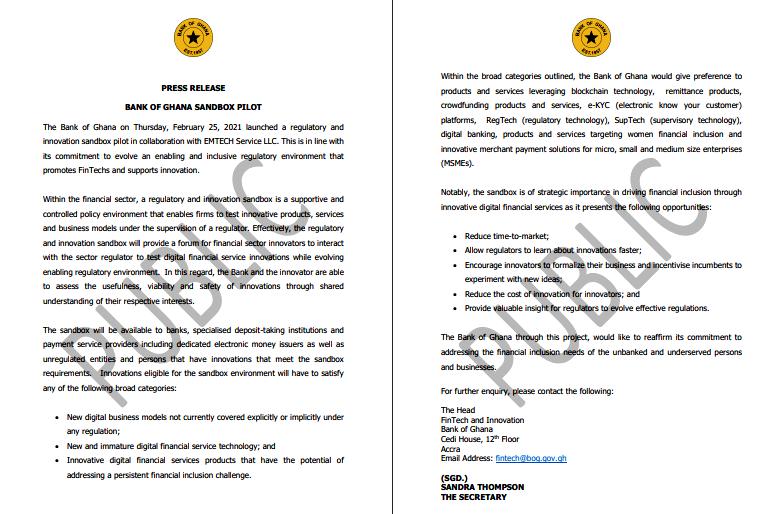
The sandbox will be open and available to:
- Banks
- Specialized deposit-taking institutions and payment service
- providers such as dedicated electronic money issuers
- Unregulated entities and persons with innovations that meet requirements
Innovations eligible for the regulatory and innovation sandbox environment will have to satisfy any of the following broad categories:
- New digital business models not currently covered explicitly or implicitly under any regulation
- New and immature digital financial service technology
- Innovative digital financial services products that have the potential of addressing a persistent financial inclusion challenge
In 2020, the Central bank Of Ghana expressed its interest in developing a virtual currency for the economy. And the new sandbox could just be a step in that direction.
A recent report by the International Monetary Fund (IMF) also listed Ghana as one of the 40 countries globally legally allowed to issue a digital currency. Out of the list, only 5 African countries are listed with Ghana being among them with its E-Cedi initiative.
source: BitcoinKe
More on digital payment in Ghana:

Ghana Ready for First Sub-Saharan African LNG-to-Power Project
Ghana is set to open sub-Saharan Africa’s first liquefied natural gas-to-power project as it moves to position itself as a hub for the cleaner and cheaper fuel in the region.
LNG-to-power projects have been booming from Asian to Latin American in recent years as they allow nations to switch from dirtier fossil fuels to keep the lights on. And for sellers, integrated LNG-to-power provides a guaranteed outlet for the fuel.
Tema LNG Terminal Co. received the floating regasification unit from Jiangnan, China on Wednesday, paving the way for the supply of 1.7 million tons of natural gas per year for power generation sometime this quarter, Edmund Agyeman-Duah, project manager at the company, said.
The company, backed by Helios Investment Partners and Africa Infrastructure Investment Managers, began building the $350 million project about two years ago.
“Ghana can now start to service the rest of the region with fuel that is continuously growing in popularity because of the cost and the significant environmental benefits it provides,” Agyeman-Duah said.
LNG has Lower Emissions of Greenhouse gases
On a lifecycle basis, LNG emits around half the greenhouse gas emissions that coal does when burnt to generate electricity, and compared to a typical new coal plant, natural gas emits 50 to 60% less carbon dioxide when combusted in a new efficient natural gas power plant, according to the International Group of Liquefied Natural Gas Importers.
For a country with 30 million people, Ghana’s electricity consumption has grown alongside its economy, but it remains lower than the average per capita consumption of Sub-Saharan Africa and far below that of developed countries. For comparison, a U.S. resident consumes more than 30 times as much electricity as a Ghanaian resident, according to World Bank data.
A Cheaper and More Reliable Source of Power
“The completion of the Tema LNG facility will be significant for Ghana and the wider West African sub-region because it will mean less dependency on the West African Gas Pipeline – which hasn’t always proved reliable,” Kissy Agyeman-Togobo, a partner and analyst at Songhai Advisory Group Ltd., said by phone from Accra, Ghana’s capital.
Tema LNG Terminal is getting its gas under a long-term contract with Royal Dutch Shell Plc, said Agyeman-Duah, who isn’t related to the analyst. State-owned Ghana National Petroleum Corp. is currently the mandatory off-taker who will receive regasified LNG to fuel plants in the Tema power and industrial enclave.
“There’s quite a bit of suppressed demand in the system,” he said. “There are a lot of industrial customers who work off-grid because of the interruptions they suffer in power supply.”
The company has given Spain’s Reganosa Servicios SL the contract for the operation and maintenance of the unit and associated 6 kilometer (3.7 miles) gas pipeline, it said in a statement.
The project was financed with a combination of equity and debt from a consortium of international banks, according to Agyeman-Duah, and its processed LNG is expected to be 30%-35% cheaper than heavy fuel oil, he said.
Source: bloomberg
Africa’s $180 Billion Internet Economy Future
Africa’s internet economy is transforming development on the continent. It is fostering economic opportunities, creating jobs, and providing innovative solutions to complex challenges, like access to healthcare, education, and finance.
The e-Conomy Africa 2020 report, is a unique collaboration between IFC and Google. It sheds light on the great potential of the continent’s internet economy, the promising tech entrepreneurs driving innovation, and the growing tech talent across the continent.
Analysis in the report finds that Africa’s Internet economy has the potential to reach $180 billion by 2025. This accounts for 5.2% of the continent’s gross domestic product (GDP). By 2050, the projected potential contribution could reach $712 billion, 8.5% of the continent’s GDP.
Driving this growth is a combination of increased access to faster and better quality Internet connectivity, a rapidly expanding urban population, a growing tech talent pool, a vibrant startup ecosystem, and Africa’s commitment to creating the world’s largest single market under the African Continental Free Trade Area.
Source: e-Conomy Africa
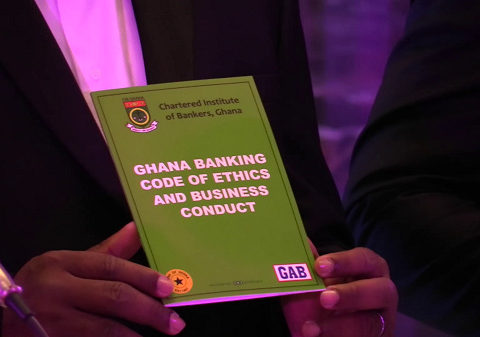
Ghana Banking Code of Ethics and Business Conduct Launched
The Chartered Institute of Bankers, Ghana (CIB) in collaboration with the Bank of Ghana (BoG) and the Ghana Association of Bankers (GAB) has launched the Ghana Banking Code of Ethics and Business Conduct.
This comes as part of efforts to curb the number of fraud-related cases perpetuated by staff within the banking industry.
President of the Chartered Institute of Bankers, Patricia Sappor launching the Code of Ethics explained it is intended to guide all practitioners to maintain the best banking practices and strong commitment to sound ethical and professional standards in the banking industry.
“This will ensure that Chartered Bankers continue to play critical roles in the banking industry and distinguish themselves on account of the significant contributions they make to the profession of banking as it is the only qualification customized to the core practice of banking,” Patricia Sappor said.
“The Code reinforces provisions made under Sections 18 (2) (d), 24 (1) (a) and the Third Schedule of Act 991. Thus, ensuring that all Financial Institution employees conduct their duties fairly, honestly and with integrity so as to uphold the mutual trust and public confidence bestowed upon them.” Sappor added.
“The effective implementation of the Code will foster a high level of integrity, discipline and etiquette in the banks leading to improved confidence amongst customers and the general public,” the CIB Ghana President stated.
The Code was developed by the Chartered Institute of Bankers Ghana in collaboration with the Ghana Bankers Association and the Bank of Ghana.
It is in line with Section 3 (d) of the Chartered Institute of Bankers Ghana Act, 2019 (Act 991) which reinforces the Institute’s mandate of setting standards and ensuring the observance of ethical standards and professional conduct among members of the banking profession in the country.
The Chartered Institute of Bankers, Ghana promotes the study of banking and regulates the practice of the banking profession in the country.
Meanwhile, the Bank of Ghana has expressed worry over the rising incidence of fraud committed by banks’ staff.
In its 2019 Banking Industry Fraud Report, the Central Bank stated that while the overall number of fraud cases went up marginally, those committed by banks’ staff remained dominant.
The report said the total number of cases reported was 2,295, with 1,667 of them committed by banks’ staff, either permanently employed or on contract.
source: ghanaweb
Registrar-General directs Companies to Change Auditors Before August 2022
The Registrar General has directed private companies to change auditors who have served for more than six years. The affected companies are to comply with the directive before August 2022, the Registrar General, Mrs. Jemima Oware, told the Graphic Business on Tuesday.
Mrs. Oware said the move was in compliance with Section 139 (11) of the Companies Act, 2019 (Act 992), which required that auditors that had served for more than six years be replaced and must not be reappointed to audit the company unless after six years.
The section states that “An auditor shall hold office for a term of not more than six years and is eligible for appointment after a cooling-off period of not less than six (6) years.”
Exempted companies
The Registrar General said apart from specialised institutions such as banks and non-bank financial institutions (NBFIs), insurance companies, capital market operators and special purpose vehicles (SPVs) that were regulated by special legislations, all companies were enjoined to comply with the directive.
The various regulations governing the operations of these specialised institutions already require that they rotate their auditors after a period of five to seven years.
Mrs. Oware said although Act 992 did not specify when the requirement should take effect, the Committee of Experts that worked on the formulation of the law and were now helping with its implementation had explained that the provision must take effect now.
As a result, she said, the directive impacted companies whose auditors had served six years or more prior to the coming into force of the law in August this year.
She explained that the current directive was to ensure that all affected companies were in line to effect the changeover of auditors at their next scheduled annual general meetings (AGMs) but not later than August 1, 2022.
Essence of rotation
One of the novel requirements under the Companies Act, experts concur that the provision for the rotation of auditors would help to reduce audit risks arising from auditors being familiar with a company due to years of continuous auditing.
Mrs Oware said the provision would also help to prevent complacency among auditors which had the tendency to undermine professionalism and ethics.
Using the circumstances that led to the Bank of Ghana (BoG) closing down nine banks and 370 other institutions between 2017 and 2018, she said it was evident that some of the auditors had become too familiar with institutions and had, therefore, failed to ensure strict compliance with requirements.
“Most of those auditors were compromised and that was only possible because they had been there for years and so found themselves too familiar with the company. Because of that, they failed to question certain practices,” she stated.
According to the Registrar General, her outfit was trying to avoid similar occurrences in the auditing of companies regulated only by the Companies Act.
Possible penalties
While advising companies to comply with the directive, Mrs. Oware said her outfit was confident that all affected businesses would effect the changes to their auditors by the due date.
On whether or not the Registrar General Department would sanction erring companies, she replied in the negative.
Meanwhile, Section 139 (10) of the Act makes it an offence to contravene Section 139.
The provision states that both the company and its officers would be made liable and punishable under the Act in the event of a contravention.

Coffee Development Programme Doubles Industry Output
Government has introduced Coffee Development Programme to support the growth of the industry.
The programme, spearheaded by the Ghana Cocoa Board, has already led to the doubling of output to above 12,000 tonnes per annum with yields about 1.4 tonnes per hectare.
Mr Owusu Afriyie Akoto, the Minister of Food and Agriculture, made this known at the 60th General Assembly of the Inter-African Coffee Organization (IACO) held virtually in Accra on Tuesday.
He said to consolidate the gains and propel the Coffee Sector to a similar status as cocoa in Ghana, COCOBOD was in the process of creating a division.
The division’s mandate, among others, would be to intensify support to the coffee sector through research, extension support, and regulation of marketing and processing activities.
He said Ghana was processing and consuming more than 90 per cent of its coffee production annually.
He said, “The Ghanaian Coffee Industry, like many others in Africa, is undergoing a revolution. A revolution underlined by the desire to transition from colonial legacy to African autonomy.”
He said Coffee was one of the major cash crops promoted by colonial masters, hence, post-independence, the major market for coffee remained outside the continent.
The Minister, who is the Chairman of IACO, said African producers had continued to target Europe and North America as the key market for export of coffee beans.
He said by this arrangement, the fortunes of the hardworking producers were tied to a volatile market, underpinned by the economic conditions of those economies.
“One of the valuable lessons from this pandemic is the domestication of critical commodity value chains,” he said.
He said increasing continental consumption and raising the level of domestic value addition of these commodities was long overdue.
He said the slow pace of industrialization was not matching up to the needs of the young and vibrant African population.
“This situation has resulted in huge imports of finished products from other parts of the world,” he added.
He said the government was committed to intensifying the effective participation of the private sector in the Coffee value chain.
He said the rising urbanization provided an available market for Coffee producers in the country, saying a sizable and urbanized population with rising incomes presented opportunities for the African private sector to increase value addition of products on the continent.
Mr Akoto said the African Continental Free Trade Area (AfCFTA) creates an opportunity for Intra-African trade to open up markets for agricultural produce.
Dr Frederick Kawuma, the Secretary-General of IACO, said they were collaborating with the African Union to boost the production of coffee on the continent.
He said Africa was the world’s largest producer of the cash crop, however, they were making woefully less in income.
Dr Kawuma said they were making inroads in calling for amendments of the international pricing of the commodity for farmers to earn more.
He said the local industries had suffered dwindling production.
However, they were interventions in place at the regional and local levels to scale up production through research and development, seedling distribution and disease control.
source: ghanaweb