
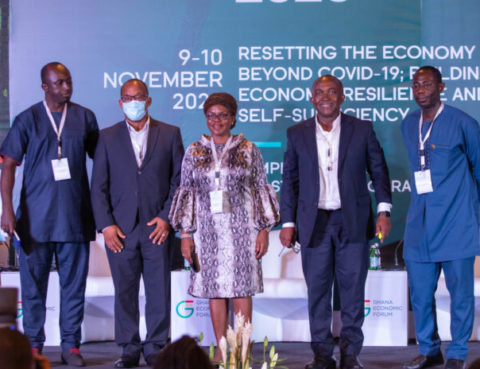
Energy experts push for change in tariff structure
Experts in the energy sector have called on government to effect changes in the pricing of tariffs in the country, to eliminate the policy which makes industries subsidise the amount households pay for their consumption of power – saying the practice has become a burden on businesses and is making them globally uncompetitive.
The experts, who spoke on the theme ‘Powering Ghana’s Industrialisation Drive: Progress Made Toward Reliable, Affordable and Clean Energy’, at this year’s Ghana Economic Forum organized by the B&FT in Accra, said the policy has added to factors accounting for the high cost of power to industry – which in turn increases operational cost of businesses and puts them in a disadvantaged position compared to their competitors in other countries.
One of the panelists, Ishmael Adjekumhene – Executive Director of the Kumasi Institute of Technology and Energy (KITE), said the high cost of power, among other factors, has resulted in the closure of some businesses; hence, it is about time the policy was reversed.
“We have a tariff system that is actually penalising industry because industry is cross-subsidising residential consumers. How do we deal with that? There are companies which have been disconnected from the grid because they cannot afford to pay for power, for the simple reason that industry is subsidising residences.
“So, there has to be a policy in place that addresses this problem… If we want the industry to be competitive, then the tariff structure has to change. It is about time we faced that reality, otherwise all our industries will not be able to afford power,” he said.
Executive Partner of Arthur Energy Advisors, Engineer Harriette Amissah-Arthur, also bemoaned the cost of power in the country which, she said, has made industries uncompetitive compared to their peers on the continent and in the world; hence her support for the policy to be scrapped.
“Industries in Ghana compete with other industries in the world. So, it is important for us to look at how we run our industries and how they are run on the world stage. In the medium to long term, our goal should be building a sustainable power sector. No matter the technology we use in this country, the key thing is for us to be competitive. I agree that households should not be subsidised by industry,” she said.
Segun Sowandey, Partner-KPMG Nigeria, also re-echoed the point, saying: “You will find that in most jurisdictions, especially in the West, the cost of power to industry is usually cheaper than the cost of power to residences. But in Africa and many emerging markets, cost of power to industry is higher than the cost of power to residential consumers. So, if we truly want to address the fundamentals, then we must eliminate those cross-subsidies,” he said.
Dr. Seth Debrah, Director-Nuclear Power Institute, said besides eliminating the cross-subsidy factor, another way of ensuring the industry has affordable power is to bring on board nuclear energy – which, he admitted, has an initial high cost, but becomes the cheapest source of power generation over the long-term.
“Nuclear power is high upfront cost, low running cost. Nuclear is the only power plant that takes care of its waste even before you begin running it. So is unique in its own sense and that is how come nuclear is cheap, because you can have a high upfront cost and low running cost over a very long period. In South Korea, they are doing around 3 cents per kilowatt hour,” he said.
source: thebftonline
Taxation of online and digital transactions: Chartered Institute of Taxation to discuss way forward
The Chartered Institute of Taxation Ghana on Thursday 12th November 2020 gathered tax experts in Ghana to discuss the challenges of digital transactions and e-commerce and its effects on Tax and the fiscal policies of Ghana.
Online transactions have in recent times experienced tremendous growth, especially following the COVID-19 pandemic.
Companies and individuals now offer almost everything one can buy online. At both domestic and international level technology is changing work and life in general. Online retailer model is a new way of providing online platforms to sell goods or connect buyers and sellers in return for a transaction or placement fee or a commission.
Enterprises across all sectors are increasing their online presence to generate more business by reaching new customers at a reduced cost. Even traditional government agencies have embraced the benefits of digital activities. Online advertising companies such as Google, retail shops such as Amazon & eBay, travel companies such as Priceline and Booking.com, consumer asset sharing organizations such Airbnb, Uber & Lyft have created shift in the traditional business operations. Statistics from the worldatlas.com suggests that, internet users in Africa have grown by 13,898% since December 2000, from 4.5 million users in 2000 to 527 million users in September 2020. This represents 12.8% of the world internet users.
Digital transactions deliver greater choice, competitive prices, convenience to consumers in remote locations who may face difficulty in physically accessing those services. For many, especially the youth, the utility derived from the consumption of online and related services far exceeds that of non-digital services. For example, with Google drive- there is no need to import or buy Hard-drive to store data. Cloud computing allows storage of large data in remote areas through the web, Facebook Advertising offers fastest, cheapest way to reach large audience, WhatsApp has caused huge reduction in traditional SMS for telecom operators, iTunes has made importation of CDs a thing of the past, e-Books has changed the way we buy books.
Tax risk posed by the digital transactions
Despite the good side of technology, fiscal policies are less responsive to these new models. The emergence of Mobile money payment system in the with e-commerce has made the whole system difficult to track. The tax risk, in the form of tax avoidance or evasion posed by digital activities is high and the OECD report on BEPS action 1 puts it this way: “because the digital economy is increasingly becoming the economy itself, it would be difficult, if not impossible, to ring-fence the digital economy from the rest of the economy for tax purposes. The digital economy and its business models present however some key features which are potentially relevant from a tax perspective”. Thus there is a real tax challenges posed by the digital transactions through business models like e-commerce, app stores, online advertising, cloud computing and participative networked platforms. The OECD ha suggested to nations to modify their tax laws to address the issues. Digital transactions create challenges for value added tax (VAT) especially where goods and services are bought by individual consumers from suppliers outside Ghana.
Addressing tax challenges on digital and e-commerce transactions:
For domestic transactions, the challenges mainly relate to the GRA not been able to accurately locate this these businesses in order to tax them according to law. But for cross-border transactions, the issue becomes more complex. The fundamental question is whether tax authorities should use the same tax laws to tax online businesses or there is the need to impose special tax on online transactions. Some tax experts say digital activities are just a mode of doing business and should not be treated differently from any other sector of the economy so tax authorities should find ways of looking for those who transact business online. Imposing special taxes on particular ways of doing business may discourage innovation and risk.
Having special tax imposed on digital activities could have negative consequences for cross-border trade and investment. Countries should rather redefine their Permanent Establishment (PE) rules and Corporate Income Tax should be limited to where the value is created. Some counties have refined their PE rules to include “Virtual Service or Significant Digital Presence”. Kuwait, Israel and Saudi Arabia’s tax authorities have introduced the concept of a “Virtual Services PE”. This involves online activities that includes substantial advertising, marketing and customer relations management, service contracts signed online by consumers and the use of online services by consumers.
Some tax experts are however of the view that, special tax needs to be imposed on digital activities because the mode of operations possesses unique features. The digital activities provide room for base erosion and profit shifting and so such activities should be dealt with differently. Indeed, as a safeguard to the threat of technology on tax revenue, the OECD recommends (in addition to revamping the PE rules) to introduce options in domestic tax laws on in the form of a withholding tax on certain types of digital transactions and tax equalization levy.
Withholding tax on digital transactions
The OECD suggests that, one way of dealing with the threat of digital activities is to apply withholding tax on certain digital transactions.
Italy: Italy has a web-based taxation called “Tax on digital transaction” in 2018. The Web Tax is levied at a 3% rate on the value of each digital transaction and it is paid by the buyers of the services.
France: The YouTube Tax in France
Digital companies established in France or outside of France, offering access in France to audiovisual content, whether for a consideration or free of charge, are subject to a 2% tax based on the sale price or right of access and on the amounts paid by advertisers and sponsors in an attempt to subject foreign digital business companies to tax.
India 6% Equalization Levy
India imposes a 6% equalization levy to be withheld by Indian residents from service provider for specified digital services including online advertisements. The levy is not an income tax.
VAT on Digital Transaction
For VAT, the reaction has been to protect the revenue at country of destination. Ghana, South Africa, Kenya etc. imposes VAT on imported electronic services. In Ghana, the Value Added Tax Act, 2012 (Act 870) of Ghana contains provisions aimed at addressing the challenges posed by digital activities. Section 16 of Act 870 requires that an unregistered, non-resident person who provides telecommunication services or electronic commerce to persons for use or enjoyment in the country, other than through a Value Added Tax registered agent must register with the GRA if that person makes taxable supplies exceeding GHS200,000.00 in a 12-month period. But because it is self-reporting and payment, compliance was low in practice.
In other countries like Thailand, a draft bill on e-commerce proposed that a foreign company providing services through electronic media to a non-VAT registered person, and where the services are used in Thailand, must register and pay tax at 7% VAT for services such as Hotel booking services, e-books, movies, music, advertising, online gaming services and downloadable music and all downloadable digital content.
Uganda passed a social media tax which took effect on July 1 2018 and seeks to charge a fee per day for using 60 mobile apps including Facebook, twitter, Instagram and WhatsApp, yahoo, google hangout, YouTube.
The meeting is expected to generate options on How the digital economy should be taxed.
The writer, Francis Timore, is a Tax Consultant and a member of the Chartered Institute of Taxation Ghana.
source: thebftonline

Start-up Bill Heads to Lawmakers in January
A bill geared at promoting more favorable economic conditions for nascent businesses in the country should be ready to be tabled for Parliamentary consideration by January 2021, Minster for Business Development, Alhaji Dr. Ibrahim Awal Mohammed has disclosed.
The Startup Bill, if approved by the house, will among other things provide tax holidays to startups by as much as eight to 10 years, the Minister said.
Elaborating on key points form his address at the 2020 edition of the Ghana Business Awards, the Minster suggested that the move is expedient as businesses in their infancy are oftentimes crippled by debt obligations and sees this as the most appropriate measure to ensure they not only to thrive up until breakeven point but proceed to sustained profitability.
“This bill will seek to present tax holidays for startups for up to 8 years. We want startups, when they begin operations not to pay taxes for up to eight or even ten years. The essence is to encourage young business owners to plough back their profits [into their businesses and consequently, the economy for both] to grow.
We have formed a committee to work on the Startup Bill, and within the next two months, the bill should be ready for Cabinet consideration and then for Parliamentary approval,” he explained, adding that the bill is in line with his Ministry’s philosophy which seeks to support businesses on every scale but has a favorable bias toward small businesses.
As further evidence of this, Dr. Awal revealed that under the CARES programme the government through his Ministry and affiliated agencies is set to roll out a Small and Medium Enterprise (SME) Mobile Clinic, with the express purpose of providing mobile business support services to all SMES in the country.
“For the first three months,” he said, “we are targeting one million SMEs to build their capacities so that they can get back to business and create jobs for young people.”
“We’ll be providing training in marketing, pitching, branding, financial management et cetera so that those affected by the pandemic are able to bounce back and create jobs for the people. We want to urge every business to patronise the Clinics when the programme commences,” he added.
With nations across the globe, especially in Europe experiencing a second wave of COVID-19, which has led to governments reintroducing drastic restrictions on movement and reports that a similar surge in cases could be recorded on the African continent, Dr. Awal urged businesses to ensure that staff and customers alike adhere to safety protocols as the short-term inconveniences might be the most prudent economic decisions they make.
source: thebftonline
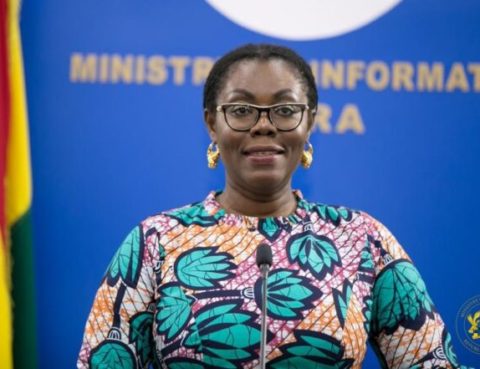
Government Confirms Takeover of AirtelTigo
The government of Ghana has confirmed reports that it is at an advanced stage in discussions with Bharti Airtel and Tigo for the transfer of AirtelTigo shares to government – along with all customers, assets and agreed liabilities.
The transaction, a statement from the Communications Ministry said, will shortly be concluded by the execution of definitive agreements.
“The government of Ghana through this transaction will temporarily operate this national asset in the best interests of the nation, and ensure protection for the interests of all employees, customers and stakeholders, and a continuation of the digital transformation in Ghana.
“Given the multiplier impact the telecommunications sector has on the economy and various related industries, the government of Ghana has entered into this agreement to ensure that thousands of Ghanaian jobs are safeguarded. It is of critical importance that the telecommunications sector remains healthy, dynamic, vibrant and, most importantly, competitive,” the statement added.
Bharti Airtel in 2017 merged with Millicom’s Tigo in Ghana to become the country’s second largest mobile operator, AirtelTigo, with the approval of The National Communications Authority. AirtelTigo serves around 5.1 million subscribers and offers direct and indirect employment opportunities to almost 10,000 people.
Celtel International acquired 75% of Western Telesystems Ltd. (Westel) from the government of Ghana for US$120million in 2007. Celtel was subsequently acquired by the Zain Group, which later sold all its African Assets to Bharti Airtel in 2010.
The government of Ghana remained a shareholder in Airtel Ghana with a 25% holding through the Ghana National Petroleum Corporation, until the AirtelTigo merger; and retained an option to acquire additional shares after the merger.
Westel was at the time of takeover by Celtel the second national operator in Ghana, and was licenced to provide fixed and mobile (GSM) telecommunications services. Millicom Ghana Limited was the first mobile telecommunications company to operate in the country under the brand name Mobitel before rebranding to become Tigo.
source: thebftonline
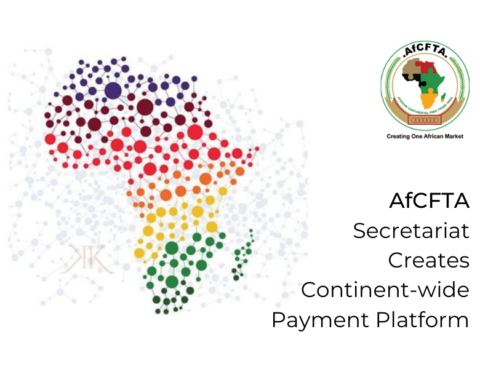
AfCFTA Secretariat to Create Continent-wide Payment Platform
The AfCFTA Secretariat is working on a continent-wide payment platform to enable MSMEs trade easily across Africa.
Businesses across the continent will soon enjoy a convenient and affordable mode of payment, as the African Continental Free Trade Area (AfCFTA) Secretariat readies to introduce a pan-African payment and settlement platform.
When introduced, businesses will no longer have to worry about the high cost involved in making cross-country payments for goods and services, Secretary General of the AfCFTA Wamkele Keabetsewe Mene announced in Accra, in what could be a major boost for intra-African trade under the free economic zone.
“Among the challenges we hope to address are the cost of doing business and cost of transactions when you do business. The cost of payment when you want to transfer money is not cost-effective or efficient. So, we are working with African Export-Import Bank to develop a pan-African payment and settlement platform,” he said.
He spoke at the 44th annual general meeting of the Ghana National Chamber of Commerce and Industry (GNCCI), and said the platform will enable businesses to make payments across the continent in local currencies and at affordable rates.
“Currently, to make payment for goods and services from Ghana to another African country, a business first has to covert the funds from cedi into dollars before it is transferred; and then the recipients will also have to covert the dollars into their local currencies,” he said, lamenting this costly and inefficient mode.
He also said holistic efforts are being made to tackle challenges which impede trade among economies within the continent, including streamlining Customs operations in member-states.
“All the things that make doing business in Africa very expensive, we want to streamline all of them – including Customs authorities – and switch them onto a digital platform for the range of activities that they do as Customs.
“We can use digital platforms to make sure that trade in Africa is affordable and easily accessible to the millions of Africans who want to conduct business across the continent. So, digital platforms in my view are going to be the catalysts for intra-African trade to take place and for us to significantly boost trade from where it stands today,” he said.
The success of the AfCFTA, to a large extent he noted, will depend on the ease with which the private sector can conduct business. “If we don’t address the constraints, if we don’t make it easier for the private sector to conduct business on the continent, this agreement will fall short.”
The AfCFTA will come into effect January 1, 2021 after the initial date of July 1, 2020 was postponed because of the effects from COVID-19.
source: thebftonline
To find out more about AfCFTA click here
Petroleum Hub Development Corporation Bill
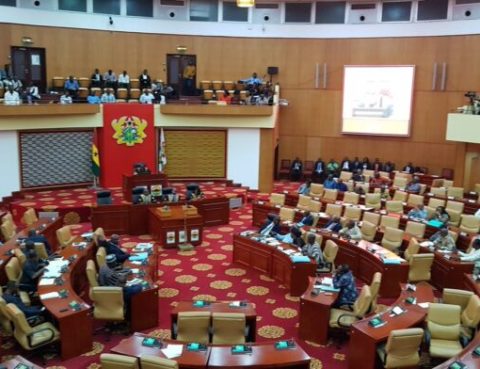
Parliament has passed into law, the Petroleum Hub Development Corporation Bill, 2020 to allow for the establishment of a petrochemical hub in the Western Region of Ghana.
The US$ 60billion project will see the establishment major infrastructure for petrochemical refining and processing, as well as the discharge, storage, distribution, transportation, and trading of petroleum products using Ghana as a hub for the West African sub-region and the world at large.
According to a report presented to Parliament prior to the passage of the bill, the project is expected to earn the country about US$ 1.56billion in export tax, and 130 percent increase in Gross Domestic Product (GDP) with the injection of US$ 60billion into the country’s economy by the year 2030.
The report also stated that the establishment of the hub is projected to create some 780,000 jobs in the country. Out of the estimated total cost of US$60billion, the government of Ghana is expected to contribute US$6billion, representing 10 percent of the total investment cost, with the remaining cost covered by some private capital sought by government.
“The government intends to leverage private capital to finance the remaining 90 percent funding requirements. The contribution of government would be targeted at providing the initial basic infrastructure including land acquisition, payment of compensation, construction of road networks, and extension to the area, social amenities such as water and electricity,” the report said.
Speaking on the Floor of the House during the consideration stage last week, Deputy Minister for Energy, Joseph Cudjoe, told the house that the project will see to an increase in the presence of major international oil trading and storage companies, while encouraging public-private partnerships and joint ventures between local and international companies. “This will invariably result in knowledge transfer and wealth creation,” the deputy minister added.
The report further noted that the establishment of the plants as part of the project, will enable the country maximise the value of its gas reserves of about 2,080 billion standard cubic feet and also take advantage of the emerging market in Africa for the production and distribution of ammonia, fertilizer, methanol, among others.
source: thebftonline
Auditor Rotation under Ghana’s New Companies Act, 2019 (Act 992): A game changer for companies
Introduction
The engagement of an auditor and his work generally have fundamentally inherent risks. These risks are well known within the accounting profession, and over the years accounting and audit regulatory bodies have explored mechanisms to mitigate these known risks. Auditor independence is at the heart of risk mitigation mechanisms, and one of the biggest threat to auditor independence is over-familiarity which can mostly be blamed on long term audit-client relationship.
Accounting and Audit regulatory bodies such as the Institute of Chartered Accountant, Ghana; International Accounting Standards Boards (IASB); Association of Chartered Certified Accountants, U.K; Financial Reporting Council, UK, and many more have invested and continue to make heavy investments in research on this subject matter. These bodies have proposed solutions to moderate the effect of these risks so as to enhance audit quality. The most advocated solution by these bodies is rotation of audit engagement partners. This approach requires that audit firms replaces their engagement partner from time to time as they become familiar with the client.
Governments across the world have mostly resorted to the use of statutory interventions to enforce auditor rotation.
The European Union (EU) has rules that require companies to rotate their auditors. Article 21 of Regulation (EU) No 537/2014 of the European Parliament and of the Council of 16 April 2014 makes provision to deal with familiarity threat of auditors and therefore reinforces the independence of statutory auditors and audit firms. It establishes a maximum duration of the audit engagement of a statutory auditor or an audit firm in a particular audited entity. Further to that the guidelines adopted by the Committee of European Auditing Oversight Bodies (“CEAOB”) on 28 November 2019 (CEAOB 2019-041) provides that EU public interest entities (PIE) rotate their auditors at a maximum of every 10 years, subject to extension under certain conditions. The Regulation also requires rotation of audit engagement partners and a gradual rotation of key audit personnel during the mandatory audit period. A four (4) year cooling period applies to the audit firm and any members of the firm’s network prior to the re-appointment as the statutory auditor
In Asia, major markets such as Japan, China and Singapore have made rules and regulations to enforce auditor rotation in order to check audit risk emanating from audit independence and familiarity with clients.
Similarly in Africa, the big markets such as Nigeria and South Africa have all made rules to regulate auditor rotation.
Ghana has now joined the list of countries that use statutes to regulate audit risks emanating from auditor-client familiarity. On the 2nd August, 2019, Ghana enacted into law a new Companies Act, Act 992. This Act has introduced several novel concepts in company law pertinent to new trends in business practice which are intended to enhance significantly, the legal and regulatory framework for doing corporate business in Ghana. Among these novel concepts is the introduction of auditor rotation. Prior to the introduction of this concept into our company law, the Bank of Ghana (BoG) by law had introduced and made it a regulatory requirement for banks to rotate their auditors every five (5) years. So whilst auditor rotation is a new concept under the Companies Act, 2019, Act 992, for institutions regulated by BoG this is not new to them.
Section 139 subsection 11 of the new Companies Act, Act 992 provides that “An auditor shall hold office for a term of not more than six (6) years and is eligible for appointment after a cooling-off period of not less than six (6) years”.
The contention within the Accounting profession in Ghana since the Act come into force has been when the rotation period starts counting (i.e. effective date for the count of the six (6) years). The question then was whether the six (6) years shall start counting from the date the Act come into force (i.e. 2nd August, 2019) or from the date a company appointed its auditor. To resolve this confusion, the Institute of Chartered Accountants, Ghana (ICAG) wrote to the Registrar General for a clarification. In a response letter the Registrar General, stated that the six (6) years run from the date of appointment of auditor, and she further cautioned companies to abide by the directive to rotate their external auditors as prescribed by the Act. Under Act 992, a company and its officers commit an offence, if the company continues to engage an auditor whose appointment is over six (6) years. In the eyes of the law such an auditor does not exist and his opinion on the financial statements of the company may not be valid. This is provided under Section 139 (5) of the Companies Act, 2019 (Act 992), as: (5) An existing auditor shall continue in office until,
a) that auditor ceases to be qualified for appointment
d) the tenure of that auditor ends.
The writer submits that once an auditor’s tenure comes to an end after serving the six (6) years term, which also implies that the auditor has ceased to be qualified for appointment, such an auditor lacks the necessary authority or power in law to profess an opinion on the affairs of the company.
Subsection 10 of Section 139, makes it an offence to contravene Section 139 and both the company and its officers are made liable and punishable under the Act.
It is pertinent for companies to note that if their auditors have served the full six (6) years terms counting from the date of appointment, then such auditors have, in the eyes of the law and technically speaking, ceased to be auditors of the company and any further act done by the auditors in their capacity as continuing auditors is unlawful and amount to an illegality, and can have dire consequences should a member of the company question the validity of the audited accounts.
Now the law is in force but the question this writer seeks to answer is, “What is in the law for companies for which reason they must comply beyond merely respecting the law?” The writer is of the opinion that the law is a game changer for companies given the benefits that are inherent in its enforcement. The benefits for companies are classified under four main headings: Cost savings, Investor Confidence, Reduction of Audit Risk, and Quality of Audit and New Perspective
Cost savings for companies
Rotating auditors certainly gives companies an opportunity to open up negotiation of audit fees with potential auditors. This may be realized through the use of a procumbent process that requires auditors to undergo competitive bidding of the company’s audit. This process if properly executed will most likely result in reduced audit fees over the six-year period for the company. The tender process must however be carried out in a manner that does not sacrifice quality of audit work for cost savings. This means companies must balance desire to cut down on audit fees with maintenance of quality of audit. Overly focusing on cost cutting may lead to unintended consequences. Notwithstanding the need to balance cost with quality, it is highly possible for a company to save some money on its audit fee by taking advantage of the provision on auditor rotation under the new Companies Act.
Investor and creditor Confidence
A natural consequence of auditor rotation is an enhanced investor and creditor confidence in the financial systems including internal controls of a company. A weak internal control system points to poor corporate governance. A company may benefit immensely from auditor rotation if it is established that successive auditors under a scheme of rotation issued a clean opinion on the financials of a company. Investors and creditors including banks are most likely to rate the governance of a company high if the company’s accounting systems has under-gone audit by more than one audit firm over a reasonable period of time and at reasonable intervals as prescribed by the Act. Another benefit which a company derives from audit is the management report which are issued by auditors to management. Where a company has benefited from audit by multiple audit firms, management get to know from these different auditors control weaknesses which require redress to improve governance. This is better served if different auditors issue such management letters over time as against one auditor. In this globalized world, the periodic rotation of auditors sends a positive impression about a company to investors including foreign ones.
Reduction of Audit Risk
Over-familiarity of auditors with clients may make auditors too comfortable to recognize and adequately plan for potential risks. There is increased potential for audit risk which is the risk that an auditor gives inappropriate opinion on the financial statements. Rotation of auditors will reduce this risk as successive auditors would look at issues with a new set of eyes devoid of presumptions.
Quality of Audit and New Perspective
Rotation of auditors brings new perspectives into the audit of the financial statements of a company. A company benefits from varied perspectives and new ideas from its newly appointed auditors.
Effect of Non-Compliance of the law
Companies that fail to enforce that law commits an offence and may continuously be exposed. Auditors are expected to be independent but their continuous occupation of the office after the six (6) year-period expires may expose them to Familiarity Threat from long periods of serving as the external auditor of a client company. The Auditors’ independence becomes threatened since his professional judgment may be overridden by emotional feelings. The company may further have to deal with Self-Interest Threat which might occur as a result of financial or other interests of an Auditor or of an immediate or close family member, undue dependence on total fees from client, having a close business relation with client, and loan to or from a client or any of its directors or officers. Finally, the company has to deal with Advocacy threat as a result of an auditor’s long term association with a client. Advocacy threat may occur when the auditor promotes a position or opinion to the point that subsequent objectivity may be compromised.
Conclusion
It is worthy of note that the requirement of the companies act 2019 (Act 992) is mandatory and companies must take steps to ensure full compliance. Companies whose auditors’ have been engaged for at least a period of six years continuously, should take steps to appoint new auditors immediately. Equally, companies whose auditors’ are in their sixth year, should take steps to transition to new auditors after the end of the sixth year.
Author: Samson Kusi–Appiah
source: ghanaweb.com
G-Money Partners Eliho Ghana LTD For Digital Payment
GCB Bank Limited, Ghana’s largest and first indigenous Bank has partnered Eliho Ghana Ltd. to facilitate the transfer and receipt of funds in the cocoa farming and purchasing ecosystem, using the G-Money platform.
The G-Money/Eliho partnership is an outcome of the Bank’s interest in providing financial inclusion for the partially banked and unbanked population of the country and to provide smooth financial operation support for Eliho and other supply chain networks and partners.
The G-Money platform will also enable Eliho to pay purchasing clerks (PCs) with virtual funds transferred onto their mobile wallets. The PCs in turn are able to transfer the value of each farmer’s cocoa sales real time onto their mobile wallets.
G-Money is a telco-agnostic mobile money service that enables both customers and non-customers of GCB to transact using e-value received on their phones.
Eliho Ghana Ltd., in collaboration with Touton SA, which has been a trading partner of Ghana Cocoa Board for over 50 years and for the past two years have designed a comprehensive sustainable sourcing model where farmers in their supply chain have access to Rural Service Centers (RSCs) that serve as one-stop-shop at the district level.
This enables them to nurture a network of youth entrepreneurs called Cocoa Tech to deliver critical and essential services at the community level including access to Finance among others.
The Eliho/Touton initiative has facilitated the onboarding of District Mangers, Purchasing Clerks and small holder farmers onto digital platforms for the digitization of their financial transactions, which has been made possible by GCB’s G-Money services.
With this partnership all cocoa farmers producing for purchase by Purchasing Clerks (PCs) have the singular convenience of receiving payment for their produce via mobile transfer.
This is a very exciting time for Eliho and its farmers as the service goes to significantly reduce the risk of loss of funds and eliminates the risk of theft resulting from carrying physical cash, along the value chain. In this particular partnership Eliho has access to the service by both the Web portal and the use of a mobile handset.
At the official signing ceremony, The Managing Director of Eliho, Mr. Nicholas Kumah stated that the G-Money digital platform will provide great relief to the supply chain through the secured consolidated cocoa District Managers Account, ensuring the real time availability of monies to purchasing clerks. This enhances transparency, accountability, traceability and security. This platform will also reduce financial misappropriation due to the shortened time in converting released cash into cocoa and sold back to COCOBOD he said.
The Deputy Managing Director of Finance, GCB, Mr. Socrates Afram, expressed his excitement about the partnership as the service would ensure availability, access, and the smooth transfer and payment of funds.
He described the G-Money platform as fast, secure, efficient and reliable for all users, adding that it would offer convenience for all stakeholders in the cocoa supply chain.
source: gcbbank.com.gh/news/

Ghana to Save $3 Billion Under New Energy Agreement With Cenpower
Cenpower Generation Co., an independent power producer in Ghana, will switch to using natural gas instead of light crude oil to fuel its electricity plants under an agreement that will save the government $3 billion over the next two decades.
The deal is among a series of power deals that the government is renegotiating with independent producers to cut costs, the Finance Ministry said in an emailed statement Wednesday. Ghana began renegotiating power deals with IPPs in November.
Read more at BloombergQuint
Is Africa ready for free movement of labour with the African Continental Free Trade Area (AfCFTA)?
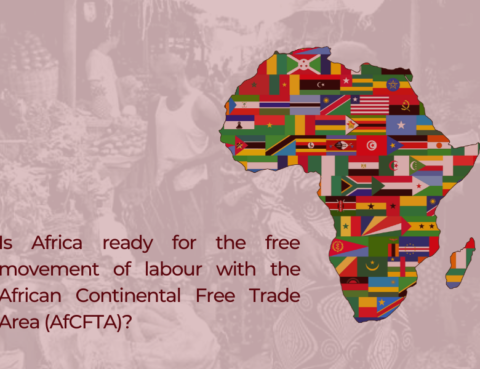
The Organization of African Unity, now African Union (AU), under Kwame Nkrumah’s leadership conceived an African Common Market programme. Nkrumah envisioned it to be an economic community of African countries pulling their production and trade to a common advantage.
That, to Nkrumah, was the epitome of true independence. The idea of a common African market, however, remained a pipe dream until 2012 when the 18th Ordinary Session of the Assembly of Heads of State and Government of the African Union adopted a decision to establish an African Continental Free Trade Area (AfCFTA) by 2017.
As the AfCFTA awaits full implementation, the status quo remains. For example, four West African nations produce almost 70% of the world’s cocoa – Ivory Coast (42%), Ghana (18%), Nigeria (5%) and Cameroon (4%) – but they just get about 2% of the US$100 billion a year revenue of the chocolate industry. In an attempt to address the problem, on March 28 2018, both Ghana and Ivory Coast signed a treaty to defend their interest in cocoa production, and to a large extent determine cocoa prices on the world market.
Hopes are that the AfCFTA will, as envisioned by founding fathers of the AU, dismantle colonial borders that hinder genuine trade among African countries. But, how does the AfCFTA resolve the challenge of xenophobia, which threatens to restrain the free movement of Africans on the continent?
African Continental Free Trade Area (AfCFTA)
AfCFTA is not just a ‘Free Trade Agreement’ – it is more than that. It is about establishing a unified continental market, including the free movement of labour and investments. The numerous benefits of AfCFTA include, first of all, the essential protocol on the Free Movement of people.
This matters because, at present, traveling between African countries can be very challenging for Africans. Despite the eminent effort of East Africa and West Africa sub-regions that introduced regional passports to aid the movement of people across each regional bloc, there are some obstacles such as visas, expensive air tickets, custom clearances and border controls, which make it difficult to do business across borders.
In addition, African countries are not able to leverage on each other’s extensive human resources. Africa will in the next few decades be the most youthful and populous continent, yet despite shortages of labour in some African countries, trained and skilled Africans find it difficult to work in other African countries.
Where some have moved to neighboring countries in search of employment, it has caused tensions in some countries – a good example is South Africa. This is because uneven development among African countries brings about movement of people resulting in crowding of the developed countries and brain drain in the less developed.
The second most essential benefit of AfCFTA is that all 55 countries on the continent have a collective GDP of US$2.5 trillion, making it the 8th largest economy in the world just behind India. And that also makes the continent much more attractive to investment, both from within and from outside the continent.
That notwithstanding, there are other factors that hinder investment in Africa – such as conflict and political instability, inadequate infrastructure, lack of energy, and more crucially, almost all African countries rely on the extractive industry or export of primary commodities, which do not create large scale employment.
On the other hand, by encouraging the development of AfCFTA, it will hold back these factors that hinder investments on the continent. For instance, the Grand Inga Dam is a proposed hydroelectric dam on the Congo River in the Democratic Republic of Congo. Upon completion, the dam is capable of generating 25 million kilowatts of electricity, capable of electrifying the entire African continent. Moreover, it is estimated to be two times the output of the largest energy-generating body ever built: Three Gorges Dam.
If AfCFTA is fully implemented, the free movement of goods across borders will boost investments on the continent, particularly the Small and Medium Enterprises (SMEs). This will also encourage business people to make investments necessary to sustain economic growth and create the job opportunity the continent badly needs for its people – regardless of nationality.
Finally, the AfCFTA will increase trade between African countries. According to the United Nations Economic Commission for Africa (UNECA), less than one fifth of all exports are currently from one African country to another. Take Kenya for instance, the largest economy in the East African Community, each year the country exports US$1 billion to Europe, and around US$500 million to the US worth of products. Kenya’s total export amounts to US$6 billion in 2017.
But to its neighbour, Ethiopia, Kenya exported just US$69 million in 2017. Why? The main reason is the high level of trade taxes. To address that, the AfCFTA is proposing to remove trade taxes on at least 90% of all trade between African countries to boost regional trade by nearly US$1 billion and to create excessive jobs across the continent.
And AfCFTA is designed to address many countries’ multiple and overlapping memberships in Regional Economic Communities (RECs), complicating integration efforts. Kenya, for example, belongs to five RECs, and this does not help achieve the continental goal of a free trade area and to allow people the movement across the continent all sorts of restrictions.
Movement of labour across the continent
With all these promising features AfCFTA is offering, for it to be successful, Africans must wake up and smell the coffee. For example, the first and second largest economy in Africa are both Nigeria and South Africa respectively. However, last year, we witnessed these two nations at centre of xenophobic attacks.
In recent times in Ghana, retailers from Nigeria are being restrained and attacked by Ghanaian traders for engaging in retail businesses which they insist are violations of the Ghana Investment Promotion Centre Act 2013 (Act 865). This is the biggest challenge that awaits AfCFTA although when it is endorsed as municipal laws and the programme is implemented effectively, it will hopefully remove the bureaucratic and legal hurdles that hinder free movement of people for businesses.
And, potentially, Africans will be able to use their talents where there is a demand for those talents on the continent.
And whereas free movement of people is in principle a good thing, the reality, as the Europeans are fast discovering, is the opposite. Current European political upheavals should act as a warning to Africa. For implementing the idea of ‘free movement of people’ without the accompanying checks and balances, which are designed to minimize inequality, will only lead to political difficulties in the future.
The better solution is, in my opinion, for African governments to first apply their best endeavours to deliver good government; as delivering good government will by implication reduce inequality on the ground, thus levelling the playing field with regard to the equitable division of the national cake.
Only by delivering good governance, the rule of law, and democracy, will it be possible to minimize inequality at home; free movement of people will follow naturally, in the same way liquids find their level when allowed to run freely. In spite of all these, there is a need for genuine embracing of Ubuntu, meaning “I am because we are”. AfCFTA will only be successful if Africans are accommodative of each other as we strive to bring economic prosperity to Africa.
Author: Michael Sumaila Nlasia, a Research Assistant at Centre for Data Processing and Geo-Spatial Analysis.
source: thebftonline.com